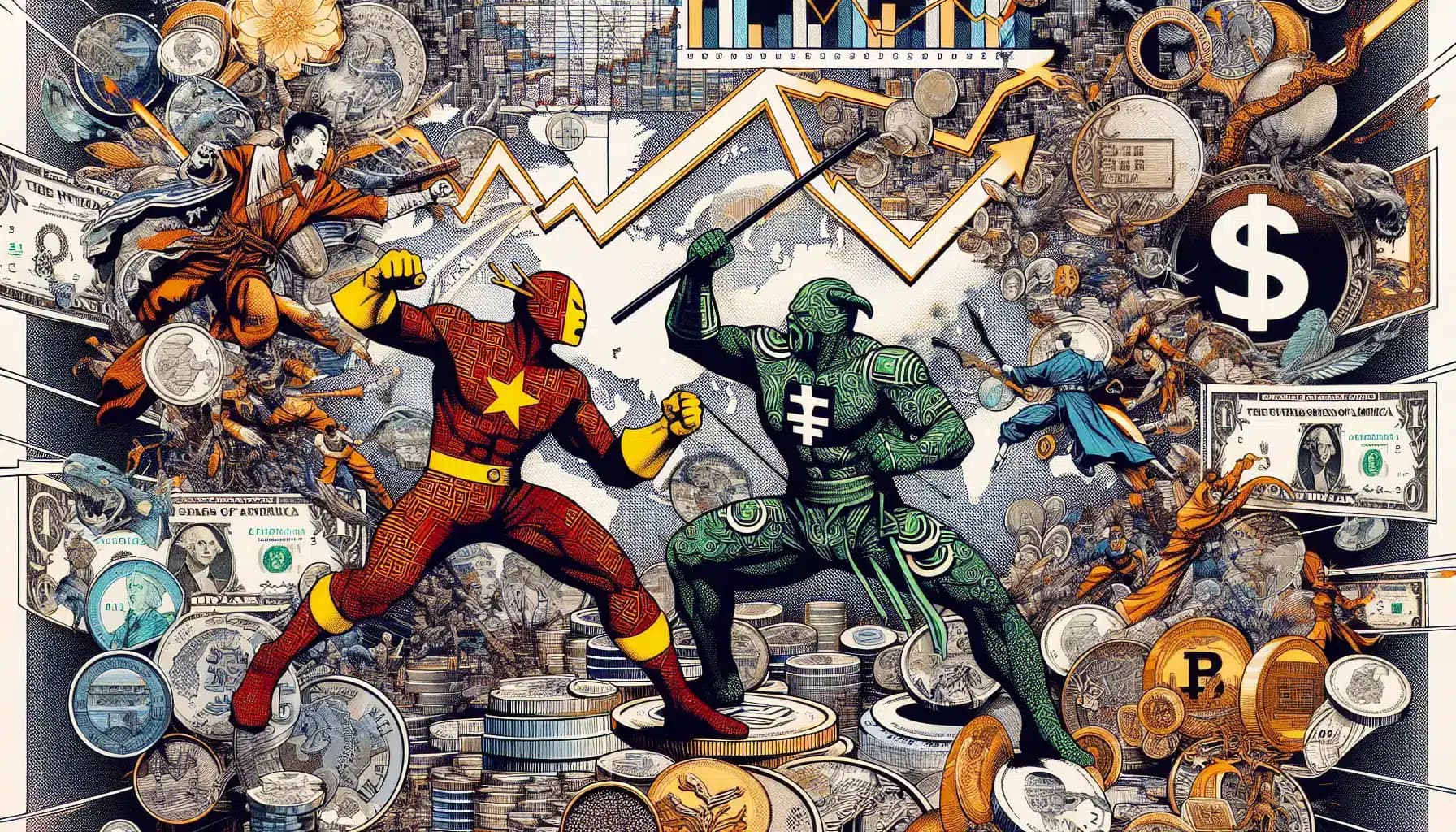

The Rising Dragon: China’s Silent Financial Warfare
I invite you to put on your spectacles, sit back with a glass of fermented cynicism, and join me as we unravel the financial enigma of our modern era. With hushed whispers and not-so-subtle hints, China has been laying the groundwork for what might very well be the economic coup of the century. The US Dollar, long-standing aristocrat of global currencies, faces its calculated competition in the form of the cunning Chinese yuan (source).
This century’s tale woven by Beijing isn’t just one of economic growth but a maneuvering masterpiece threatening to culminate in shifting the world’s financial gravity east. But how, you wonder, is the yuan gearing to unseat the cushy US dollar as the global reserve currency?
The Great Replacement: From Greenback to Yuan
The tale begins with China’s strategic and understated push, aligning with initiatives like ‘Made in China 2025’. This bold plan to upgrade from factory floors to tech titans comes wrapped in a blueprint of widespread economic reforms and currency confidence schemes.
Advertisement
By championing high-tech innovations and fostering dependency on yuan-denominated trade, China is not just playing the game but potentially rewriting its rules. It’s a multi-pronged effort—less of a direct assault and more like a cerebral game of chess against the Western financial hegemony.
The Unseen Threads: Who Holds the Real Power?
Now, truly, the beauty of this financial tale is how the illusion of power appears as potent as power itself. The once quietly insurgent yuan is now a contender, juiced up with structured strategies that would make Machiavelli proud (source).
As conspiracy theorists lean into their mics, the world watches this simmering narrative with bated breath.
The Shadow Dance: Dollars and Dynasties
In the shadows of economic summit rooms, the real action unfolds. Modern titans—China leveraging political capital, the US clinging to its historic dominance—each dance a precarious ballet on a global stage replete with economic tension. It’s a saga resurrecting fears not just of financial transitions but entire paradigm shifts.