Key Takeaways
- Strong evidence supports the existence of an 18th-century figure known as the Count of St. Germain, documented in memoirs, diplomatic correspondence, and newspapers as a charismatic courtier, musician, and eccentric.
- Claims of immortality and ascended mastery go beyond verifiable records, stemming from late 19th-century Theosophical writings and devotional testimonials that lack primary civil documentation.
- Unresolved questions include the absence of confirmed birth records, the need for direct scans of burial registers, and how a historical eccentric transformed into a living legend in modern spiritual communities.
A Man Out of Time in Rococo Salons
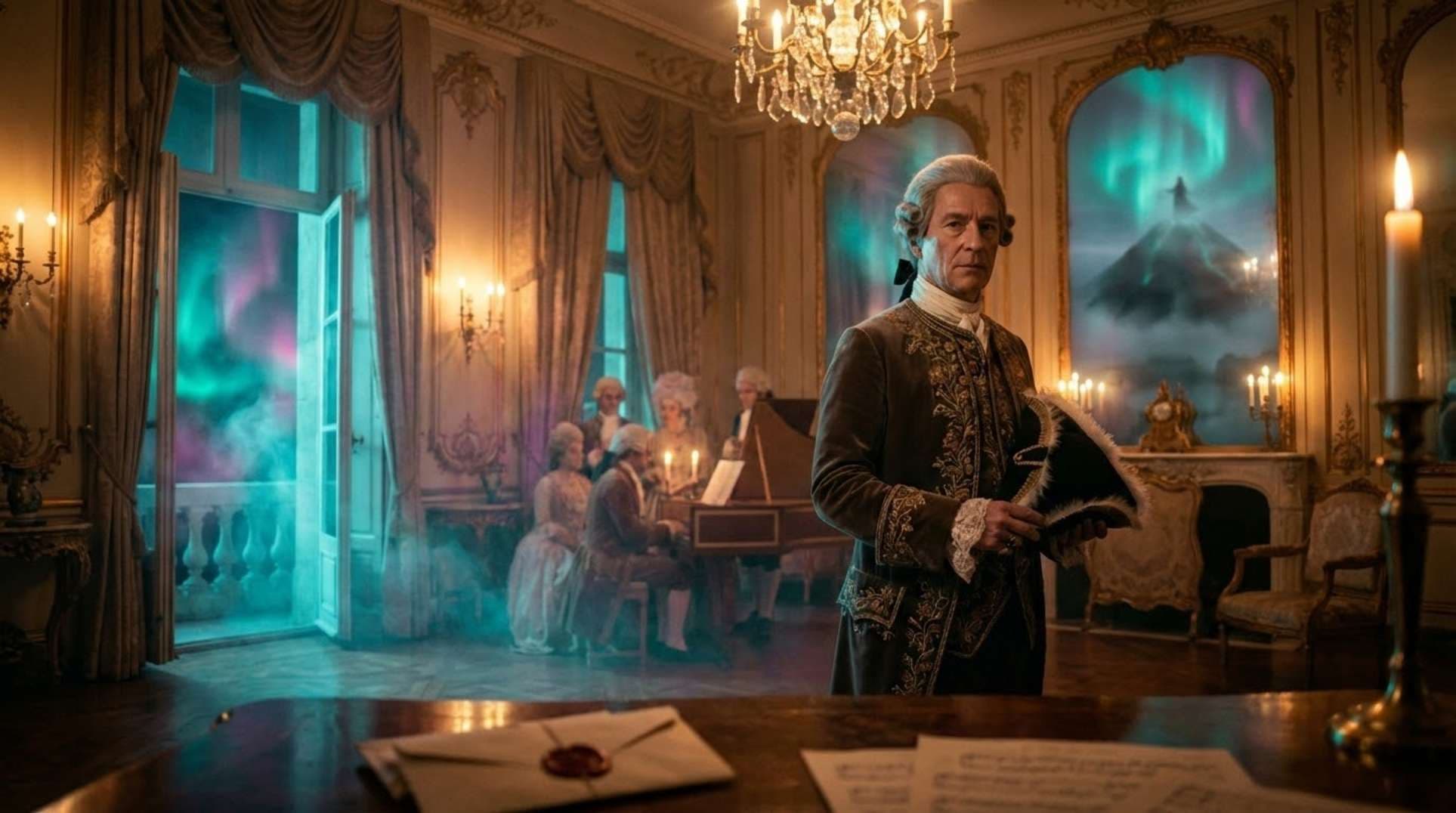
Picture the glow of candlelight flickering across gilded mirrors in a Paris salon, circa 1750. The air hums with whispered conversations among courtiers and philosophers, glasses clinking as tales of distant lands unfold. Into this scene steps a man of refined bearing, his voice carrying melodies from forgotten operas, his stories laced with details that seem pulled from history’s hidden pages. This is the Count of St. Germain, as contemporaries described him—not yet the immortal of legend, but a curious guest who charmed and puzzled Europe’s elite.
Accounts from the time place him in courts across Europe, mingling with figures like Voltaire and Madame de Pompadour. Voltaire himself wrote on April 15, 1758, calling him ‘a man who knows everything and never dies’—likely with a dash of sarcasm, as the tone in surviving correspondence suggests. What we can trace are his musical ties, like performances in London around 1745, his diplomatic appearances, and a reputation for eccentricity that colored his presence in those rococo gatherings.
What Witnesses and Devotees Say
Over time, the Count’s story has grown through voices of those who claim deeper connections. Madame Blavatsky and other Theosophical writers painted him as an Adept, an Ascended Master guiding humanity from beyond the veil. These portrayals frame him as a spiritual teacher, drawing on esoteric traditions rather than just historical quirks.
In the I AM movement, founded by Guy and Edna Ballard, published messages and stories describe ongoing contact, including their famous Mount Shasta encounter. Groups like the Saint Germain Foundation and Summit Lighthouse carry this forward, sharing devotional materials that speak of his continued activity. Modern reports in New Age circles echo these sightings, serving as community touchstones—testimonial accounts that hold meaning within those groups, even as they stand apart from official records.
Timelines, Tracks, and Hard Documents
The trail of evidence starts strong in the 18th century but fades into ambiguity. Diplomatic dispatches in the Mitchell Papers capture his movements at European courts, while musical catalogs link him to works like the song cycle L’Incostanza delusa, performed at London’s Haymarket in 1745. Surviving scores on IMSLP and library holdings offer tangible ties to his name.
Birth estimates vary—around 1710 is common, but others like 1691 or 1712 appear without a solid primary baptismal record. Death is often pegged to February 27, 1784, yet that needs a direct scan of the burial register to confirm. For follow-up, we’d request those Mitchell Papers dispatches, the 1784 register entry, and searches of parish records or passport lists.
| Claim/Fact | Primary Source(s) | Confidence (High/Medium/Low) |
|---|---|---|
| Presence in 18th-century European courts | Mitchell Papers, diplomatic dispatches | High |
| Musical associations (e.g., L’Incostanza delusa) | IMSLP scores, library catalogs | High |
| Birth circa 1710 | Secondary literature, no primary baptismal record | Low |
| Death on February 27, 1784 | Reference works, needs archival scan | Medium |
| Post-1784 sightings | Devotional testimonials, no civil records | Low |
Official Record vs. The Living Legend
Mainstream sources like Encyclopaedia Britannica view the Count as a real 18th-century adventurer—charismatic, with murky origins, but no evidence for immortality. Historians stress the gaps in birth and baptismal records, sticking to what’s verifiable in archives.
On the other side, Theosophical and I AM groups hold him as an Ascended Master, based on doctrinal teachings and revelatory experiences. Blavatsky’s writings and the Ballards’ publications form the core of this view. Both sides agree a historical figure existed; they split on later claims, with archives demanding civil proof and communities valuing spiritual testimony.
What It All Might Mean
At its core, we have a documented 18th-century personality who left marks in dispatches and music. Gaps persist—no agreed-upon birth certificate, and that 1784 death entry begs for a fresh look at the registers.
The shift from eccentric to immortal traces through Blavatsky’s influence and I AM texts, showing how legends evolve in spiritual circles. Worth pursuing: secure those archival scans, build a timeline of primary sources, talk to religion historians and foundation reps. Weigh the documents against the testimonies yourself—the mystery holds where the records blur.
Frequently Asked Questions
Yes, contemporaneous accounts in memoirs, diplomatic correspondence, and newspapers confirm his presence as a courtier and musician in 18th-century Europe. Figures like Voltaire referenced him, and musical works are attributed to his name.
Claims of immortality arise from late 19th-century Theosophical writings and devotional testimonials in movements like I AM, including stories of post-1784 sightings. These lack primary civil records and rely on community experiences rather than archival proof.
Historians focus on verifiable documents, which show no evidence beyond an 18th-century life, with gaps in birth and death records. They contrast this with devotional narratives that use different standards of evidence.
Key gaps include missing primary birth or baptismal records and the need for scans of the 1784 burial register. How his story evolved into a spiritual legend also invites further exploration through archives and interviews.
Madame Blavatsky and Theosophists reframed him as an Adept, with the I AM movement building on this through published messages and encounters. This transformation reflects broader patterns in esoteric traditions.