
Key Takeaways
- Eyewitnesses often describe ‘giant’ spiders in cabins, docks, and garages, and dramatic beach strandings of long, ribbon-like worms; social posts rarely include scale references.
- Verified data: Dolomedes spiders reach about 5–9 cm across, ribbon worms can extend multiple meters, and polar gigantism explains oversized marine arthropods; invasive mosquitoes are expanding ranges but not body size.
- Open questions: most reports lack scale or specimens, under-sampled regions could hide surprises, and shifting mosquito risks blur abundance with perceived gigantism.
A Night at the Cabin: Hand-sized Shadows and Strandline Mysteries
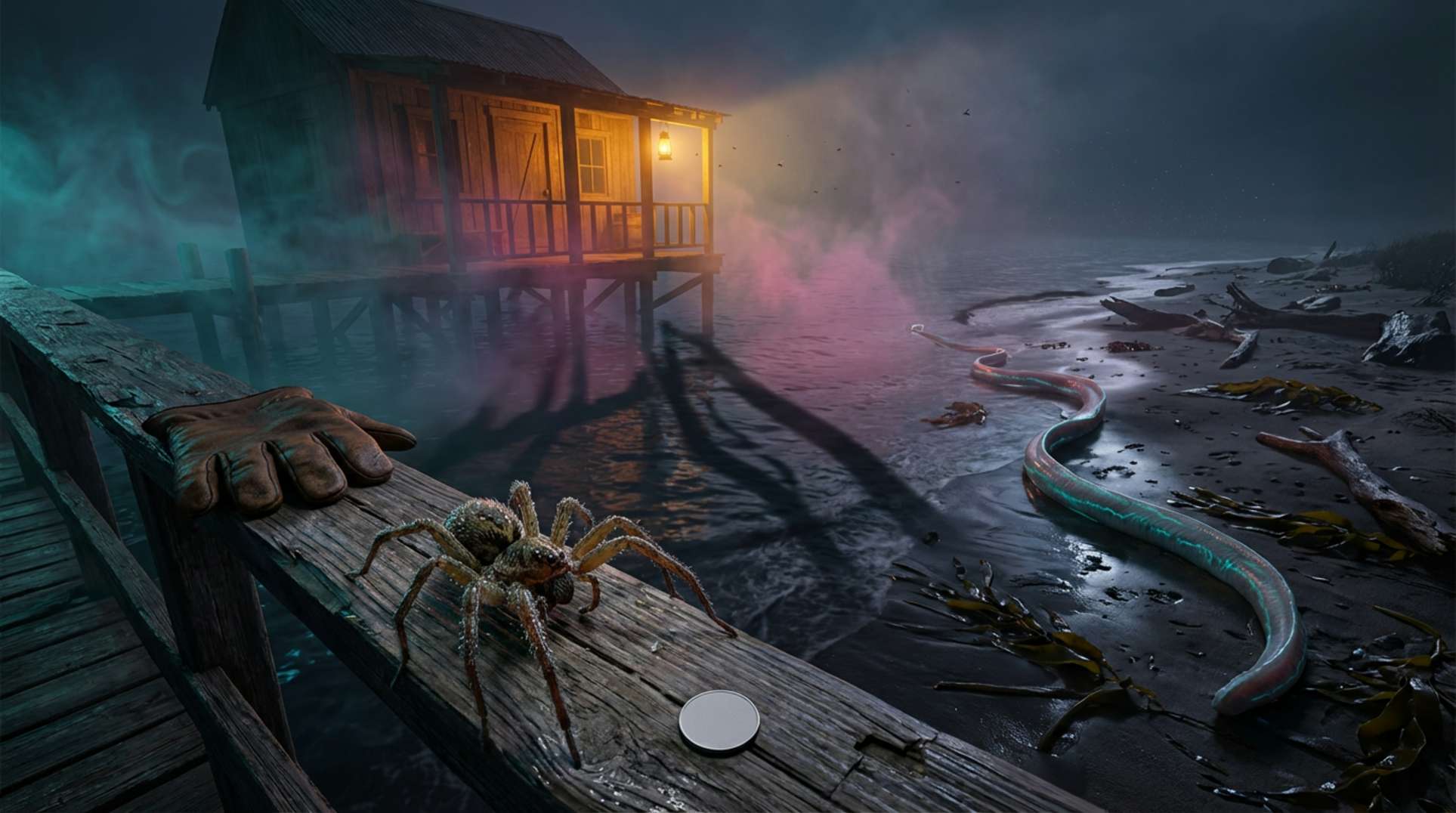
Late summer at a lakeside cabin: docks creak, dusk deepens, and suddenly a shadow or an unfamiliar shape stalls your step. On storm-swept coasts, waves withdraw to reveal slick, elongated forms on the sand. These settings concentrate reports: boathouses, porches, and strandlines where people spot ‘giant’ spiders or long worms. Short clips and forum posts amplify these moments, often without reliable scale or specimens, which makes them memorable but hard to validate.
What Witnesses and Local Storytellers Describe
People report ‘dock’ or ‘fishing’ spiders as hand-sized, and coastal witnesses describe ribbon-like or ‘sea caterpillar’ strandings after storms. Mosquito accounts are usually about swarms that feel overwhelming rather than single oversized insects. These narratives spread on social platforms, local blogs, and community groups; consistency in descriptions is notable, even when measurements are absent.
Timelines, Tracks, and Hard Data
Here are verifiable points: Dolomedes spiders commonly cited in inland and nearshore reports measure roughly 5–9 cm across. Ribbon worms such as Lineus longissimus are known to reach multiple meters (5–15 m verified; longer anecdotal reports exist). Polar gigantism has been recorded in some sea spiders and other polar invertebrates. Mosquito vectors like Aedes albopictus are expanding northward, tracked by public health agencies, but there is no evidence of substantial insect body-size increases. Surveillance for diseases such as West Nile virus in Canada has been ongoing since the early 2000s.
Advertisement
Official Story vs. Community Readings
Museums and entomologists generally identify the ‘giant’ land spiders as Dolomedes within known size ranges. Marine scientists explain long strandings through the biology of ribbon worms and report polar gigantism where applicable. Public health agencies monitor mosquito range and disease risk rather than sensational size claims. Communities, however, often interpret dramatic finds as extraordinary, and social media can leave questions unresolved when no specimen or scale is provided.
What do eyewitnesses typically report? Is there scientific evidence for truly giant insects in Canada? How do official explanations differ from community views? What should I do if I encounter something unusual? Why are mosquito risks changing in Canada?