Jeffrey Epstein Files: What Whitney Webb Gets Right
Politics
Jeffrey Epstein Files: What Whitney Webb Gets Right
\n Key Takeaways \n \n Whitney Webb has published a multi-part investigation alleging ties between Jeffrey Epstein, organized-crime actors, and intelligence services; her coverage appears at MintPress News and Unlimited…
Art Grindstone is the hard-nosed storyteller behind Unexplained.co, a veteran investigator whose life’s work sits at the crossroads of the paranormal, fringe science, and the shadows most people try not to look into. With decades spent chasing impossible stories — black-budget psychic programs, vanished Cold War experiments, desert rituals that sparked UFO waves, and the strange phenomena buried in America’s forgotten backroads — Art brings a rare combination of skepticism, awe, and journalistic precision. He’s not here to debunk. He’s not here to blindly believe. He follows the evidence wherever it leads — even when it leads someplace deeply uncomfortable. Known for his immersive, cinematic style and his ability to turn obscure research into gripping narrative, Art has built a devoted following across podcasts, long-form features, documentaries, and serialized investigations. His interviews are direct. His analysis is unflinching. His voice has become a staple in the modern paranormal renaissance — the guy people turn to when a story is too strange, too complex, or too dangerous for anyone else to touch. Off-mic, Art works with a distributed network of researchers, archivists, and field operatives who help surface the stories mainstream media ignores. On-mic, he transforms their findings into meticulous, high-impact reporting that refuses to insult the intelligence of true believers. His philosophy is simple: Take the phenomenon seriously. Treat the audience with respect. Tell the story as if the world depends on it — because sometimes it does. When Art Grindstone digs into a case, he isn’t just chasing a mystery. He’s tracing the fault lines of reality itself.
5 min · 1,184 words
In This Report(7)
\n
Key Takeaways
\n
\n
Whitney Webb has published a multi-part investigation alleging ties between Jeffrey Epstein, organized-crime actors, and intelligence services; her coverage appears at MintPress News and Unlimited Hangout, and she authored One Nation Under Blackmail.
\n
Primary public records exist, including the DOJ Epstein library, FBI Vault entry, court filings, and flight logs from sources like DocumentCloud’s release in USA v. Maxwell, documenting Epstein’s travel, contacts, and civil/criminal litigation.
\n
Official investigations, such as the DOJ OIG report, concluded Epstein died by suicide in MCC on August 10, 2019; mainstream summaries and later DOJ/FBI reviews reported no preserved ‘client list’ or evidence of murder.
\n
Key unresolved issues include the lack of publicly available contemporaneous agency employment or contract records tying Epstein as an asset or contractor; major parts of DOJ/FBI holdings remain redacted or unreleased; some witness claims, like those from Ari Ben-Menashe, lack independent documentary corroboration.
\n
\n
\n
A Quiet Network of Flights and Meeting Rooms
\n
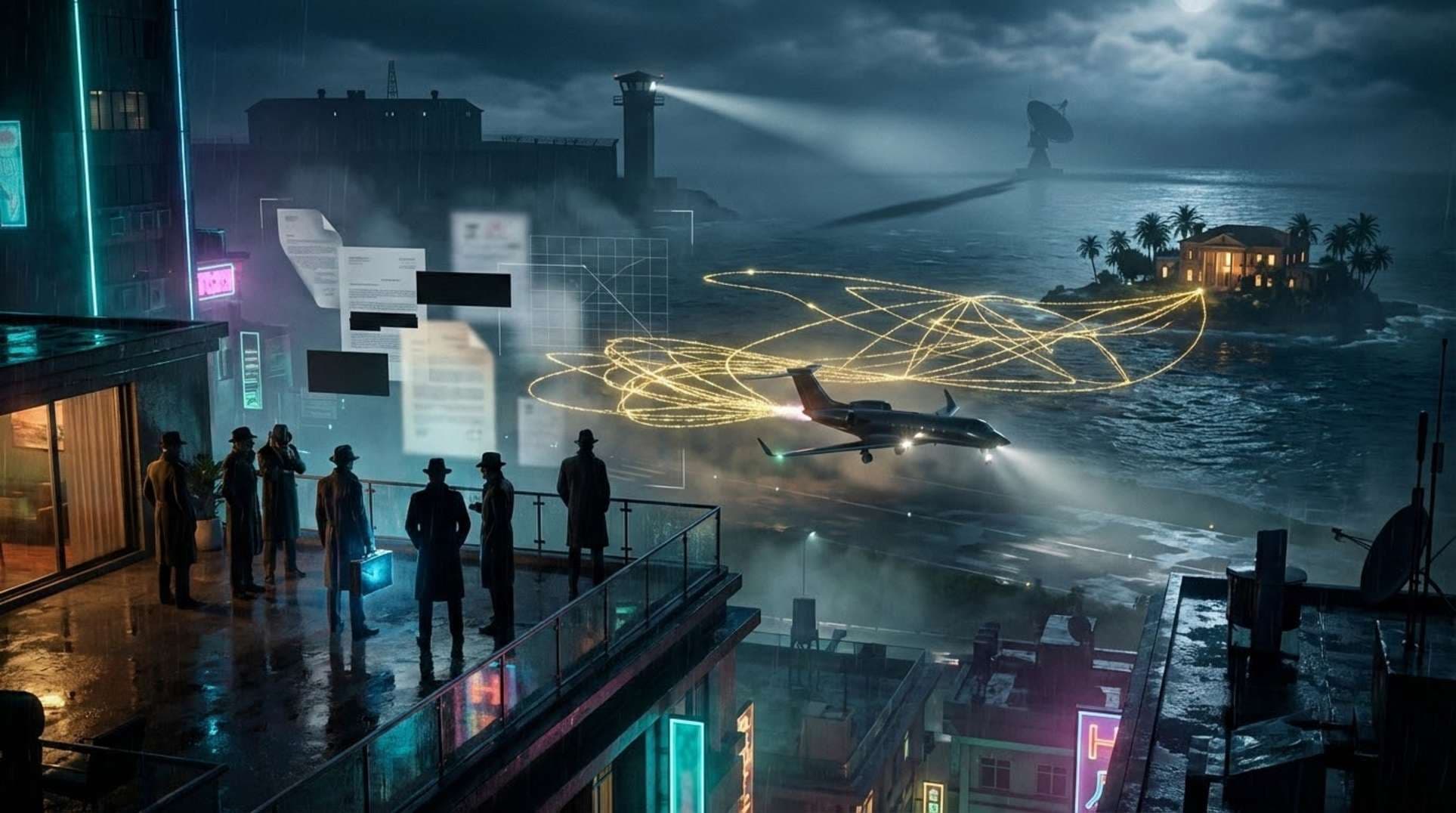
Picture this: a private jet slicing through the night sky, carrying figures from high finance and shadowy dealings to secluded islands. From the 1980s through 2019, Jeffrey Epstein’s world unfolded in these unassuming spaces—Manhattan townhouses hosting elite gatherings, planes ferrying passengers across borders. It all built to his arrest and death on August 10, 2019. The DOJ started phased releases of related materials, with the first noted on February 27, 2025, feeding into their online Epstein document library.
\n
These aren’t wild tales; they’re backed by tangible traces. Flight logs, photographs, court exhibits—they sketch the outlines of a network. Ordinary tools like jets and parties, twisted into something darker. Allegations of influence and abuse echo through these settings, leaving researchers sifting the remnants for patterns that refuse to fade.
\n
What Witnesses and Independent Researchers Claim
\n
Whitney Webb pulls no punches in her thesis: Epstein’s web of relationships points to intelligence agencies, possibly leveraged for blackmail. She draws from archival documents, interviews, and network maps to build her case, highlighting historical precedents of intelligence-run operations and connections to groups like the Mega Group.
\n
Figures like Ari Ben-Menashe, a former Israeli military intelligence official, step forward with claims. He says he met Epstein and Ghislaine Maxwell in the 1980s, tying them to Israeli intelligence. Webb amplifies these assertions, weaving them into her broader picture.
\n
\n What does Whitney Webb allege about Epstein’s connections?\n
\n
\n What evidence supports these claims?\n
\n
\n What do official investigations say about Epstein’s death?\n
\n
\n Are there unresolved issues in the Epstein case?\n
\n
\n How can readers access the primary documents?\n
\n
Advertisement
Frequently Asked Questions
What does Whitney Webb allege about Epstein's connections?
\n Whitney Webb alleges ties between Jeffrey Epstein, organized crime, and intelligence services, suggesting his network was used for blackmail. She supports this with archival documents, interviews, and network mapping, including historical precedents and claims from figures like Ari Ben-Menashe. \n
What evidence supports these claims?
\n Public records like flight logs, court filings, and DOJ/FBI releases document Epstein's travels and contacts. However, key claims like intelligence ties lack contemporaneous agency records, and some witness statements, such as Ben-Menashe's, need independent corroboration. \n
What do official investigations say about Epstein's death?
\n The DOJ OIG report concluded Epstein died by suicide by hanging on August 10, 2019, while in MCC custody. Reviews found no evidence of murder or a preserved 'client list,' though custodial failures were noted. \n
Are there unresolved issues in the Epstein case?
\n Yes, major gaps include redacted DOJ/FBI files, no public records tying Epstein to intelligence agencies as an asset, and unproven witness claims. Survivors and researchers demand fuller releases for accountability. \n
How can readers access the primary documents?
\n Check the DOJ Epstein library at https://www.justice.gov/epstein, the FBI Vault at https://vault.fbi.gov/jeffrey-epstein, and flight logs on DocumentCloud. These provide direct access to verifiable materials like court exhibits and reports. \n
Europe Has Been Quietly Tracking UAP Reports Since 2023
Documents reveal how the European Commission handled UAP images, what it promised to improve, and why Europe still lacks a public investigation office.
Aug 17, 2026 • 8 min read
Conspiracy Theories
The Sandia Quantum Scientist Who Vanished: Ingrid Lane’s Double Life and the Mystery No One Solves
Ingrid Lane lived a double life — bipolar musician to the world, Sandia National Laboratories quantum computing scientist underneath. Then she disappeared. The story is a fixation in high-strangeness communities.
May 14, 2026 • 7 min read
Space
A ‘Black Hole Star’ May Be Hiding Inside the Early Universe’s Red Dots
One crimson point in the infant universe is so bright that ordinary starlight cannot explain it. A new Nature study argues it may be a dense gas envelope powered from within by a growing black hole.
Aug 20, 2026 • 8 min read
\n
Survivors add their voices—hundreds of victims through civil suits and depositions, demanding transparency and accountability. Their testimonies form key parts of the public record. In our community, reactions vary: some researchers see plausibility in these network hypotheses, backed by circumstantial patterns. Others, including mainstream critics, call for caution, pointing to sourcing gaps and the need for stronger corroboration. We respect the split; it’s part of chasing the truth.
\n
Timelines, Tracks, and Hard Data
\n
Let’s get to the verifiable spine. The DOJ’s Epstein document library stands as the main hub: https://www.justice.gov/epstein. The FBI Vault entry offers searchable holdings: https://vault.fbi.gov/jeffrey-epstein. Flight logs from USA v. Maxwell are up on DocumentCloud: https://www.documentcloud.org/documents/21165424-epstein-flight-logs-released-in-usa-vs-maxwell/.
\n
The DOJ OIG report on Epstein’s custody and death, released in June 2023, concluded suicide by hanging. A milestone came with the DOJ’s first-phase public file release on February 27, 2025, via Attorney General Bondi’s press release. Court materials include photos, emails, and declarations, though redactions and seals limit access. Stats underline the scale: over 250 alleged victims referenced by DOJ, with hundreds of thousands of documents slated for review.
\n
\n\n
\n
Document/Source
\n
Date
\n
What it Shows
\n
Link/Reference
\n
\n
\n
\n
\n
DOJ Epstein Document Library
\n
Ongoing
\n
Collection of court filings, flight logs, and litigation documents
\n
https://www.justice.gov/epstein
\n
\n
\n
FBI Vault Entry
\n
Ongoing
\n
Searchable FBI holdings on Epstein
\n
https://vault.fbi.gov/jeffrey-epstein
\n
\n
\n
Flight Logs (USA v. Maxwell)
\n
Released 2021
\n
Travel patterns, e.g., flights to private islands with notable passengers
Conclusion of suicide by hanging; details custodial failures
\n
DOJ OIG Report on Epstein’s Death
\n
Advertisement
\n
\n
First-Phase File Release
\n
February 27, 2025
\n
Initial declassification of materials
\n
Attorney General Bondi Press Release
\n
\n
\n
\n
Official Story vs. What the Data Suggests
\n
Agencies draw firm lines. The DOJ OIG report states Epstein’s death was suicide. DOJ and FBI push for transparency in releases, protecting victim identities, with the FBI’s Vault entry as a key resource. Mainstream reports, like those from Axios, echo that no ‘client list’ exists in evidence, and murder theories lack support.
\n
Yet researchers like Webb see different shapes in the data. Travel patterns, social ties, and claims from witnesses like Ben-Menashe suggest intelligence-blackmail angles, drawing parallels to past operations. Gaps fuel this: no public records of Epstein as an agency asset, heavy redactions in files, unverified testimonies.
\n
Official rulings hold weight, but their boundaries deserve scrutiny. Where documents end, inference begins. We note the patterns without claiming certainty, highlighting where proof is thin.
\n
What It All Might Mean
\n
The firm ground: Epstein’s travels and contacts shine through in logs and exhibits. Agencies have released volumes, with OIG pinning death to suicide amid custodial lapses. These anchor the story.
\n
Shadows linger in the unknowns—no public ties to intelligence via contracts or payments, questions on Ben-Menashe’s claims, redactions hiding potential keys. Survivors push for more, and rightly so; this touches trust in systems and possible overlaps with exploitation.
\n
What would shift the view? A claim-by-claim map separating Webb’s documented points from inferences. Annotated logs and depositions could clarify. We’re on it—mapping sources next, annotating files. What evidence would settle these disputes for you?
\n
Frequently Asked Questions
\n
Whitney Webb alleges ties between Jeffrey Epstein, organized crime, and intelligence services, suggesting his network was used for blackmail. She supports this with archival documents, interviews, and network mapping, including historical precedents and claims from figures like Ari Ben-Menashe.
\n
\n
\n
Public records like flight logs, court filings, and DOJ/FBI releases document Epstein’s travels and contacts. However, key claims like intelligence ties lack contemporaneous agency records, and some witness statements, such as Ben-Menashe’s, need independent corroboration.
\n
\n
\n
The DOJ OIG report concluded Epstein died by suicide by hanging on August 10, 2019, while in MCC custody. Reviews found no evidence of murder or a preserved ‘client list,’ though custodial failures were noted.
\n
\n
\n
Yes, major gaps include redacted DOJ/FBI files, no public records tying Epstein to intelligence agencies as an asset, and unproven witness claims. Survivors and researchers demand fuller releases for accountability.
\n
\n
\n
Check the DOJ Epstein library at https://www.justice.gov/epstein, the FBI Vault at https://vault.fbi.gov/jeffrey-epstein, and flight logs on DocumentCloud. These provide direct access to verifiable materials like court exhibits and reports.
Art Grindstone is the hard-nosed storyteller behind Unexplained.co, a veteran investigator whose life’s work sits at the crossroads of the paranormal, fringe science, and the shadows most people try not to look into. With decades spent chasing impossible stories — black-budget psychic programs, vanished Cold War experiments, desert rituals that sparked UFO waves, and the strange phenomena buried in America’s forgotten backroads — Art brings a rare combination of skepticism, awe, and journalistic precision. He’s not here to debunk. He’s not here to blindly believe. He follows the evidence wherever it leads — even when it leads someplace deeply uncomfortable. Known for his immersive, cinematic style and his ability to turn obscure research into gripping narrative, Art has built a devoted following across podcasts, long-form features, documentaries, and serialized investigations. His interviews are direct. His analysis is unflinching. His voice has become a staple in the modern paranormal renaissance — the guy people turn to when a story is too strange, too complex, or too dangerous for anyone else to touch. Off-mic, Art works with a distributed network of researchers, archivists, and field operatives who help surface the stories mainstream media ignores. On-mic, he transforms their findings into meticulous, high-impact reporting that refuses to insult the intelligence of true believers. His philosophy is simple: Take the phenomenon seriously. Treat the audience with respect. Tell the story as if the world depends on it — because sometimes it does. When Art Grindstone digs into a case, he isn’t just chasing a mystery. He’s tracing the fault lines of reality itself.