Key Takeaways
- Mt. Etna is undergoing intense paroxysmal activity at its summit craters, with lava fountains, ash plumes, and short lava flows observed; INGV reports and mainstream press confirm these events from 24–27 December 2025; the main unresolved risk centers on whether this signals a shift to more sustained or explosive behavior.
- Campi Flegrei shows accelerating long-term unrest through ground uplift and increasing seismic swarms; peer-reviewed studies in Nature journals from 2024–2025, along with INGV bulletins, verify the intensification since 2021; the primary uncertainty is the potential for this bradyseism to culminate in an eruptive event.
- Marsili, the largest submarine volcano in the Tyrrhenian Sea, exhibits ongoing hydrothermal and seismo-volcanic activity with evidence of flank instability; INGV data and Bulletin of Volcanology papers document its Holocene explosive deposits and dimensions (70 km × 30 km, summit at 450–508 m below sea level); the key unresolved risk is the possibility of a large flank collapse generating tsunamis, hampered by limited monitoring.
A Silent Convoy Beneath the Dark Sea
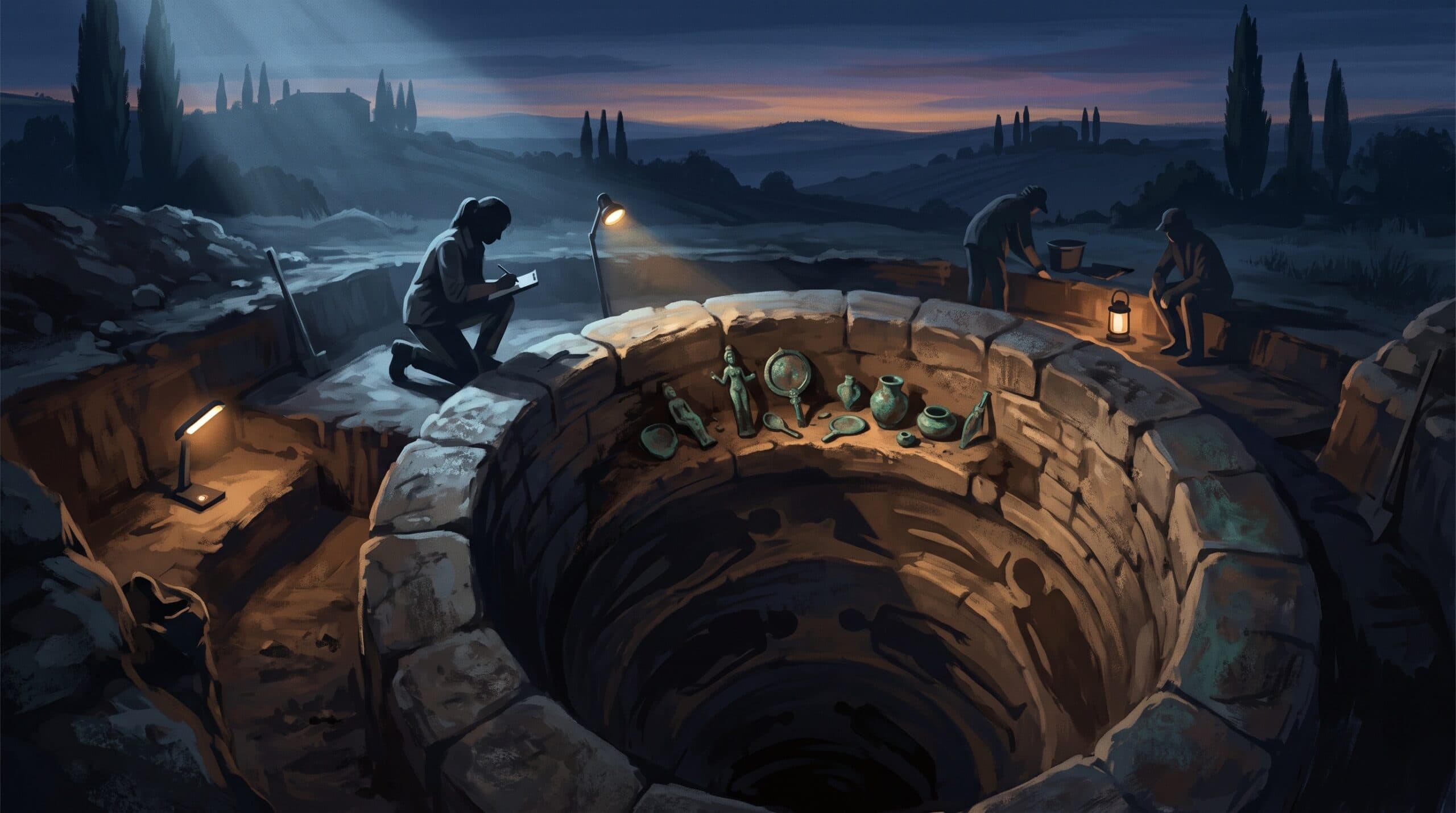
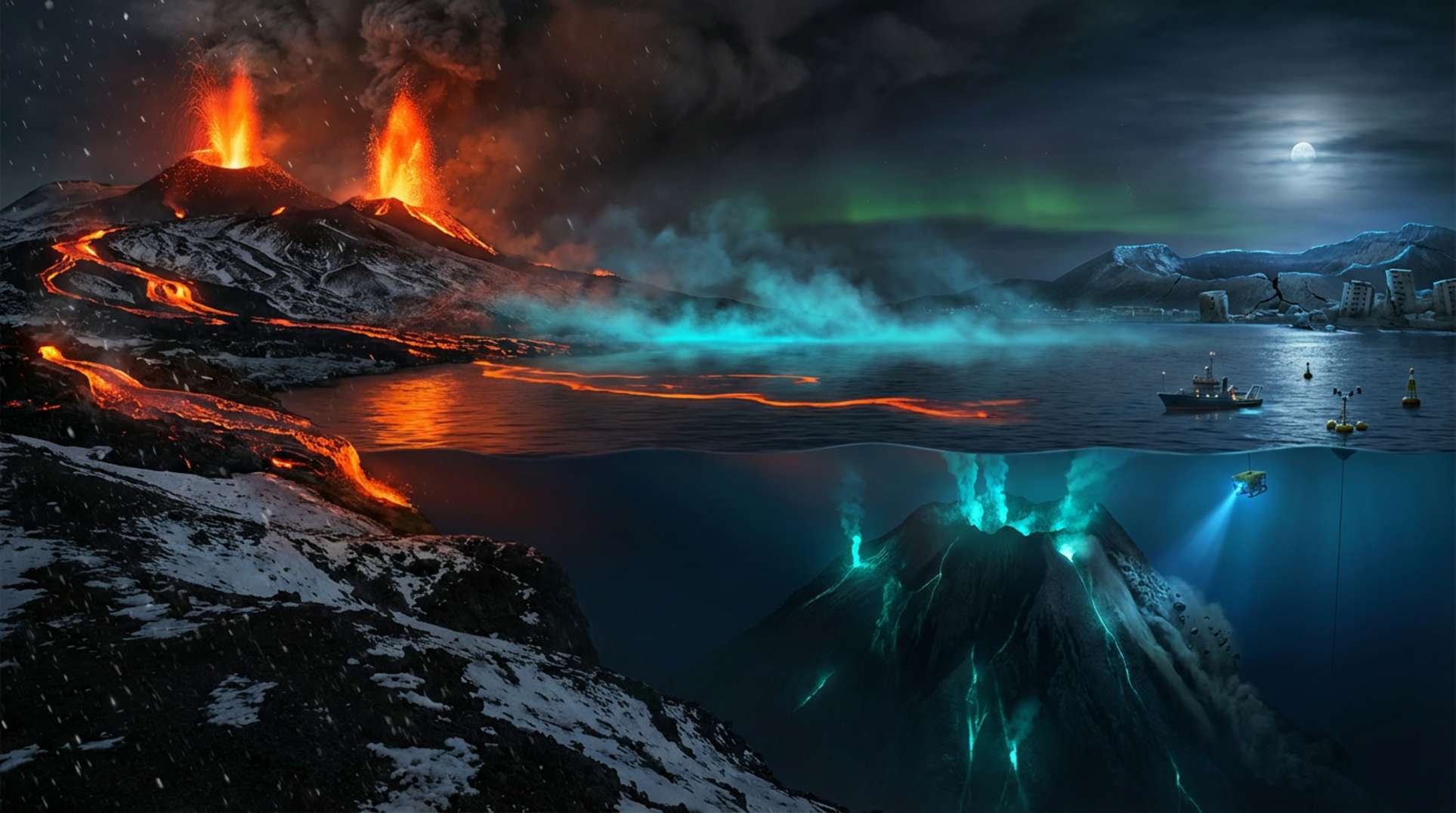
Imagine standing on the blackened slopes of Mt. Etna, ash falling like gritty snow under a rumbling sky, as lava fountains light up the night from the Northeast Crater and Voragine. It’s late December 2025, and the air carries the sharp tang of sulfur while tremors shake the ground. Shift your gaze westward across the Strait of Messina to the swollen caldera of Campi Flegrei, where the earth has been rising steadily since 2005, punctuated by seismic bursts that have grown more insistent since 2021. Now, drop your eyes to the sea between them—the calm, dark surface of the Tyrrhenian, hiding the massive form of Marsili below. No plumes rise here, no fountains erupt into view. Yet intermittent monitoring cruises by INGV have captured subtle signals: hydrothermal vents bubbling, seismic whispers, hints of unrest from a giant that remains mostly out of sight. Drone videos and ski-slope footage from Etna flood the news, republished by BBC and Washington Post, but Marsili offers no such spectacle—its story inferred from sparse data, a stark contrast to the visible fury onshore.
What Witnesses and Analysts Report
Eyewitness accounts from Etna’s December 2025 activity paint a vivid picture. Skiers on the slopes captured footage of lava fountains and ash plumes billowing from the summit craters, shared widely on social media and picked up by outlets like BBC, Washington Post, and VolcanoDiscovery. These firsthand videos show the raw power of the paroxysms, with glowing lava flows contrasting against the winter landscape. Turning to Marsili, local narratives circulating since 2010–2011 describe fears of catastrophic collapse and tsunamis, often drawing on early INGV warnings and amplified in media like a 2021 BBC feature. These stories reflect genuine community concern, portraying Marsili as a hidden threat capable of unleashing waves on nearby coasts. Independent voices, such as geophysics communicator Stefan Burns and various online analysts, argue that Marsili is under-studied and potentially more hazardous than acknowledged, sometimes weaving it into a larger narrative of Mediterranean unrest linking Etna and Campi Flegrei as signs of a regional awakening. On the other side, professional scientists and skeptics in online forums emphasize that while Marsili’s activity is real, claims of direct linkages or imminent disaster stretch beyond current evidence, treating these as interpretive leaps rather than confirmed observations.
Timelines, Tracks, and Hard Data
The record begins with Mt. Etna’s paroxysmal activity around 24–27 December 2025, involving summit craters like the Northeast Crater, with lava fountains, ash plumes, and short flows documented in INGV reports and covered by BBC and Washington Post. Campi Flegrei’s unrest traces back to accelerating uplift and seismicity since about 2005, with burst-like swarms intensifying from 2021 onward, as detailed in peer-reviewed papers in Nature Communications Earth & Environment (2024) and Nature Communications (2025), plus INGV bulletins. For Marsili, dimensions stand at approximately 70 km long by 30 km wide, with the summit at 450–508 meters below sea level and the base on a 3,400-meter plain, per INGV and VolcanoDiscovery. Geological evidence from Iezzi et al. in Gondwana Research (2013/2014) dates tephra layers to Holocene explosive submarine eruptions, a few thousand years before present. Monitoring by INGV and collaborators has logged persistent low-level seismo-volcanic signals, hydrothermal activity, and flank instability, though coverage relies on intermittent cruises rather than continuous setups. Tsunami modeling in Bulletin of Volcanology (2021) and related studies explores scenarios from large flank failures, but results hinge on variables like collapse volume, rate, and bathymetry, introducing significant uncertainties.
| Feature | Value/Source |
|---|---|
| Marsili Footprint | ~70 km × 30 km (INGV; VolcanoDiscovery) |
| Marsili Summit Depth | ~450–508 m below sea level (INGV; VolcanoDiscovery) |
| Marsili Tephra Age Range | Holocene, a few thousand years BP (Iezzi et al., Gondwana Research 2013/2014) |
| Etna Activity Date | 24–27 December 2025 (INGV reports; BBC; Washington Post) |
| Campi Flegrei Trend | Accelerating uplift and seismicity since ~2005, intensification since ~2021 (Nature Communications Earth & Environment 2024; Nature Communications 2025; INGV) |
| Monitoring Status | Limited continuous coverage for Marsili (intermittent cruises, INGVs); robust for Etna and Campi Flegrei |
Official Story vs. What the Data Suggests
INGV describes Marsili as the largest active submarine volcano in the Mediterranean, with its 70×30 km footprint, summit at 450–508 meters below sea level, and evidence of seismo-volcanic and hydrothermal activity plus flank instability—they stress the need for ongoing monitoring but avoid labeling it a ‘supervolcano’ in the traditional sense. Peer-reviewed work, including Iezzi et al. and Bulletin of Volcanology studies, acknowledges the Holocene explosive record and models potential tsunamis from flank collapses, yet highlights uncertainties in collapse scale and dynamics. In contrast, community interpretations and local media often portray Marsili as a supervolcano on the brink, connecting it to Etna’s December 2025 paroxysms and Campi Flegrei’s swarms in a unified crisis narrative that outpaces the evidence. A critical gap persists: no strong geophysical data establishes a short-term causal chain between these sites, with literature viewing them as regionally related but not proven triggers. Official positions call for caution, research, and preparation, which aligns with public concerns without endorsing the more dramatic claims.
What It All Might Mean
Marsili stands as a massive, active submarine volcano with confirmed Holocene explosive deposits, ongoing seismic and hydrothermal signals, and flank instability—meanwhile, Etna’s late-December 2025 activity and Campi Flegrei’s escalating unrest demand attention on their own merits, backed by INGV data and peer-reviewed analyses. Open questions loom large: does Marsili truly qualify as a supervolcano by metrics like magma volume or VEI, and what are the real odds of a rapid flank collapse producing tsunamis? For residents and planners, this underscores the value of enhanced ocean-bottom monitoring through seismometers, hydrophones, and repeat surveys, alongside transparent communication that addresses fears without exaggeration. Researchers should prioritize data on tephra volumes from Iezzi et al., modeled collapse scenarios, and Campi Flegrei uplift patterns to pinpoint monitoring gaps. In the end, the worry is understandable—these volcanoes remind us of forces beyond daily view—but the science points to vigilance over panic, leaving room for discoveries that could reshape the picture.
Frequently Asked Questions
Mt. Etna experienced marked paroxysmal activity from its summit craters, including lava fountains, ash plumes, and short lava flows between 24–27 December 2025. This was documented by INGV reports, eyewitness footage from skiers and drones, and republished by mainstream outlets like BBC and Washington Post.
INGV and peer-reviewed sources do not classify Marsili as a supervolcano in the strict sense, despite its large size and Holocene explosive history. Community narratives sometimes use the term, but official descriptions emphasize its activity and instability without endorsing that label.
While these sites are regionally related in the Mediterranean volcanic arc, no robust geophysical data shows a short-term causal link between Etna’s 2025 activity, Campi Flegrei’s unrest, and Marsili’s signals. Independent analysts suggest broader patterns, but professionals note the absence of proven contemporaneous triggers.
Monitoring relies on intermittent cruises and deployments by INGV and collaborators, capturing seismo-volcanic signals, hydrothermal activity, and flank instability. This is less comprehensive than onshore systems for Etna and Campi Flegrei, highlighting a gap in continuous ocean-bottom coverage.
Peer-reviewed models indicate that a large flank collapse could generate tsunamis, but outcomes depend on variables like volume and speed, introducing high uncertainty. Official recommendations focus on improved monitoring and preparation rather than predicting imminent events.