The Unexplained Company Logo
Max Headroom TV Hijack: What Really Hit Chicago That Night

Max Headroom TV Hijack: What Really Hit Chicago That Night

Art Grindstone

December 31, 2025
Cataclysm Survival Briefing — Access Briefing Now

Key Takeaways

  • On November 22, 1987, two Chicago TV stations—WGN-TV (Channel 9) and WTTW (Channel 11/PBS Chicago)—faced signal hijacks during evening broadcasts, disrupting normal programming with bizarre intrusions.
  • Verifiable evidence includes viewer-recorded tapes of the longer WTTW incident, FCC and FBI technical analyses with enhanced frames, and reports confirming a microwave link override as the likely method.
  • Unresolved questions linger: who orchestrated the hijacks, their exact methods and equipment, the geographic origin, and why no suspects were ever identified or charged despite investigations.

A Night of Static and a Laughing Mask

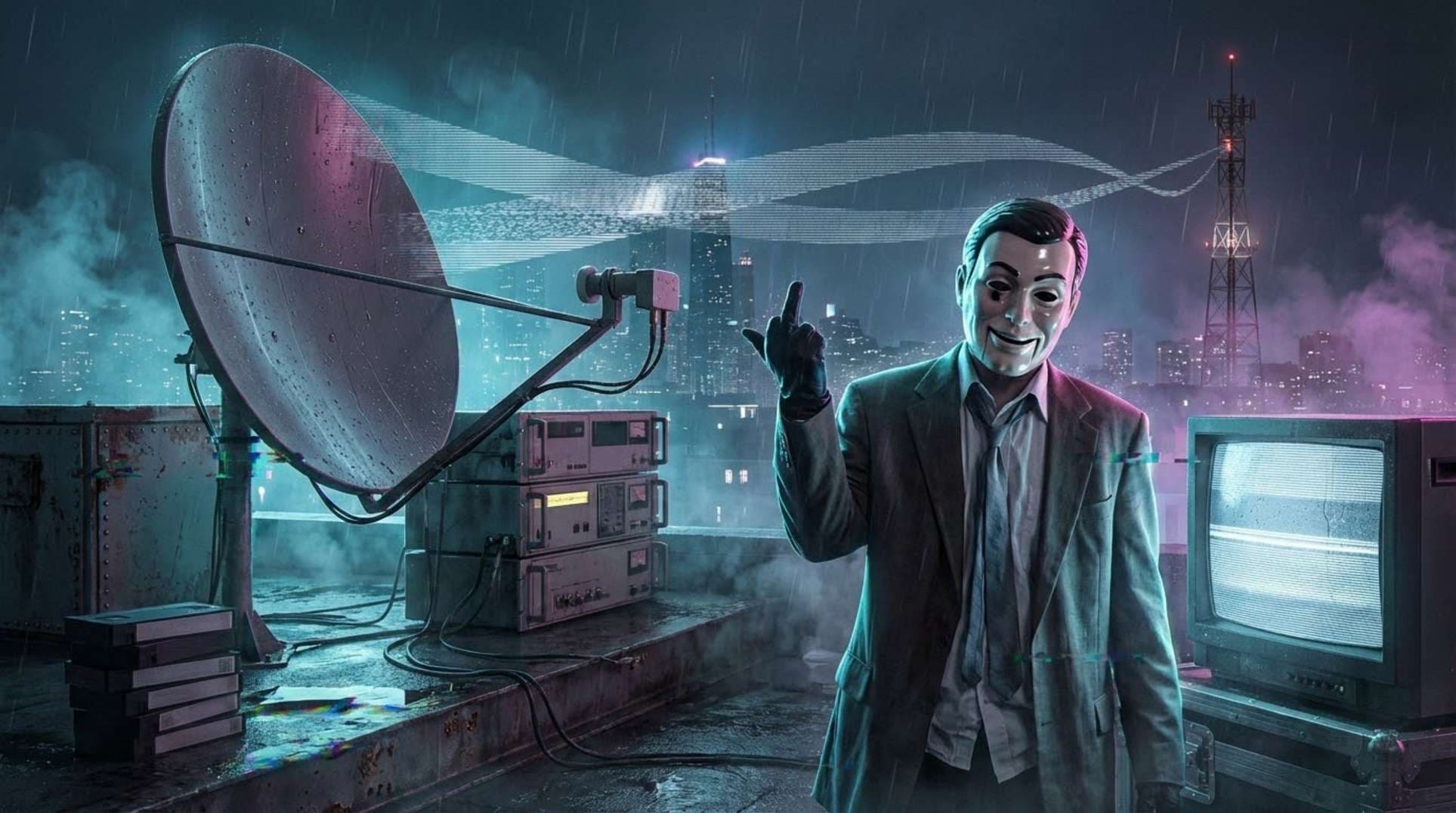
Picture Chicago on November 22, 1987. Families settle in for evening TV—news on WGN, sci-fi on PBS. The city hums under a cold autumn sky, VCRs whirring in living rooms. Then, at around 9:14 p.m., static tears through WGN’s newscast. A figure in a Max Headroom mask appears, audio garbled, backdrop spinning like corrugated metal. It’s brief, disorienting. Two hours later, during Doctor Who on WTTW, it happens again—longer this time, nearly 90 seconds of insults, crude gestures, and distortion. Viewers hit record, capturing the chaos. Engineers scramble, but the intrusion shakes faith in the broadcast system. What if your screen isn’t yours anymore?

What Witnesses and Analysts Report

Viewers who saw it live describe a masked performer mocking commercials, shouting obscenities, set against a rotating metal backdrop with warped audio. Station staff at WGN acted fast, killing the feed in 15 to 30 seconds. WTTW’s team struggled longer, allowing the extended Doctor Who hijack to play out and get taped by home recorders. Over the years, online communities—Reddit threads, podcasts, essays—have picked it apart. Some point to insider knowledge of station schedules; others speculate on a lone hacker with microwave gear. Researchers like Reddit user ‘bpoag’ have mapped potential transmission sites, drawing on geography and signal paths. These voices aren’t outliers; they’re dedicated analysts spotting patterns officials overlooked.

Timelines, Tracks, and Hard Data

The events unfolded precisely on November 22, 1987, hitting two stations in sequence. WGN’s intrusion struck during the 9:00 p.m. newscast at about 9:14 p.m., lasting 15 to 30 seconds. WTTW’s came later, around 11:15 to 11:20 p.m. amid Doctor Who, running roughly 90 seconds and preserved on multiple VCR tapes. The FCC’s Field Operations Bureau and FBI’s Chicago office led the probe, enhancing frames and analyzing forensics. Reports highlighted a microwave studio-to-transmitter link override—line-of-sight, high-power, tough to pull off in 1987. Surviving recordings from WTTW fueled the official work.

DateStationApprox. TimeReported DurationSurviving RecordingsSource
November 22, 1987WGN-TV (Channel 9)~9:14 p.m.~15–30 secondsNone widely availableTribune reporting, FCC/FBI FOIA
November 22, 1987WTTW (Channel 11)~11:15–11:20 p.m.~90 secondsMultiple viewer VCR tapesWTTW reporting, FCC/FBI FOIA

Official Story vs. What the Data Suggests

Authorities from the FCC and FBI launched investigations, releasing FOIA documents with enhanced frames and notes on possible transmitter overrides. They stressed the technical hurdles—no easy feat without overpowering secure microwave links—and broadcasters echoed this, detailing how they regained control. No arrests followed, and no origin was publicly named. Yet researchers in radio enthusiast circles push back, arguing 1987 tech allowed savvy hobbyists to jury-rig equipment for such a stunt. Some theories invoke insider help or exploited vulnerabilities. Both sides nod to the microwave method as fitting the facts, but officials highlight improbability without proof of suspects, while enthusiasts see room for determined improvisation. The gap leaves space for doubt.

What It All Might Mean

We know two hijacks hit Chicago stations that night in 1987, with WTTW footage surviving and agencies conducting frame enhancements and forensics—yet no one faced charges. Questions persist: Where exactly did the signals originate? Who pulled it off, and for what reason—pure prank, a grudge, or a tech demo? Could hobbyists really assemble the gear back then? Are there sealed records still out there? This case endures because it exposes broadcast weak spots, tests trust in institutions, and fuels a tradition of media hacks. In a world of partial clues, communities build their own narratives. It reminds us to question secure systems and embrace the pull of unsolved puzzles—keep watching, keep analyzing.

Frequently Asked Questions

Yes, on November 22, 1987, two Chicago stations—WGN-TV and WTTW—experienced signal intrusions. Viewers reported and recorded the events, and official investigations by the FCC and FBI confirmed them through technical analysis and preserved tapes.

Surviving VCR recordings of the WTTW hijack show the masked figure and distorted audio. FCC and FBI documents include enhanced frames and forensics pointing to a microwave link override, supported by station reports and community analyses.

The FCC and FBI investigated, producing technical reports and attempting to trace the signal’s origin. Despite their efforts, including frame enhancements, no suspects were identified or charged, leaving the case unsolved.

It highlights vulnerabilities in broadcast infrastructure and the challenges of attribution before modern forensics. The incident also reflects cultural interest in media pranks and how communities interpret incomplete data.

No arrests were made, and the perpetrators remain unidentified. Investigations concluded without public attribution, fueling ongoing speculation among researchers.