Montauk Project: What The Declassified Files Miss | Unexplained
Mind Control
Montauk Project: What The Declassified Files Miss
Key Takeaways The dossier supports claims from witnesses like Preston B. Nichols, Al Bielek, Duncan Cameron, and Stewart Swerdlow, who describe experiments at Camp Hero involving a ‘Montauk Chair’ for mind-control…
Art Grindstone is the hard-nosed storyteller behind Unexplained.co, a veteran investigator whose life’s work sits at the crossroads of the paranormal, fringe science, and the shadows most people try not to look into. With decades spent chasing impossible stories — black-budget psychic programs, vanished Cold War experiments, desert rituals that sparked UFO waves, and the strange phenomena buried in America’s forgotten backroads — Art brings a rare combination of skepticism, awe, and journalistic precision. He’s not here to debunk. He’s not here to blindly believe. He follows the evidence wherever it leads — even when it leads someplace deeply uncomfortable. Known for his immersive, cinematic style and his ability to turn obscure research into gripping narrative, Art has built a devoted following across podcasts, long-form features, documentaries, and serialized investigations. His interviews are direct. His analysis is unflinching. His voice has become a staple in the modern paranormal renaissance — the guy people turn to when a story is too strange, too complex, or too dangerous for anyone else to touch. Off-mic, Art works with a distributed network of researchers, archivists, and field operatives who help surface the stories mainstream media ignores. On-mic, he transforms their findings into meticulous, high-impact reporting that refuses to insult the intelligence of true believers. His philosophy is simple: Take the phenomenon seriously. Treat the audience with respect. Tell the story as if the world depends on it — because sometimes it does. When Art Grindstone digs into a case, he isn’t just chasing a mystery. He’s tracing the fault lines of reality itself.
5 min · 1,116 words
In This Report(7)
Key Takeaways
The dossier supports claims from witnesses like Preston B. Nichols, Al Bielek, Duncan Cameron, and Stewart Swerdlow, who describe experiments at Camp Hero involving a ‘Montauk Chair’ for mind-control amplification, time travel portals, and encounters with non-human creatures.
Documented elements include the real existence of Montauk Air Force Station (Camp Hero), decommissioned in 1981, and Cold War programs like MKULTRA that explored drugs, hypnosis, and sensory deprivation—though no public DoD records confirm the more exotic aspects.
Open questions remain around repressed memories, potential classified activities, and the lack of corroborating archives, leaving room for further investigation into whether these stories reflect hidden programs or cultural myth-making.
A Coastline That Keeps Secrets
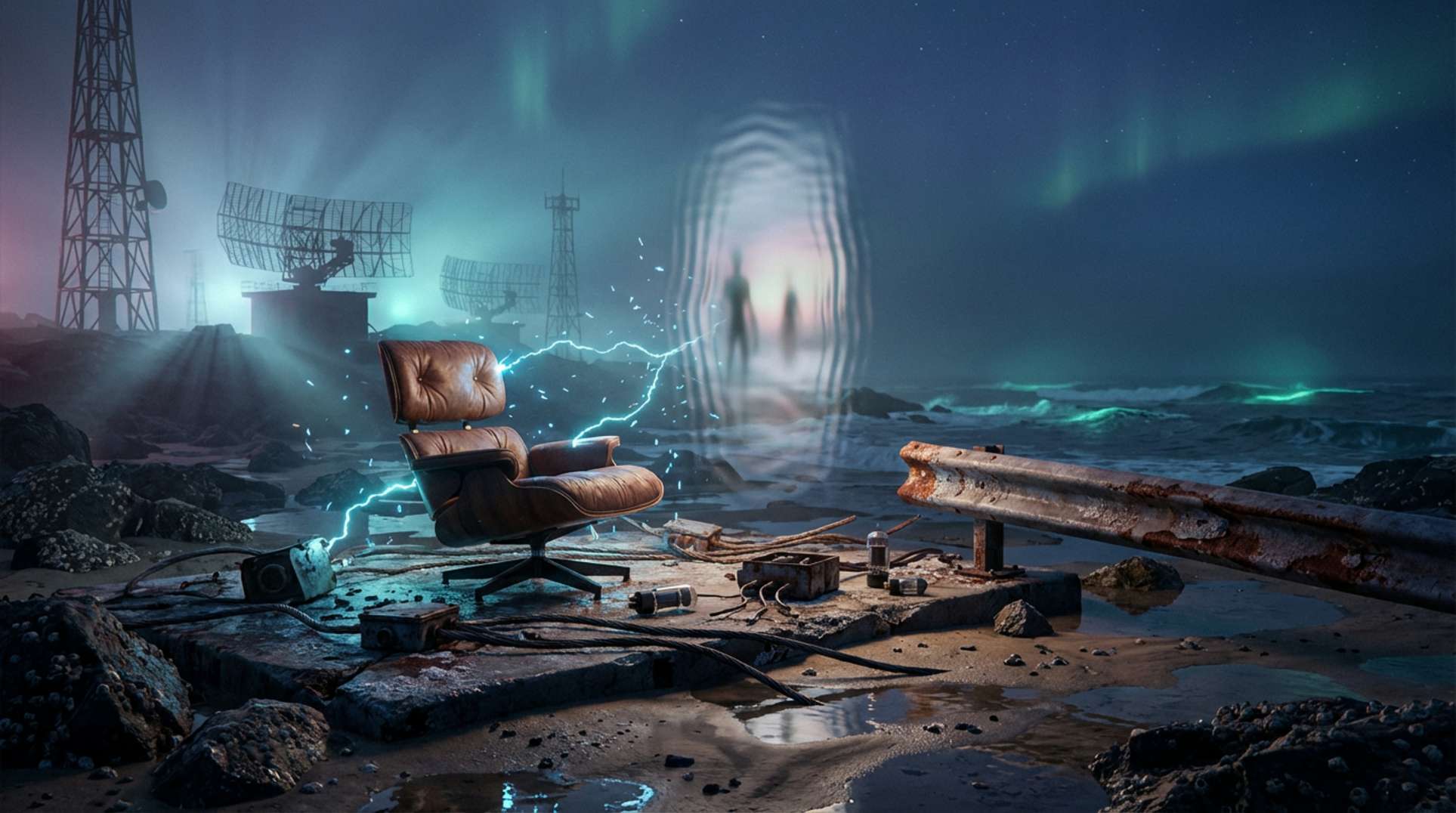
As twilight settles over Montauk Point, the wind carries the sharp tang of salt mixed with the faint ozone of rusted electronics. Abandoned radar towers loom like forgotten sentinels against the darkening sky, their skeletal frames whispering of a bygone era when Cold War tensions hummed through underground bunkers. Here at the eastern tip of Long Island, Camp Hero State Park now overlays what was once Montauk Air Force Station—a coastal defense outpost decommissioned in 1981. Locals have long traded stories of strange lights and shadowy operations, blending the site’s real military history with rumors that refuse to fade. This backdrop of secrecy and isolation fueled narratives that seeped into popular culture, echoing in works like Stranger Things, where science, memory, and the unknown collide in ways that demand we question what lingers beneath the surface.
What Witnesses and Analysts Report
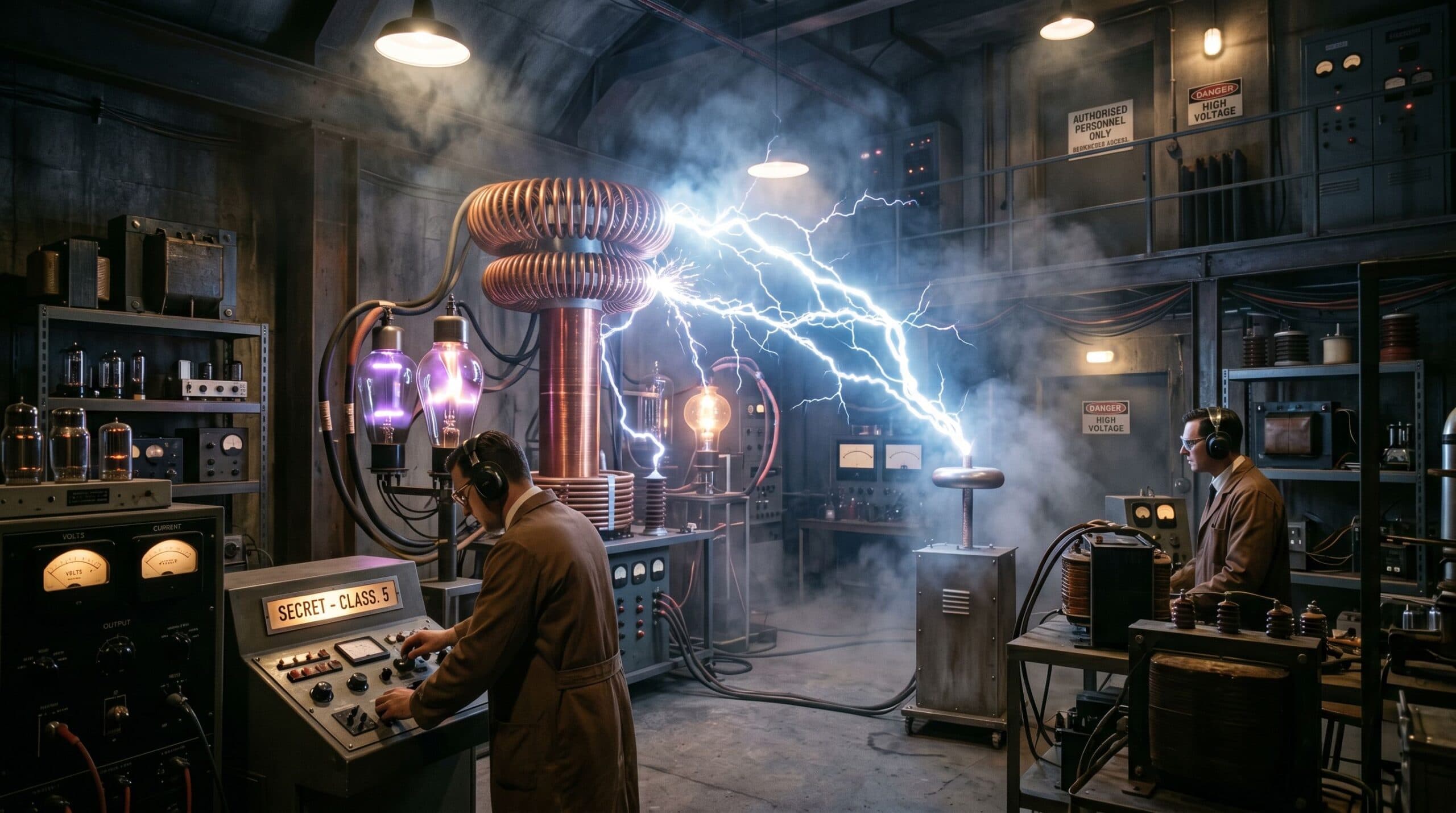
Primary voices in the Montauk narrative come from figures like Preston Nichols, Al Bielek, Duncan Cameron, and Stewart Swerdlow, many of whom accessed their accounts through hypnosis or regression therapy, surfacing what they describe as repressed memories. These testimonies center on a device called the Montauk Chair, said to amplify psychic abilities via electromagnetic fields from the base’s radar systems. Witnesses recount experiments on young subjects, remote viewing sessions, accidental rifts in time creating portals, and interactions with inter-dimensional beings—motifs that repeat across their stories.
Over time, these claims spread through Nichols and Peter Moon’s 1992 book, The Montauk Project: Experiments in Time, as well as documentaries like Montauk Chronicles and discussions on platforms such as Metaphysical.tv. Community analysts see these overlaps as potential signs of corroboration, though some note how books, films, and local tales might shape or reinforce the details. We treat these as firsthand reports deserving scrutiny, separating core eyewitness elements from later expansions in the broader conversation.
documented proof of the Montauk experiments?
How did the Montauk story influence Stranger Things?
What are the main witnesses saying?
How can we investigate this further?
Why do official records not match the claims?
Frequently Asked Questions
Is there any documented proof of the Montauk experiments?
Public archives confirm Camp Hero's role as a radar base and Cold War programs like MKULTRA that tested mind control methods, but no DoD records support claims of time travel, portals, or non-human entities. Witness testimonies provide the core narrative, yet gaps in destroyed files leave room for further archival searches.
How did the Montauk story influence Stranger Things?
The show's creators originally pitched it as 'Montauk' and drew from Long Island lore, including Montauk Project tales of psychic experiments and portals. This cultural echo highlights how local rumors shaped the series' themes of government secrecy and superpowers.
What are the main witnesses saying?
Figures like Preston Nichols, Al Bielek, Duncan Cameron, and Stewart Swerdlow report recovered memories of a 'Montauk Chair' amplifying psychic abilities, experiments on youth, time portals, and encounters with inter-dimensional beings. These accounts, often accessed via hypnosis, repeat similar motifs but lack independent documentary corroboration.
How can we investigate this further?
Target FOIA requests for 1970s–1980s Camp Hero contracts, payroll, and contractor logs. Also, review local building permits, harbor manifests, and interview surviving personnel or families to uncover potential evidence of unusual activities.
Why do official records not match the claims?
Agencies maintain Camp Hero was a standard defense site, with MKULTRA files documenting hypnosis and drugs but not exotic tech. Destroyed records and classification could explain discrepancies, or the stories might stem from mythologized memories influenced by media and lore.
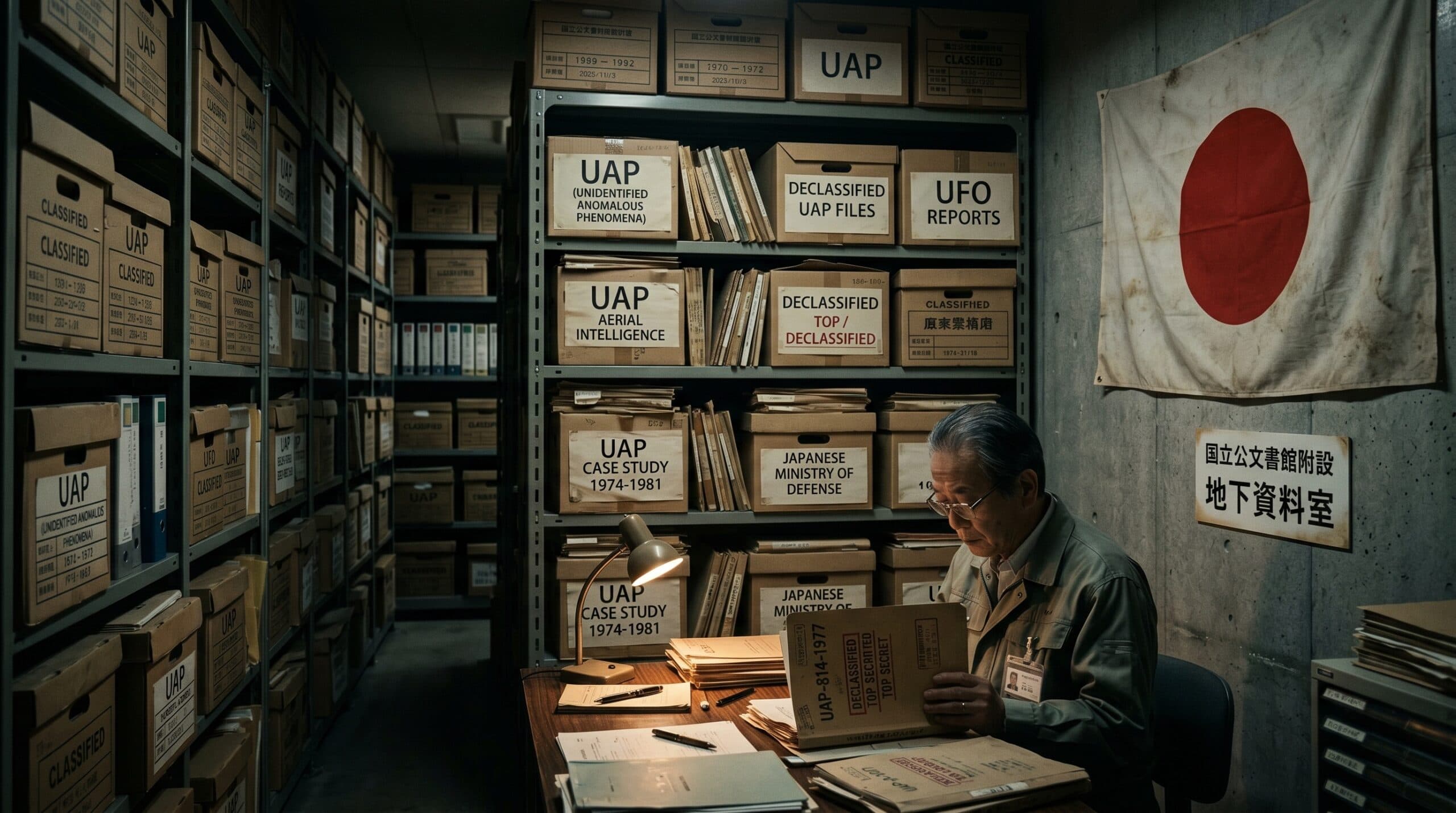
Japan Just Confirmed It Has UAP Footage, and Is Analyzing Pentagon Files Near Its Borders
Japan’s formal entry into the UAP transparency wave signals an international domino effect. What the country knows about UAP encounters near Japanese territory and why it matters now.
May 14, 2026 • 5 min read
Conspiracy Theories
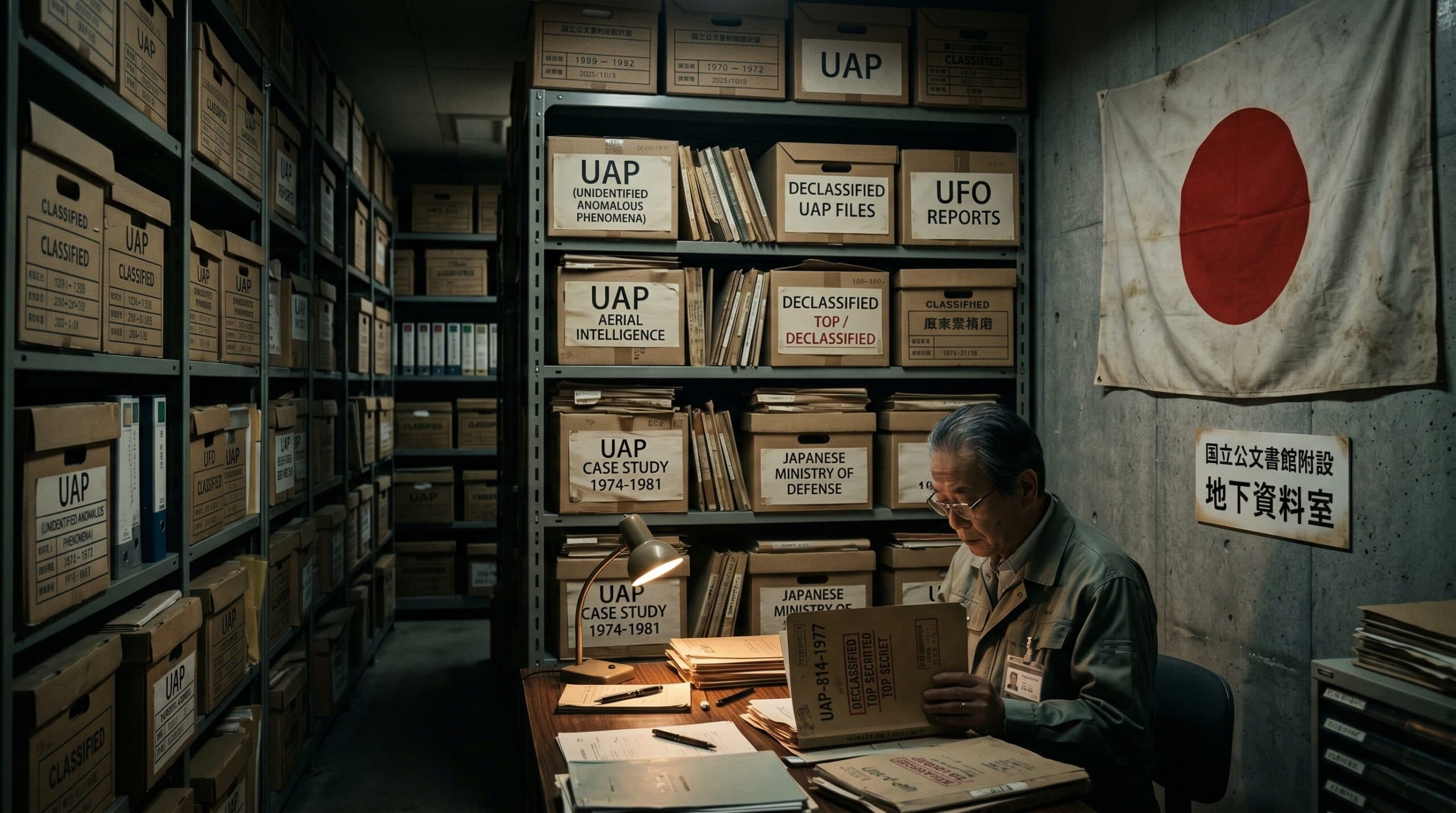
Japan Just Confirmed It Has UAP Footage — and Is Analyzing Pentagon Files Near Its Borders
Japan’s formal entry into the UAP transparency wave signals an international domino effect. What the country knows about UAP encounters near Japanese territory and why it matters now.
May 13, 2026 • 5 min read
Ancient Civilizations
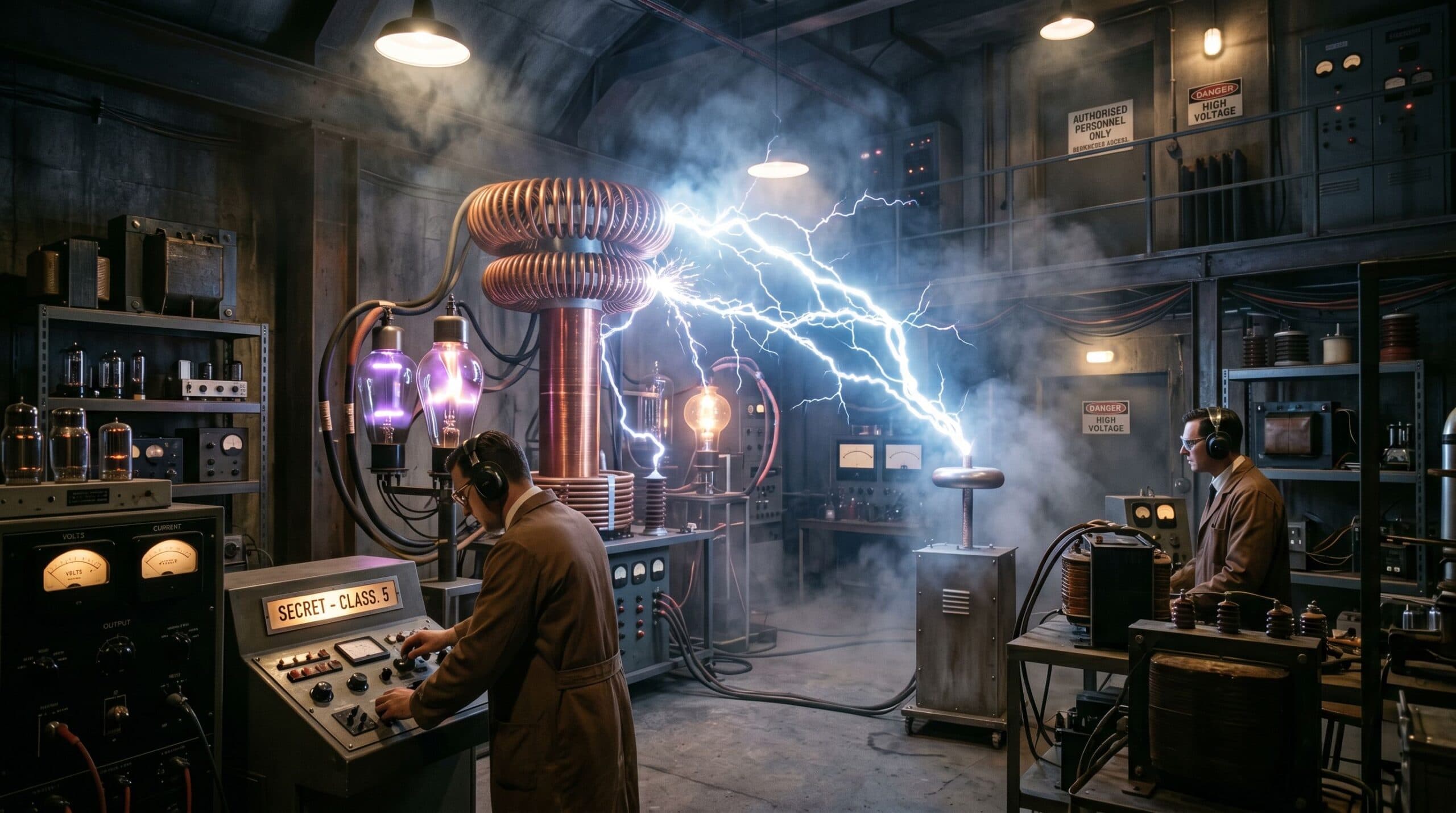
1957 Electrogravitics Secret: The Classified Research Program Whose Watchers Have All ‘Gone’
A viral essay claims that classified electrogravitics research made real progress in the 1950s — and that everyone who knew the truth about it has since disappeared from the public record. The story is spreading through high-strangeness forums.
May 13, 2026 • 7 min read
Advertisement
Timelines, Tracks, and Hard Data
To ground the story, here’s a compact table of verifiable milestones and facts, drawn from public records and declassified sources:
Key Data Point
Details
Source
Decommission Date
1981
Official site histories / public records
First Montauk Book Publication
1992 (The Montauk Project: Experiments in Time by Preston B. Nichols & Peter Moon)
Book publication records
MKULTRA Active Years
Roughly 1950s–1964
Declassified CIA documents
Primary Witnesses
Preston Nichols, Al Bielek, Duncan Cameron, Stewart Swerdlow
Testimonies in books and documentaries
Current Site Status
Camp Hero State Park
New York State Parks records
These points highlight strengths like confirmed Cold War programs and the site’s history, but gaps persist—many MKULTRA files were destroyed in 1973, and no public DoD documents link Camp Hero to portals or time experiments. Mainstream checks view the claims as unproven, yet the cultural ripple, including Stranger Things’ original ‘Montauk’ pitch, shows their staying power. To advance, consider this checklist: file FOIA requests for 1970s–1980s Camp Hero contracts and payroll; review local building permits and harbor manifests for signs of large subterranean work; search Brookhaven Lab or contractor records; and scan archives for vendor deliveries that might indicate unusual activity.
Official Story vs. What the Data Suggests
Official accounts describe Camp Hero as a standard radar and defense installation, with no DoD records acknowledging anything beyond routine operations before its 1981 closure. In contrast, witnesses tie the site’s hardware to amplified mind control, drawing parallels to documented CIA efforts in MKULTRA, ARTICHOKE, and BLUEBIRD, which explored hypnosis and sensory manipulation but stopped short of temporal or inter-dimensional tech.
Community perspectives extend these threads, suggesting Montauk’s radar could have boosted psychic experiments into uncharted territory. Possible frames include a secret program with earthly aims that got mythologized over time, shared memories influenced by hypnosis and media, or true anomalies needing deeper digs into payrolls, permits, and logs to test the claims.
What It All Might Mean
At its core, Camp Hero’s existence and 1981 decommissioning are solid, as is the 1992 book that launched the Montauk tale and shaped shows like Stranger Things. We know U.S. agencies chased behavior control during the Cold War, with file destructions in 1973 creating blind spots. Yet the wilder elements—portals, creatures, time shifts—lack backing from available records, making contractor and permit logs prime targets for clarity.
This matters because it probes the edges of government secrecy, the power of personal stories, and how they blend into myths that resonate today. For next steps, pursue those FOIA requests on contracts and payroll, check local manifests, interview former staff or families, and talk to experts on memory recovery. Readers, sift the evidence yourself—what patterns emerge when you line up the facts against the shadows?
Public archives confirm Camp Hero’s role as a radar base and Cold War programs like MKULTRA that tested mind control methods, but no DoD records support claims of time travel, portals, or non-human entities. Witness testimonies provide the core narrative, yet gaps in destroyed files leave room for further archival searches.
Advertisement
The show’s creators originally pitched it as ‘Montauk’ and drew from Long Island lore, including Montauk Project tales of psychic experiments and portals. This cultural echo highlights how local rumors shaped the series’ themes of government secrecy and superpowers.
Figures like Preston Nichols, Al Bielek, Duncan Cameron, and Stewart Swerdlow report recovered memories of a ‘Montauk Chair’ amplifying psychic abilities, experiments on youth, time portals, and encounters with inter-dimensional beings. These accounts, often accessed via hypnosis, repeat similar motifs but lack independent documentary corroboration.
Target FOIA requests for 1970s–1980s Camp Hero contracts, payroll, and contractor logs. Also, review local building permits, harbor manifests, and interview surviving personnel or families to uncover potential evidence of unusual activities.
Agencies maintain Camp Hero was a standard defense site, with MKULTRA files documenting hypnosis and drugs but not exotic tech. Destroyed records and classification could explain discrepancies, or the stories might stem from mythologized memories influenced by media and lore.
Art Grindstone is the hard-nosed storyteller behind Unexplained.co, a veteran investigator whose life’s work sits at the crossroads of the paranormal, fringe science, and the shadows most people try not to look into. With decades spent chasing impossible stories — black-budget psychic programs, vanished Cold War experiments, desert rituals that sparked UFO waves, and the strange phenomena buried in America’s forgotten backroads — Art brings a rare combination of skepticism, awe, and journalistic precision. He’s not here to debunk. He’s not here to blindly believe. He follows the evidence wherever it leads — even when it leads someplace deeply uncomfortable. Known for his immersive, cinematic style and his ability to turn obscure research into gripping narrative, Art has built a devoted following across podcasts, long-form features, documentaries, and serialized investigations. His interviews are direct. His analysis is unflinching. His voice has become a staple in the modern paranormal renaissance — the guy people turn to when a story is too strange, too complex, or too dangerous for anyone else to touch. Off-mic, Art works with a distributed network of researchers, archivists, and field operatives who help surface the stories mainstream media ignores. On-mic, he transforms their findings into meticulous, high-impact reporting that refuses to insult the intelligence of true believers. His philosophy is simple: Take the phenomenon seriously. Treat the audience with respect. Tell the story as if the world depends on it — because sometimes it does. When Art Grindstone digs into a case, he isn’t just chasing a mystery. He’s tracing the fault lines of reality itself.