Key Takeaways Operation HIGHJUMP was a documented U.S. Navy expedition in 1946–47, involving about 4,700 personnel, 13 ships, and 33 aircraft, focused on polar equipment testing, mapping, and base establishment, as…
Art Grindstone is the hard-nosed storyteller behind Unexplained.co, a veteran investigator whose life’s work sits at the crossroads of the paranormal, fringe science, and the shadows most people try not to look into. With decades spent chasing impossible stories — black-budget psychic programs, vanished Cold War experiments, desert rituals that sparked UFO waves, and the strange phenomena buried in America’s forgotten backroads — Art brings a rare combination of skepticism, awe, and journalistic precision. He’s not here to debunk. He’s not here to blindly believe. He follows the evidence wherever it leads — even when it leads someplace deeply uncomfortable. Known for his immersive, cinematic style and his ability to turn obscure research into gripping narrative, Art has built a devoted following across podcasts, long-form features, documentaries, and serialized investigations. His interviews are direct. His analysis is unflinching. His voice has become a staple in the modern paranormal renaissance — the guy people turn to when a story is too strange, too complex, or too dangerous for anyone else to touch. Off-mic, Art works with a distributed network of researchers, archivists, and field operatives who help surface the stories mainstream media ignores. On-mic, he transforms their findings into meticulous, high-impact reporting that refuses to insult the intelligence of true believers. His philosophy is simple: Take the phenomenon seriously. Treat the audience with respect. Tell the story as if the world depends on it — because sometimes it does. When Art Grindstone digs into a case, he isn’t just chasing a mystery. He’s tracing the fault lines of reality itself.
5 min · 1,236 words
In This Report(8)
Key Takeaways
Operation HIGHJUMP was a documented U.S. Navy expedition in 1946–47, involving about 4,700 personnel, 13 ships, and 33 aircraft, focused on polar equipment testing, mapping, and base establishment, as detailed in official naval reports.
Community retellings often highlight unverified claims like a ‘secret diary’ of Admiral Byrd describing an inner-Earth paradise, alleged Nazi bases in Antarctica, and mysterious deaths linked to suppression, which continue to circulate despite lacking primary-source backing.
Open questions persist around the origins of the diary text, discrepancies in expedition timelines, and potential still-classified records that could clarify whether HIGHJUMP involved more than its stated scientific goals.
A Cold Armada on the Horizon
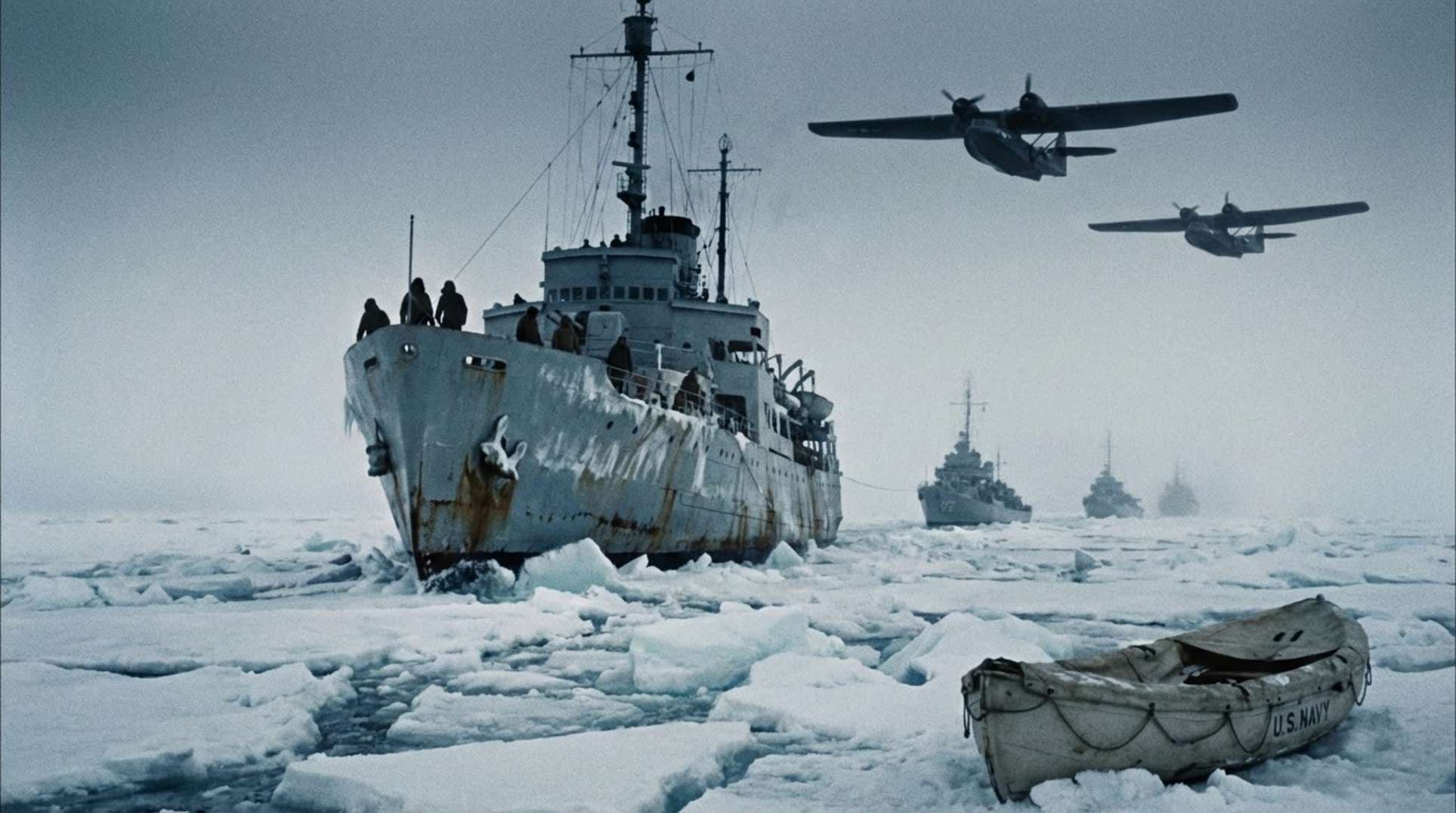
Picture it: autumn 1946, the world still shaking off the dust of World War II. The U.S. Navy gathers a fleet like no other for peacetime—ships cutting through southern waters, planes humming overhead, all headed for the frozen edge of the Earth. Operation HIGHJUMP kicks off on August 26, with the bulk of Antarctic action crammed into December through February 1947. We’re talking roughly 4,700 men, about 13 ships, and 33 aircraft, pushing into isolation where the sun never sets in summer, yet the cold bites deep.
The stated mission? Test gear in polar extremes, map uncharted ice, set up bases. But the scale feels heavy, almost wartime—carriers, destroyers, icebreakers churning against vast white horizons. Then comes the real peril: on December 30, the Martin PBM-5 ‘George 1’ crashes, claiming lives and demanding rescues that highlight just how remote and unforgiving this theater is. Machines roar against endless light, a postwar navy dressed in research gear, sailing into questions that echo louder than the engines.
What Witnesses and Independent Researchers Report
In the shadows of official logs, other voices emerge—expedition participants, ufology circles, and dedicated researchers piecing together fragments. Oral accounts and forum discussions often reference a February 1947 flight where Byrd supposedly ventured beyond the pole, chronicling in a ‘secret diary’ a lush inner-Earth valley: warm lakes, forests, even prehistoric beasts, guided by an entity called the ‘Arani’ Master.
Advertisement
Fringe books and translated newspaper pieces build on this, pointing to Nazi remnants—claims of ‘Base 211’ or hideouts in ‘New Swabia’ from prewar German expeditions, suggesting secret tech or postwar escapes. Then there’s Byrd’s March 5, 1947, interview in El Mercurio, picked up by the International News Service, where he warns of attacks ‘over one or both poles’—reframed by many as hints of advanced craft encountered down south.
What was Operation HIGHJUMP really about?
Is there evidence for Admiral Byrd’s secret diary?
Why do some say HIGHJUMP was cut short?
What about the Nazi base claims?
How did officials explain Byrd’s polar attack warning?
Advertisement
Frequently Asked Questions
What was Operation HIGHJUMP really about?
Official Navy reports describe it as a polar expedition for equipment testing, aerial mapping, and base establishment in 1946–47. Community researchers often suggest hidden motives, like confronting Nazi bases or advanced threats, based on the operation's scale and Byrd's statements.
Is there evidence for Admiral Byrd's secret diary?
No authenticated manuscript exists in Byrd's archival holdings at Ohio State University or other major repositories. The text circulates in fringe books and forums, but its origins and provenance remain unverified, leaving the inner-Earth claims unsupported by primary sources.
Why do some say HIGHJUMP was cut short?
Some accounts claim it ended after 40 days due to mysterious events, but official records show Antarctic operations running from December 1946 to February 1947. This discrepancy could stem from distortions about specific mission phases, warranting checks of ship logs and reports.
What about the Nazi base claims?
Researchers link 'Base 211' to prewar German expeditions in Antarctica, suggesting postwar survival or tech hides. No primary archival evidence confirms this in naval or historical records, though the narrative persists alongside HIGHJUMP stories.
How did officials explain Byrd's polar attack warning?
In his March 1947 interview, Byrd highlighted strategic vulnerabilities over the poles. Officials framed it as general defense concerns, while communities interpret it as evidence of encountered advanced craft or threats during HIGHJUMP.
Europe Has Been Quietly Tracking UAP Reports Since 2023
Documents reveal how the European Commission handled UAP images, what it promised to improve, and why Europe still lacks a public investigation office.
Aug 17, 2026 • 8 min read
Conspiracy Theories
Japan Just Confirmed It Has UAP Footage, and Is Analyzing Pentagon Files Near Its Borders
Japan’s formal entry into the UAP transparency wave signals an international domino effect. What the country knows about UAP encounters near Japanese territory and why it matters now.
May 14, 2026 • 5 min read
Conspiracy Theories
Ukrainian Defense Ministry Advisor Posts Star-Shaped UAP Video — and the Close-Ups Look Nothing Like a Drone
Serhii ‘Flash’ Beskrestnov released footage of a structured, star-shaped craft over Ukraine that has UFO researchers examining every frame for proof.
May 14, 2026 • 6 min read
Stories swirl about the operation’s sudden end after just 40 days, tied to suppressed footage or hostile forces. Independent investigators link later deaths—like Secretary James V. Forrestal’s in 1949 or Byrd’s son’s in 1988—to a cover-up. UFO reports from southern skies get woven in, adding layers that communities analyze as patterns, not coincidences.
Timelines, Tracks, and Hard Data
Let’s ground this in what’s verifiable. Operation HIGHJUMP ran from August 26, 1946, with core Antarctic efforts from December 1946 to February 1947, as outlined in the U.S. Navy’s 1947 report. Personnel numbered around 4,700, with about 13 ships and 33 aircraft—numbers echoed in contemporary press and archives like The Black Vault.
Byrd’s El Mercurio interview on March 5, 1947, via Lee van Atta, flagged polar vulnerabilities: attacks could come ‘over one or both poles.’ Yet, the Antarctic Treaty, signed December 1, 1959, and effective June 23, 1961, promotes peaceful science without sealing off access.
On deaths: Forrestal’s May 22, 1949, fall was ruled suicide; Byrd’s son died in October 1988 from malnutrition, dehydration, and brain disease. Critically, no authenticated ‘secret diary’ appears in Byrd’s papers at Ohio State University or other major archives—authenticated diaries exist, but not this one.
No authenticated manuscript in Byrd archives or recognized holdings
HIGHJUMP lasted only 40 days and was cut short
Operational records show Antarctic work through February 1947, spanning months
Nazi Base 211 confirmed
No primary evidence in naval or historical archives; linked to prewar expeditions but unverified postwar
Byrd warned of polar attacks due to encounters
Interview text exists but interpreted variably; official context was strategic vulnerability
Official Story vs. What the Data Suggests
The Navy insists HIGHJUMP was straightforward: training, logistics, mapping—all in the 1947 report. The Antarctic Treaty later reinforced this with calls for open science and no military bases. Straightforward, right?
But communities see more. The armada’s size and firepower hint at hidden agendas—perhaps confronting threats or securing sites. Byrd’s ‘pole to pole’ quote gets read as code for real encounters, not just hypotheticals. That ’40-day’ cutoff? Official timelines stretch longer, suggesting the claim might twist a partial pullback into full retreat.
The diary’s missing manuscript undercuts the inner-Earth tale, yet its spread raises questions about origins. Deaths have official explanations, but their timing fuels suspicion. Here, facts and interpretations split—doubts linger where patterns emerge, even if archives stay silent.
Lingering Gaps and Productive Next Steps
Key puzzles remain. Where did the ‘secret diary’ text first appear? No authenticated source in archives, but tracing its publication could reveal much. Then the timeline clash: why ’40 days’ in some accounts when records show months? Ship logs and squadron reports might clarify.
Advertisement
Classification hangs over it—could redacted files from 1946–1956 in National Archives or presidential libraries change the picture? FOIA requests targeting HIGHJUMP intelligence, film, and aviation reports are a start.
For the dig: hunt the diary’s earliest print, snag the full van Atta interview from news vaults, scour Ohio State’s Byrd inventories, and pull Navy unit logs. Stick to provenance—chain of custody matters when secondary sources dominate.
What It Might Mean — and Why the Story Persists
Hard facts anchor HIGHJUMP as a massive naval push with clear goals and real risks, including casualties. Byrd’s 1947 warning stands in print, but that diary? Absent from archives. Mysteries endure: the diary’s true source, timeline mismatches, possible hidden docs.
It sticks because it blends Cold War moves, German Antarctic history, and myths like Hollow Earth or UFOs—fueling a narrative that won’t fade. Chasing clarity through sources matters; it honors the search without shutting doors on what’s unresolved.
Frequently Asked Questions
Official Navy reports describe it as a polar expedition for equipment testing, aerial mapping, and base establishment in 1946–47. Community researchers often suggest hidden motives, like confronting Nazi bases or advanced threats, based on the operation’s scale and Byrd’s statements.
No authenticated manuscript exists in Byrd’s archival holdings at Ohio State University or other major repositories. The text circulates in fringe books and forums, but its origins and provenance remain unverified, leaving the inner-Earth claims unsupported by primary sources.
Some accounts claim it ended after 40 days due to mysterious events, but official records show Antarctic operations running from December 1946 to February 1947. This discrepancy could stem from distortions about specific mission phases, warranting checks of ship logs and reports.
Researchers link ‘Base 211’ to prewar German expeditions in Antarctica, suggesting postwar survival or tech hides. No primary archival evidence confirms this in naval or historical records, though the narrative persists alongside HIGHJUMP stories.
In his March 1947 interview, Byrd highlighted strategic vulnerabilities over the poles. Officials framed it as general defense concerns, while communities interpret it as evidence of encountered advanced craft or threats during HIGHJUMP.
Art Grindstone is the hard-nosed storyteller behind Unexplained.co, a veteran investigator whose life’s work sits at the crossroads of the paranormal, fringe science, and the shadows most people try not to look into. With decades spent chasing impossible stories — black-budget psychic programs, vanished Cold War experiments, desert rituals that sparked UFO waves, and the strange phenomena buried in America’s forgotten backroads — Art brings a rare combination of skepticism, awe, and journalistic precision. He’s not here to debunk. He’s not here to blindly believe. He follows the evidence wherever it leads — even when it leads someplace deeply uncomfortable. Known for his immersive, cinematic style and his ability to turn obscure research into gripping narrative, Art has built a devoted following across podcasts, long-form features, documentaries, and serialized investigations. His interviews are direct. His analysis is unflinching. His voice has become a staple in the modern paranormal renaissance — the guy people turn to when a story is too strange, too complex, or too dangerous for anyone else to touch. Off-mic, Art works with a distributed network of researchers, archivists, and field operatives who help surface the stories mainstream media ignores. On-mic, he transforms their findings into meticulous, high-impact reporting that refuses to insult the intelligence of true believers. His philosophy is simple: Take the phenomenon seriously. Treat the audience with respect. Tell the story as if the world depends on it — because sometimes it does. When Art Grindstone digs into a case, he isn’t just chasing a mystery. He’s tracing the fault lines of reality itself.