Red Sea Tanker Strikes: Inside the Silver Rip Mystery
UFO & Aliens
Red Sea Tanker Strikes: Inside the Silver Rip Mystery
Key Takeaways Tankers and commercial ships in the Red Sea and Gulf of Oman have faced over 190 attacks since October 19, 2023, mostly involving drones and missiles from Houthi forces, turning vital shipping lanes into…
Art Grindstone is the hard-nosed storyteller behind Unexplained.co, a veteran investigator whose life’s work sits at the crossroads of the paranormal, fringe science, and the shadows most people try not to look into. With decades spent chasing impossible stories — black-budget psychic programs, vanished Cold War experiments, desert rituals that sparked UFO waves, and the strange phenomena buried in America’s forgotten backroads — Art brings a rare combination of skepticism, awe, and journalistic precision. He’s not here to debunk. He’s not here to blindly believe. He follows the evidence wherever it leads — even when it leads someplace deeply uncomfortable. Known for his immersive, cinematic style and his ability to turn obscure research into gripping narrative, Art has built a devoted following across podcasts, long-form features, documentaries, and serialized investigations. His interviews are direct. His analysis is unflinching. His voice has become a staple in the modern paranormal renaissance — the guy people turn to when a story is too strange, too complex, or too dangerous for anyone else to touch. Off-mic, Art works with a distributed network of researchers, archivists, and field operatives who help surface the stories mainstream media ignores. On-mic, he transforms their findings into meticulous, high-impact reporting that refuses to insult the intelligence of true believers. His philosophy is simple: Take the phenomenon seriously. Treat the audience with respect. Tell the story as if the world depends on it — because sometimes it does. When Art Grindstone digs into a case, he isn’t just chasing a mystery. He’s tracing the fault lines of reality itself.
6 min · 1,375 words
In This Report(8)
Key Takeaways
Tankers and commercial ships in the Red Sea and Gulf of Oman have faced over 190 attacks since October 19, 2023, mostly involving drones and missiles from Houthi forces, turning vital shipping lanes into active conflict zones.
The U.S. has upheld a moratorium on full-scale nuclear explosive tests since 1992, with no official resumption by 2025 despite political pressures, while Russia conducted non-explosive tests of nuclear-capable systems in October 2025; no public evidence links these to the tanker incidents or any failed detonations.
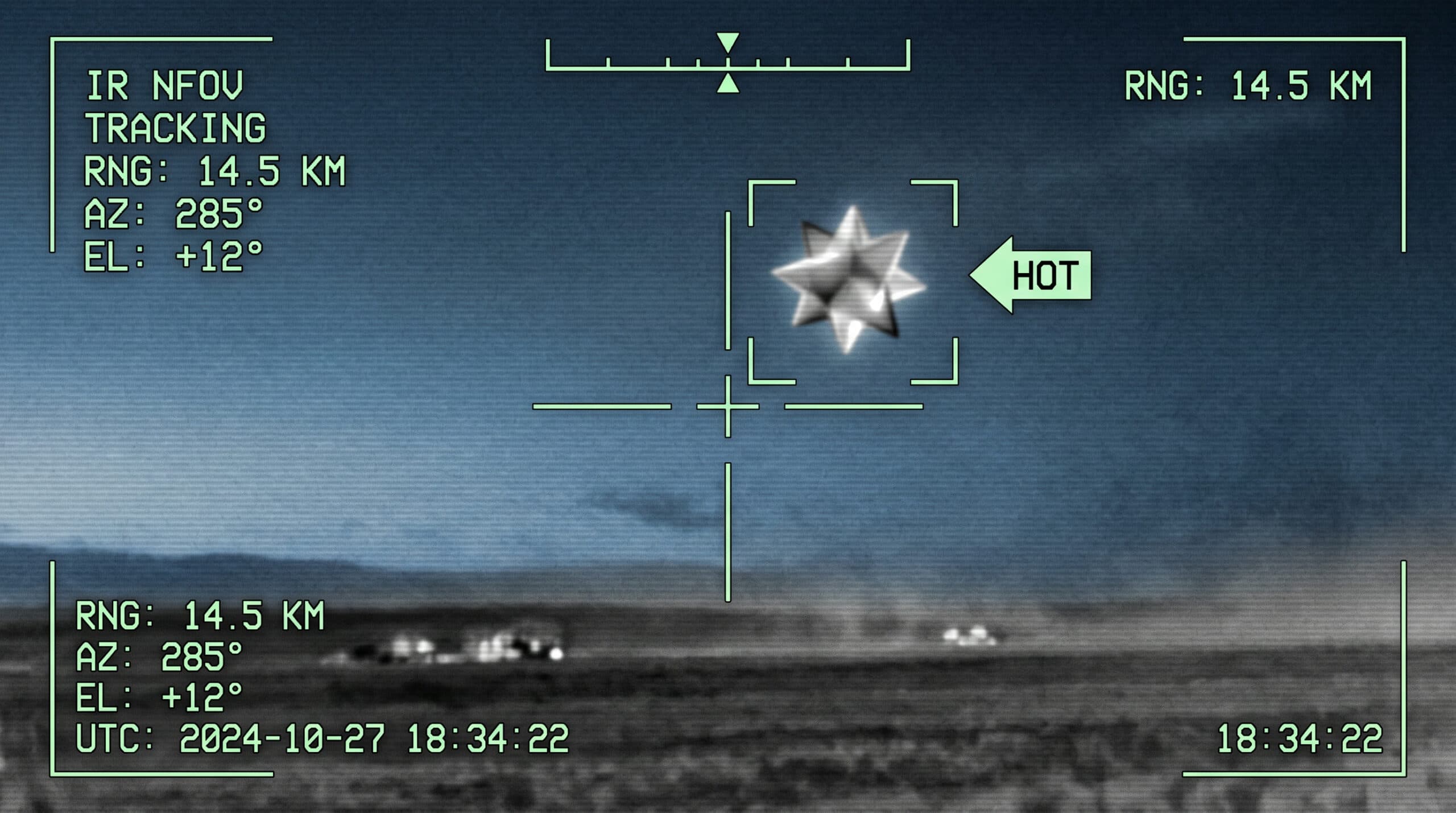
Amid the attacks, reports of “silver rips”—brief, metallic flashes or tear-like sky anomalies—echo historical UFO sightings near nuclear sites, fueling speculation about dimensional events or monitoring of nuclear activities, though verifiable data remains elusive.
Convoys in a Crosshair Sea
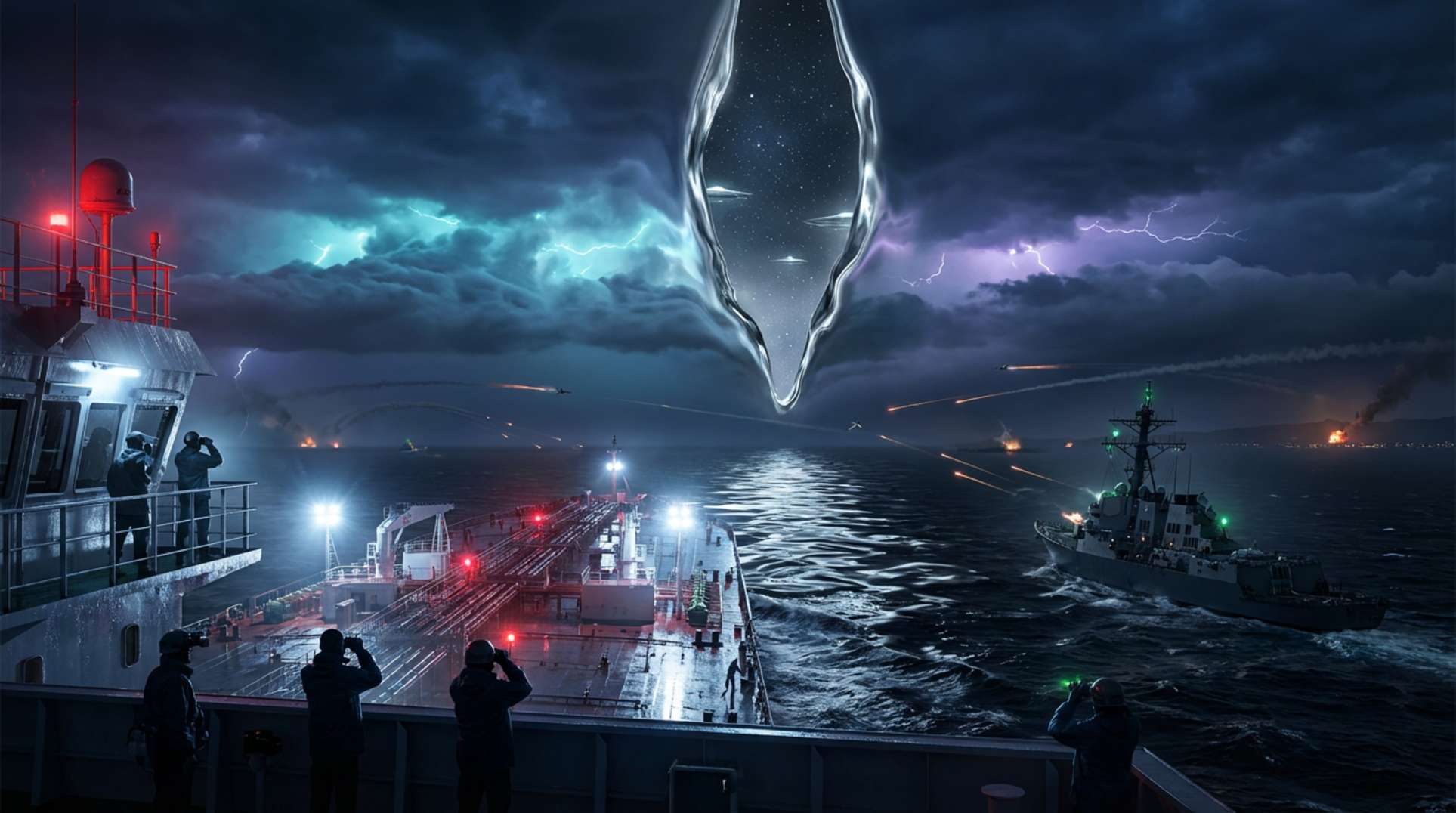
Picture massive tankers slicing through the dark waters of the Red Sea under a tense moon. Radar screens flicker in the bridges, crews scan the horizons for incoming threats. Since October 19, 2023, this stretch has morphed into a war zone. Over 190 incidents by October 2024—drones swarming, missiles streaking—have hammered home the danger. Governments pin it on Houthi forces, firing from Yemen in a wider regional clash.
But in encrypted chats and fringe forums, another layer emerges. Whispers of strange lights. Metallic glints cutting through the night. Brief flashes that tear open the sky or shimmer over the waves—what some now call “silver rips.” These aren’t the headlines. Missiles and drones dominate the official logs. Yet here, geopolitics rubs against something older: patterns of unexplained aerial phenomena shadowing nuclear tensions. The sea becomes a crossroads where human conflict meets the unknown.
What Witnesses and Researchers Say They’re Seeing
In the shadows of these attacks, stories circulate among sailors, shipping trackers, and those who’ve long studied UFO-nuclear links. These aren’t polished reports—they’re raw, shared in online hubs and private networks. People describe fleeting metallic flashes, like seams ripping in the air, or disc-shaped objects that appear and vanish around the strikes.
Advertisement
Some see these “silver rips” as dimensional tears, portals triggered by intense energy. Others link them to classic flying discs, the silver saucers reported near atomic sites since the 1940s. Researchers like Robert Hastings have compiled decades of accounts from military personnel: unknowns hovering over missile silos, interfering with systems, monitoring tests.
What exactly are the tanker attacks in the Red Sea?
Is there evidence of nuclear tests linked to these events?
What are “silver rips” and how do they relate to UFO history?
How do officials explain the incidents?
Why should we care about these mysteries?
Advertisement
Frequently Asked Questions
What exactly are the tanker attacks in the Red Sea?
The attacks began on October 19, 2023, and involve over 190 incidents of drones and missiles targeting commercial vessels and tankers, primarily attributed to Houthi forces in a regional conflict.
Is there evidence of nuclear tests linked to these events?
No public evidence connects the tanker attacks to failed nuclear tests; the U.S. has maintained a testing moratorium since 1992, and Russia's October 2025 trials were non-explosive, though speculation persists due to timelines and anomalies.
What are "silver rips" and how do they relate to UFO history?
"Silver rips" refer to reported brief, metallic flashes or tear-like sky anomalies during some attacks, echoing historical UFO sightings near nuclear sites, such as foo fighters in WWII or discs over atomic tests, suggesting a pattern of monitoring nuclear activities.
How do officials explain the incidents?
Officials attribute the attacks to Houthi militants using conventional weapons, deny any nuclear test failures or UFO involvement, and explain historical sightings as misidentifications or classified tech.
Why should we care about these mysteries?
With global nuclear stockpiles over 12,000 warheads, ongoing shipping threats, and patterns of unexplained phenomena near nuclear sites, understanding these anomalies affects maritime safety, nuclear transparency, and broader questions of reality.
The Pentagon Released More UAP Files—but Not the Data Needed to Solve Them
The Pentagon’s fifth UAP release reveals cold orbs and a giant triangle—but missing sensor data keeps its strangest cases unresolved and untested.
Aug 17, 2026 • 10 min read
Conspiracy Theories
Japan Just Confirmed It Has UAP Footage, and Is Analyzing Pentagon Files Near Its Borders
Japan’s formal entry into the UAP transparency wave signals an international domino effect. What the country knows about UAP encounters near Japanese territory and why it matters now.
May 14, 2026 • 5 min read
Conspiracy Theories
Ukrainian Defense Ministry Advisor Posts Star-Shaped UAP Video — and the Close-Ups Look Nothing Like a Drone
Serhii ‘Flash’ Beskrestnov released footage of a structured, star-shaped craft over Ukraine that has UFO researchers examining every frame for proof.
May 14, 2026 • 6 min read
Think back to WWII’s “foo fighters,” glowing orbs tailing bombers, or Cold War sightings of discs near bomb labs. The pattern holds: wherever nuclear tech ramps up, anomalies follow. In today’s Red Sea chaos, some speculate the tanker hits mask failed covert nuclear tests—events that could rip open atmospheric oddities. Explosions gone wrong, drawing in these silver phenomena.
Not everyone agrees. Voices in the same circles point to human tech: classified drones, directed-energy weapons, exotic tests mimicking the effects. No aliens needed. These debates respect the anecdotes, connecting dots without forcing answers. The reports persist, tying maritime violence to deeper mysteries.
Timelines, Test Bans, and Hard Numbers
Shifting gears to what we can pin down. The Red Sea crisis kicked off October 19, 2023, with Houthi groups targeting vessels. By late 2024, records show over 190 incidents—drones, anti-ship missiles, the works. Navies and companies log them as conventional warfare.
The U.S. stopped full nuclear explosive tests in 1992, sticking to a voluntary moratorium. Lab simulations and subcritical experiments keep the arsenal modern. In 2025, under Trump, talks heated up about restarting tests, but no official word of any by year’s end.
Russia ran non-explosive trials in October 2025: a nuclear-powered cruise missile, a nuclear-capable torpedo, among others. They called them successes, no detonations involved. Globally, the Federation of American Scientists tallies about 12,241 nuclear warheads in 2025 stockpiles—plenty of hardware, even without new blasts.
Recent U.S. laws, like the 2022 National Defense Authorization Act, demand more UAP reporting near nuclear sites. It nods to the issue without endorsing alien theories. To spot overlaps, here’s a quick table:
Event Type
Key Dates/Locations
Overlap with “Silver Rips” Reports?
Red Sea Tanker Attacks
October 19, 2023–ongoing; Red Sea/Gulf of Oman
Yes, scattered reports during attack spikes
U.S. Nuclear Test Moratorium & 2025 Debates
1992–present; U.S. sites; 2025 political pushes
No direct; debates coincide with attack timeline
Russian Nuclear-Capable Tests
October 2025; Undisclosed sites
Possible; timing aligns with some Red Sea anomalies
Notable UFO-Nuclear Incidents
1940s–present; Global nuclear sites
Pattern echoes in “silver rip” descriptions
Timelines brush close, but hard links? Scarce.
The Official Narrative and the Paths It Leaves Open
Governments keep it straightforward. The U.S. Navy and allies blame Houthi militants for the Red Sea and Gulf of Oman strikes—drones and missiles in a power play. No room for anomalies. The Department of Defense denies UFO interference or recent nuclear mishaps in the area.
Experts at places like the Bulletin of the Atomic Scientists view UFO-nuclear ties as unproven. Historical sightings? Chalked up to misidentifications, weather quirks, or secret projects. No declassified proof of “silver rips” from failed tests.
Yet independent researchers see it differently. They highlight patterns: objects tampering with missiles, lights over test ranges. Decades of testimony from credible sources. In the tanker saga, they connect the dots—maritime war, U.S. testing debates, Russian trials—as cover for hidden experiments.
No seismic or satellite data screams “clandestine nuke” in these waters. Secrecy thrives, though. Officials lean on classified intel; communities on witness accounts and history. Both pick their evidence. The space between? That’s where questions linger.
Inside the Silver Rips: Weapons Glitch, Atmospheric Trick, or Something Other?
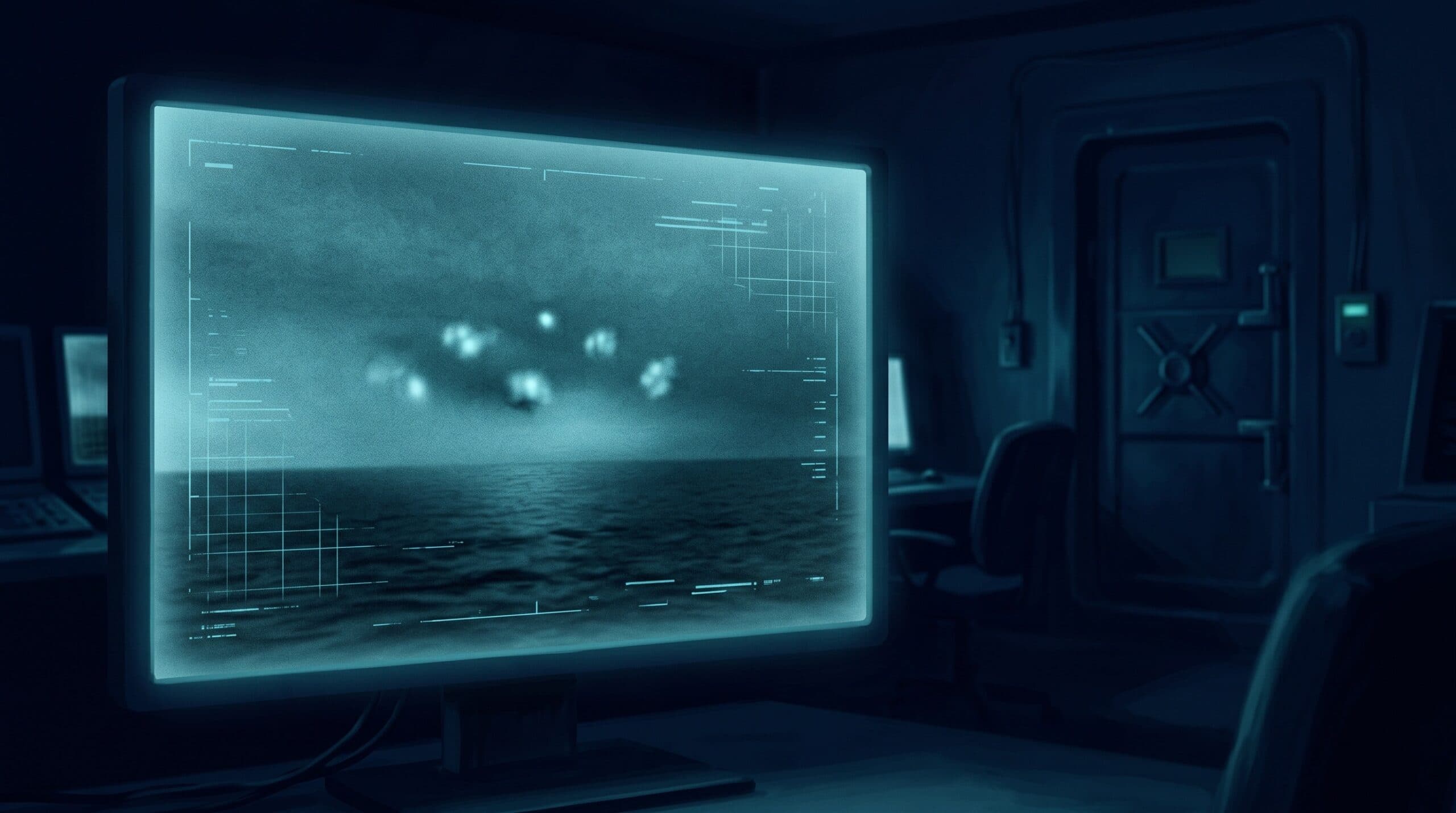
What are these “silver rips” really? The term’s grassroots, describing quick metallic tears in the sky during attacks. Could be mundane: missile exhaust reflecting light, drone glints, sensor errors in night gear. Or atmospheric plays—ice crystals, plasma from charged air.
Human tech fits too. Classified drones with weird signatures. Directed-energy tests creating visuals. Decoys mimicking metal forms. Tie that to U.S. and Russian work on nuclear-capable missiles and subs—exotic propulsion without booms.
History adds layers. Foo fighters dogging WWII planes. Discs over 1947 atomic labs. Glowing shapes at silos. Descriptions match across eras. Some push further: these as non-human craft, or dimensional shifts pulled by nuclear energy. Monitoring us, maybe intervening.
We lack solid, multi-source data confirming a “silver rip” tie to any incident. Still, the repeats demand real scrutiny. Not laughs. Patterns like this don’t fade easy.
Where the Data Ends and the Mystery Begins
Here’s what stands firm: tanker attacks are real, with over 190 since 2023, rooted in geopolitics. Blame Houthis, not ghosts. U.S. no explosive tests since 1992; Russia’s 2025 trials non-nuclear. UFOs near nukes? Documented for decades, but mainstream says no aliens proven. Laws now push UAP transparency around nuclear gear.
Advertisement
Gaps yawn wide. Hidden nuclear ops—fails, tests—in these seas? “Silver rips” as secret tech, nature’s trick, or beyond? No proof seals a covert blast, but official lines don’t close the book. Secrecy clouds weapons and UAP worlds.
This matters. Over 12,000 warheads stockpile. Ships under siege. Powers jostling. If skies tear over battle zones, we need answers—for safety, truth, and grasping what’s out there with us.
Frequently Asked Questions
The attacks began on October 19, 2023, and involve over 190 incidents of drones and missiles targeting commercial vessels and tankers, primarily attributed to Houthi forces in a regional conflict.
No public evidence connects the tanker attacks to failed nuclear tests; the U.S. has maintained a testing moratorium since 1992, and Russia’s October 2025 trials were non-explosive, though speculation persists due to timelines and anomalies.
“Silver rips” refer to reported brief, metallic flashes or tear-like sky anomalies during some attacks, echoing historical UFO sightings near nuclear sites, such as foo fighters in WWII or discs over atomic tests, suggesting a pattern of monitoring nuclear activities.
Officials attribute the attacks to Houthi militants using conventional weapons, deny any nuclear test failures or UFO involvement, and explain historical sightings as misidentifications or classified tech.
With global nuclear stockpiles over 12,000 warheads, ongoing shipping threats, and patterns of unexplained phenomena near nuclear sites, understanding these anomalies affects maritime safety, nuclear transparency, and broader questions of reality.
06
Inside the Silver Rips: Weapons Glitch, Atmospheric Trick, or Something Other?
Art Grindstone is the hard-nosed storyteller behind Unexplained.co, a veteran investigator whose life’s work sits at the crossroads of the paranormal, fringe science, and the shadows most people try not to look into. With decades spent chasing impossible stories — black-budget psychic programs, vanished Cold War experiments, desert rituals that sparked UFO waves, and the strange phenomena buried in America’s forgotten backroads — Art brings a rare combination of skepticism, awe, and journalistic precision. He’s not here to debunk. He’s not here to blindly believe. He follows the evidence wherever it leads — even when it leads someplace deeply uncomfortable. Known for his immersive, cinematic style and his ability to turn obscure research into gripping narrative, Art has built a devoted following across podcasts, long-form features, documentaries, and serialized investigations. His interviews are direct. His analysis is unflinching. His voice has become a staple in the modern paranormal renaissance — the guy people turn to when a story is too strange, too complex, or too dangerous for anyone else to touch. Off-mic, Art works with a distributed network of researchers, archivists, and field operatives who help surface the stories mainstream media ignores. On-mic, he transforms their findings into meticulous, high-impact reporting that refuses to insult the intelligence of true believers. His philosophy is simple: Take the phenomenon seriously. Treat the audience with respect. Tell the story as if the world depends on it — because sometimes it does. When Art Grindstone digs into a case, he isn’t just chasing a mystery. He’s tracing the fault lines of reality itself.