The Unexplained Company Logo
Ribbonfish Omen: What Monterey’s Sighting Really Means

Ribbonfish Omen: What Monterey’s Sighting Really Means

Art Grindstone

January 5, 2026
Cataclysm Survival Briefing — Access Briefing Now

Key Takeaways

  • A rare juvenile deep-sea ribbonfish (Trachipterus altivelis) surfaced in Monterey Bay on December 30, 2025, spotted by diver Ted Judah and confirmed by a local aquarium biologist, drawing attention from outlets like SFGATE, SFist, and Divernet.
  • Mainstream sources, including the USGS and marine institutions, assert no proven link between such strandings or planetary alignments and short-term earthquake prediction; precise forecasting remains impossible.
  • Independent voices, such as Stefan Burns, point to the sighting alongside global seismicity and planetary configurations as signs of heightened M6+ risk in California—a perspective that’s gaining traction but lacks reproducible evidence for validation.

A Silent Convoy Beneath the Dark Sea

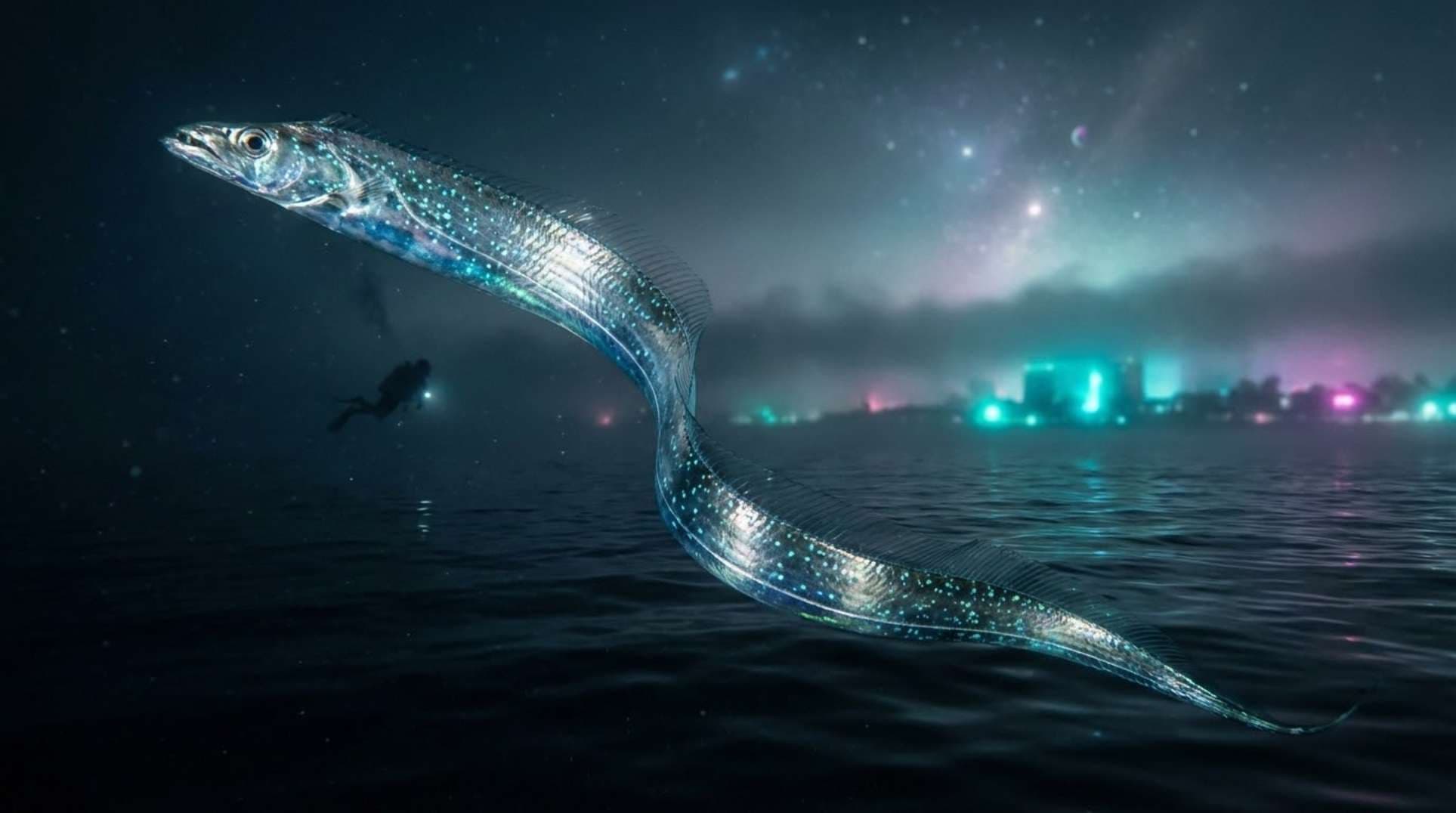
Picture this: December 30, 2025, in the chill depths of Monterey Bay. Diver Ted Judah glides through the murk, his GoPro capturing the endless blue. Then, something long and serpentine cuts through the water—a juvenile deep-sea ribbonfish, Trachipterus altivelis, its body shimmering like a lost relic from the abyss. Judah’s photos and video spread fast in local dive circles, then hit regional news: SFGATE, SFist, Divernet. The sighting stirred echoes of old ocean tales, like the Japanese ‘ryūgū no tsukai,’ the messenger from the dragon palace. Social media lit up with wonder and whispers of omens, pulling in those who’ve long watched the seas for signs of deeper unrest.

What Witnesses and Analysts Report

Ted Judah’s encounter hit hard in the community. His GoPro footage showed the ribbonfish twisting through the bay, a sight that quickly went viral in dive groups and beyond. Regional outlets amplified it, framing the event as a rare glimpse into the deep. For many, it recalled folklore tying these creatures to earthquakes—the ‘doomsday fish’ of Japanese legend, surfacing before disaster. Independent analysts aren’t stopping there. Figures like Stefan Burns weave the sighting into a bigger picture: recent quakes off East Africa, seen as antipodal echoes, plus active planetary alignments. They warn of rising odds for a M6+ event in California. Reactions vary—some stock up on supplies, others demand solid stats to back the claims.

Timelines, Tracks, and Hard Data

Let’s break it down by the numbers. The Monterey Bay event fits into a longer pattern of strandings, with California logging around 20 or more ribbonfish or oarfish sightings since the early 1900s, per media and natural history records. Seismically, the USGS stands firm: no precise predictions possible, only probabilistic maps. Planetary notes include the Saturn-Neptune conjunction building toward February 20, 2026, amid other alignments of Jupiter, Earth, Sun, Mercury, Venus, and Mars—but their tidal pull pales next to the Moon and Sun. Antipodal focusing? It’s a real wave effect in peer-reviewed studies, yet it doesn’t prove quake triggering. Recall the 1989 Loma Prieta M6.9, during a similar Saturn-Neptune phase, which some cite as precedent.

DateEventLocationMagnitude/DescriptionPrimary Source
December 30, 2025Ribbonfish sightingMonterey Bay, CAJuvenile Trachipterus altivelisSFGATE, SFist, Divernet; Monterey Bay Aquarium
Early 1900s–presentHistorical strandingsCalifornia coast~20+ recorded casesMedia summaries, natural history
October 17, 1989Loma Prieta earthquakeSan Francisco Bay AreaM6.9USGS
2025–2026Saturn-Neptune conjunctionAstronomicalPeak ~Feb 20, 2026Astronomical references
RecentAntipodal seismicityOff East AfricaClaimed patternsIndependent commentators

Official Story vs. What the Data Suggests

The USGS and seismologists hold the line: earthquakes defy short-term prediction, with efforts centered on hazard maps and alerts. Planetary scientists add that alignments like the current ones carry no meaningful gravitational weight against everyday tides. Marine experts at places like the Monterey Bay Aquarium stick to facts—identifying species, not chasing omens. Still, antipodal wave focusing is documented science, hinting at global connections in seismic energy. Where independent claims falter is the synthesis: blending strandings, quakes, and stars into forecasts without shared methods or stats. To bridge that, we’d need open data pulls, like from USGS ComCat, and tests against historical baselines.

What It All Might Mean

The sighting is solid, captured and confirmed. So are the planetary shifts and recent global shakes, plus antipodal effects in the seismic record. But tying them to an imminent California quake? No mechanism holds up yet, and predictions stay anecdotal without rigorous checks. For readers tracking these patterns, it’s worth watching—pull USGS ComCat data for December 2025 to January 2026 to gauge if activity spikes. Evaluate claims with a checklist: Demand reproducible methods, transparent sources, and stats beating random chance. Stay prepared with earthquake kits and plans, probe analysts for their data, and keep that curiosity alive amid the unknowns.

Frequently Asked Questions

Yes, diver Ted Judah encountered a juvenile deep-sea ribbonfish in Monterey Bay on December 30, 2025, with photos and video shared in dive groups. A Monterey Bay Aquarium biologist confirmed the species as Trachipterus altivelis, and it was covered by outlets like SFGATE, SFist, and Divernet.

Mainstream science, including the USGS, finds no proven causal link between ribbonfish strandings or planetary alignments and earthquake prediction. Independent analysts like Stefan Burns suggest patterns with global seismicity and alignments indicate risk, but these claims lack reproducible data and statistical validation.

The USGS maintains that precise short-term earthquake prediction is not possible, focusing instead on probabilistic hazard maps and preparedness. They dismiss links to oarfish sightings or planetary positions, noting negligible gravitational effects from distant planets compared to the Moon and Sun.

Review USGS ComCat data for recent seismicity to see if it’s above baseline. For evaluating predictions, look for reproducible methods, transparent sources, and statistical tests against historical norms—key steps to separate patterns from coincidence.