Scientists Baffled by a Newly Discovered Human Species…
Ancient Civilizations
Scientists Baffled by a Newly Discovered Human Species Living Underground
A remarkable scientific discovery has emerged from China, where researchers have found the skull of what they believe to be a new species of human. This astonishing find could redefine our understanding of human…
Art Grindstone is the hard-nosed storyteller behind Unexplained.co, a veteran investigator whose life’s work sits at the crossroads of the paranormal, fringe science, and the shadows most people try not to look into. With decades spent chasing impossible stories — black-budget psychic programs, vanished Cold War experiments, desert rituals that sparked UFO waves, and the strange phenomena buried in America’s forgotten backroads — Art brings a rare combination of skepticism, awe, and journalistic precision. He’s not here to debunk. He’s not here to blindly believe. He follows the evidence wherever it leads — even when it leads someplace deeply uncomfortable. Known for his immersive, cinematic style and his ability to turn obscure research into gripping narrative, Art has built a devoted following across podcasts, long-form features, documentaries, and serialized investigations. His interviews are direct. His analysis is unflinching. His voice has become a staple in the modern paranormal renaissance — the guy people turn to when a story is too strange, too complex, or too dangerous for anyone else to touch. Off-mic, Art works with a distributed network of researchers, archivists, and field operatives who help surface the stories mainstream media ignores. On-mic, he transforms their findings into meticulous, high-impact reporting that refuses to insult the intelligence of true believers. His philosophy is simple: Take the phenomenon seriously. Treat the audience with respect. Tell the story as if the world depends on it — because sometimes it does. When Art Grindstone digs into a case, he isn’t just chasing a mystery. He’s tracing the fault lines of reality itself.
4 min · 957 words
In This Report(20)
A remarkable scientific discovery has emerged from China, where researchers have found the skull of what they believe to be a new species of human. This astonishing find could redefine our understanding of human evolution and our closest relatives. The implications of this discovery are profound, challenging everything we thought we knew about our ancient ancestors.
Key Takeaways
Discovery of a new human species, possibly our closest relative.
The skull exhibits a mix of ancient and modern human features.
Findings challenge existing theories about human evolution.
The Dragon Man Skull
The Dragon Man skull, discovered in Harbin, China, has left scientists in awe. Unearthed in the 1930s, it resurfaced in 2018, revealing a unique blend of ancient and modern human traits. This skull, dating back at least 146,000 years, showcases a brain size comparable to modern humans but features a robust brow ridge and large teeth. This discovery introduces Homo longi, a potential new branch in our evolutionary tree, possibly even closer to us than Neanderthals.
Homo Naledi: A Hidden Society
In 2013, scientists uncovered Homo naledi in South Africa’s Rising Star Cave System. This species, with a brain only one-third the size of ours, was found in a chamber suggesting complex burial practices. Over 1,500 fossil fragments from at least 15 individuals were discovered, indicating a sophisticated social structure.
Advertisement
The Hobbit: Homo Floresiensis
The discovery of Homo floresiensis, or the Hobbit, in 2003 on Flores Island, Indonesia, turned heads. Standing at just 3.5 feet tall, these small humans lived between 50,000 and 100,000 years ago. Despite their size, they crafted tools and hunted, showcasing remarkable survival skills. The mystery of how they ended up on such an isolated island continues to intrigue researchers.
Denisovans: The Ultimate Underground Crew
Denisovans, discovered in Siberia’s Denisova Cave, are another fascinating find. First identified in 2008, they lived around 160,000 years ago at high altitudes, showcasing advanced hunting and tool-making skills. Their remains, including a juvenile girl’s finger bone, have reshaped our understanding of human ancestry.
The Mushroom That Makes People See Tiny People—and the Chemical Nobody Has Found
Reports from China, Papua New Guinea and the Philippines describe the same unnerving vision after eating one mushroom: crowds of tiny people. Researchers have now connected the cases to Lanmaoa asiatica, but the active chemical remains unknown.
Aug 20, 2026 • 9 min read
Strange History
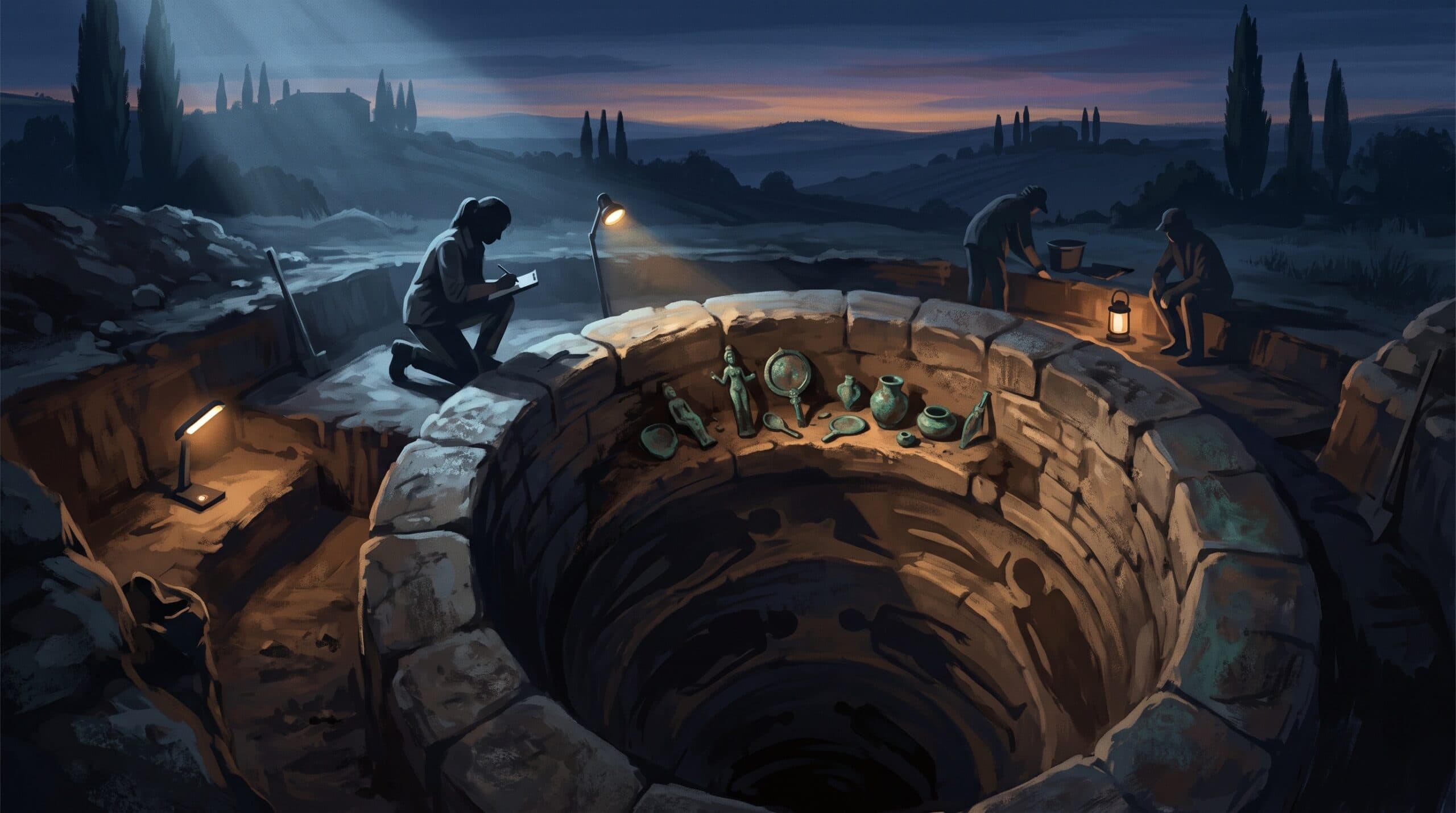
The Etruscan Well Sealed With Human Remains Is Stranger Than a Sacrifice Story
A newly reported Etruscan well in Italy was opened with offerings and sealed with human remains. The evidence reveals a ritual mystery, not a simple sacrifice tale.
Aug 18, 2026 • 7 min read
Articles
The Lonely Rock That Led Archaeologists to a 3,700-Year-Old Ritual Site
A single stone spotted by a student led archaeologists to a 3,700-year-old ritual site—and raised new questions about how ancient landscapes were read.
Aug 17, 2026 • 4 min read
Homo erectus roamed the Earth from about 2 million to 100,000 years ago. Discovered in Indonesia, they were the first ancestors to exhibit modern human-like traits. Fossils found in the Joudian Caves near Beijing indicate they were not just temporary dwellers but established communities, utilizing fire and tools.
The Dolly Skull: A Brain Twister
The Dolly skull, found in Shanxi Province, China, has puzzled scientists since its discovery in 1978. Dating back 200,000 years, it features a mix of Homo erectus and early Homo sapiens traits, complicating our understanding of human evolution in East Asia.
Neanderthals: The Original Underground Dwellers
Neanderthals were not just cave dwellers; they transformed caves into homes. Evidence from various sites shows they had designated areas for sleeping, cooking, and tool-making. Their burial practices, often including flowers, suggest a complex social structure and emotional depth.
Homo Luzonensis: The Island Mystery
Discovered in 2007 in the Philippines, Homo luzonensis presents a unique case. With remains dating back 67,000 years, these small individuals were only about 4 feet tall. Their mix of ancient and modern traits raises questions about their origins and how they reached the island.
Homo Antecessor: The Cultural Puzzle
Found in Spain’s Gran Dolina cave, Homo antecessor lived around 800,000 years ago. Their remains suggest they were skilled hunters and tool users, sparking debates about their place in the human lineage.
Homo Sapiens Idaltu: The Ancient Cousins
In 1997, researchers discovered Homo sapiens idaltu in Ethiopia, dating back 160,000 years. These ancient humans exhibit a mix of modern and archaic features, prompting discussions about their relationship to contemporary humans.
Advertisement
Early Modern Humans: Thriving Underground
Homo sapiens, our direct ancestors, were thriving in caves as far back as 300,000 years ago. Sites like Jebel Irhoud in Morocco reveal that these early humans created social hubs, possibly for rituals and community gatherings.
The Mystery of Homo Rensus
The Homo rensus skull, discovered in Zambia in 1921, has puzzled scientists due to its mix of traits resembling both Homo heidelbergensis and modern humans. This species lived between 300,000 and 125,000 years ago, bridging gaps in our understanding of human evolution.
Homo Georgicus: The Early Outliers
Homo georgicus, found in Georgia, dates back 1.8 million years. Despite their small brain size, they were adept tool users, showcasing early social behaviors.
The Peeking Man: A Cave Dweller
Peeking Man, discovered in the Joudian Caves, dates back 700,000 to 300,000 years. Evidence suggests they were skilled at using fire and tools, indicating a sophisticated understanding of their environment.
Homo Rudolensis: The Indiana Jones of Early Humans
Discovered in Kenya, Homo rudolensis lived between 1.9 to 2.4 million years ago. Their unique mix of features continues to challenge our understanding of human evolution.
Homo Habilis: The Tool Makers
Homo habilis, discovered in Tanzania, lived around 2.3 to 1.65 million years ago. They were not just surviving but thriving, using caves for shelter and crafting tools.
Australopithecus Afarensis: The Early Ancestors
Australopithecus afarensis, including the famous Lucy, roamed East Africa 3.7 to 3 million years ago. Their small stature and limited brain size highlight the diversity of early human ancestors.
Homo Gorgonensis: The Original Cave Dwellers
Homo gorgonensis, discovered in South Africa, lived between 1.8 to 2 million years ago. Their cave-dwelling habits suggest they may have used these spaces for social interactions.
Conclusion
The discovery of these underground-dwelling human species not only enriches our understanding of human evolution but also challenges long-held beliefs about our ancestors. As research continues, we may uncover even more about the complex tapestry of human history.
Art Grindstone is the hard-nosed storyteller behind Unexplained.co, a veteran investigator whose life’s work sits at the crossroads of the paranormal, fringe science, and the shadows most people try not to look into. With decades spent chasing impossible stories — black-budget psychic programs, vanished Cold War experiments, desert rituals that sparked UFO waves, and the strange phenomena buried in America’s forgotten backroads — Art brings a rare combination of skepticism, awe, and journalistic precision. He’s not here to debunk. He’s not here to blindly believe. He follows the evidence wherever it leads — even when it leads someplace deeply uncomfortable. Known for his immersive, cinematic style and his ability to turn obscure research into gripping narrative, Art has built a devoted following across podcasts, long-form features, documentaries, and serialized investigations. His interviews are direct. His analysis is unflinching. His voice has become a staple in the modern paranormal renaissance — the guy people turn to when a story is too strange, too complex, or too dangerous for anyone else to touch. Off-mic, Art works with a distributed network of researchers, archivists, and field operatives who help surface the stories mainstream media ignores. On-mic, he transforms their findings into meticulous, high-impact reporting that refuses to insult the intelligence of true believers. His philosophy is simple: Take the phenomenon seriously. Treat the audience with respect. Tell the story as if the world depends on it — because sometimes it does. When Art Grindstone digs into a case, he isn’t just chasing a mystery. He’s tracing the fault lines of reality itself.