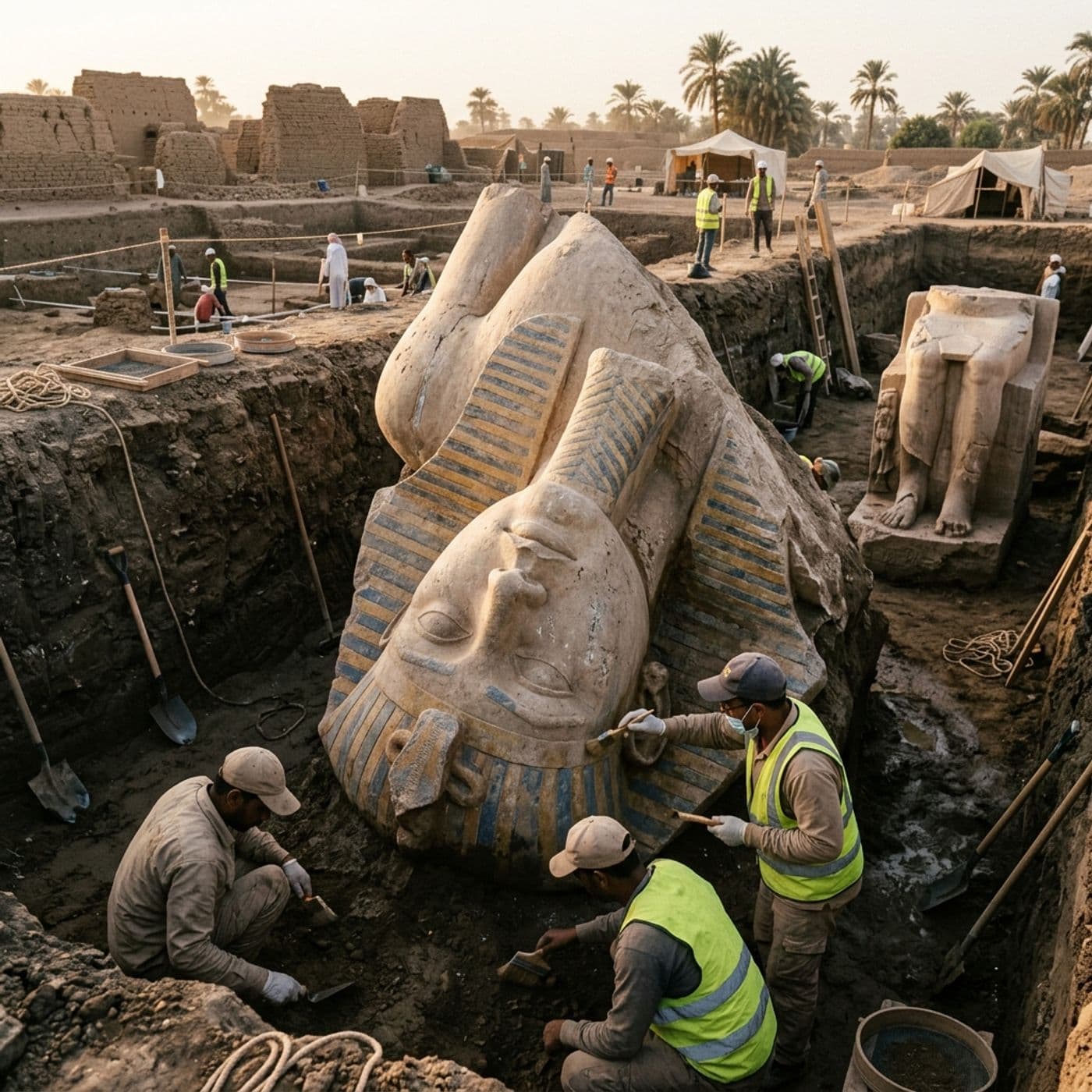

In 1898, a significant archaeological event unfolded at Umm El Qa’ab in Abydos, Egypt. French archaeologist Émile Amélineau led an excavation that would claim to uncover the tomb of the god Osiris. This discovery sparked excitement and skepticism, revealing the complexities of early Egyptology.
Key Takeaways
- Émile Amélineau’s excavation in 1898 claimed to find the tomb of Osiris.
- The discovery included a beautifully crafted basalt sarcophagus.
- Skepticism arose regarding the authenticity of the findings.
- Flinders Petrie later re-examined the site, revealing critical overlooked artifacts.
- The site evolved into a significant pilgrimage location dedicated to Osiris.
The Excavation Begins
On New Year’s Day 1898, Amélineau announced his groundbreaking find. He believed he had discovered the tomb of Osiris, a claim that resonated with the millennial belief in the god’s burial site. The excavation was marked by a rush to clear the tomb, leading to the disregard of many artifacts that could have provided deeper insights into the site.
The Basalt Sarcophagus
Among the most striking finds was a large, intricately designed basalt sarcophagus. This object depicted Osiris on his deathbed, surrounded by symbols of protection and power. The sarcophagus was found lying on its side, adorned with carvings of lions and hawks, representing the god Horus, the son of Osiris.
Advertisement
Skepticism and Controversy
Despite the initial excitement, skepticism quickly emerged. Notably, a skull found in the tomb was later identified as belonging to a woman, challenging Amélineau’s claims. Critics, including the renowned archaeologist Flinders Petrie, questioned the validity of the findings. Petrie was eager to excavate the site himself, and in 1899, he was granted permission to do so.
Flinders Petrie’s Re-examination
Petrie’s excavation revealed that Amélineau had overlooked many significant artifacts. Among these were a human arm adorned with gold and turquoise jewelry and various objects linked to King Djer, a ruler from the First Dynasty. Petrie’s meticulous work led to the conclusion that the tomb attributed to Osiris was, in fact, the tomb of Djer.
The Transformation of the Site
Interestingly, the tomb of Djer was later transformed into a ritual site dedicated to Osiris during the Middle Kingdom. Pilgrims flocked to the site, believing it to be the resting place of the god. This transformation highlights the evolving significance of the site over time, as it became a focal point for worship and pilgrimage.