
In ancient narratives, the story of the darkened skies weaves a rich tapestry of myth, cosmic allegory, and spiritual transformation. This tale marks the end of the Golden Age under Saturn’s rule, a time characterized by harmony, abundance, and unity with the divine. As we delve into this mythological narrative, we uncover universal themes of cosmic upheaval, the loss of an ideal age, and the promise of renewal through divine intervention.
Key Takeaways
- The Golden Age symbolizes a period of perfection and harmony under Saturn’s rule.
- The transition to a new era is marked by cosmic events and moral decline.
- The figure of the Son of God represents hope and renewal across various cultures.
- The narrative reflects real societal changes and the quest for meaning in adversity.
The Golden Age Under Saturn
The Golden Age is often depicted as a time of perfection where humanity thrived in a paradisiacal state. Under Saturn’s dominion, society flourished without the need for laws or labor. Saturn, known as Kronos in Greek mythology, was a wise and benevolent ruler, overseeing a world in perfect harmony with nature.
This era symbolizes the zenith of human potential and the primordial unity between mankind and the divine. In esoteric traditions, Saturn’s rule is linked to discipline and cosmic balance, representing an age of innocence where mortality, greed, and suffering were unknown.
Advertisement
The Darkened Skies: A Catastrophic Transition
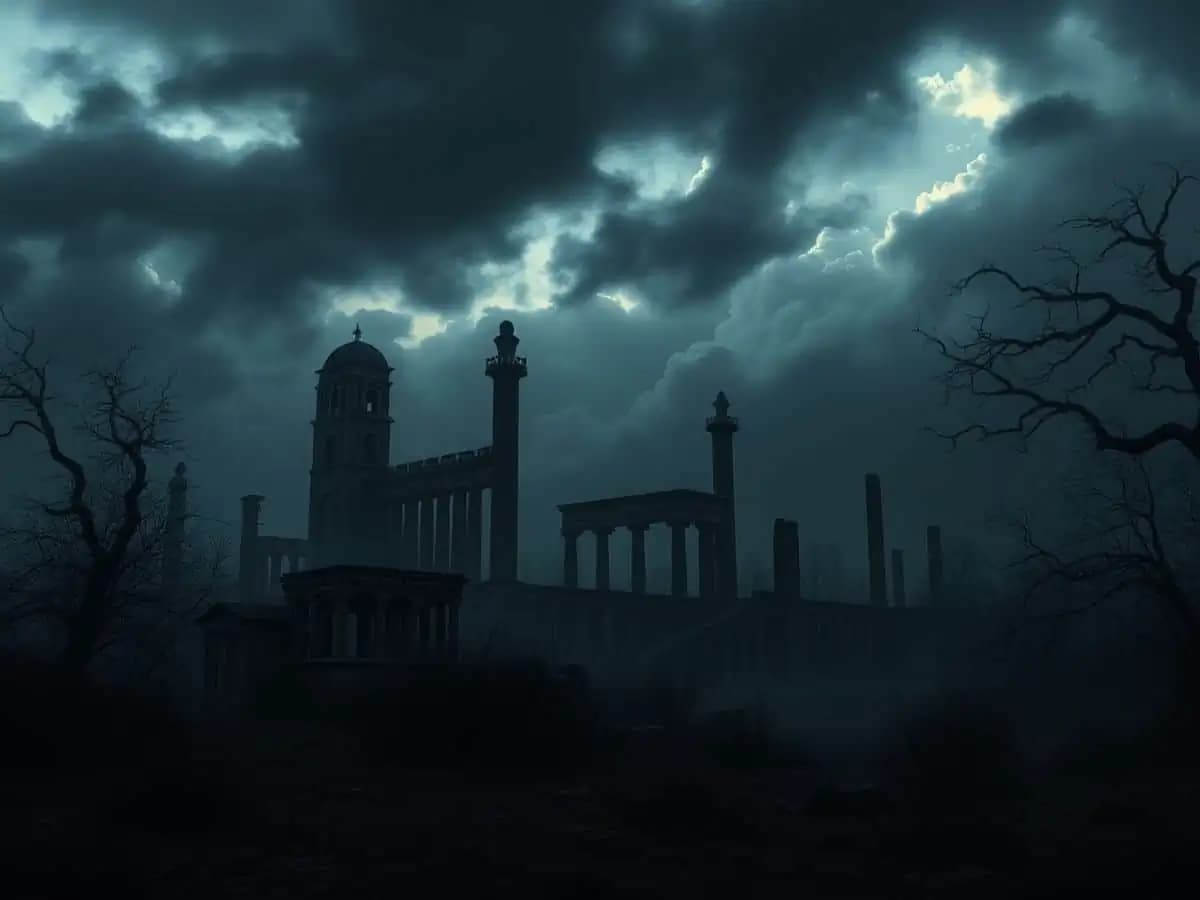
The narrative of the darkened skies signals the catastrophic end of this idyllic period. According to the myth, a celestial event marked this transition, causing the skies to darken, the earth to tremble, and the cosmic order to shatter. This upheaval is interpreted both literally and symbolically, representing planetary alignments, cosmic disasters, or moral decline.
The darkened skies serve as a metaphor for humanity’s loss of direct connection to the divine, leading to chaos, toil, and division. This transition echoes the description of the five ages of man, where the Golden Age gives way to lesser epochs, culminating in the troubled Iron Age.
The Arrival of the Son of God
Amidst the turmoil, the narrative introduces the figure of the Son of God, a divine savior destined to restore balance and usher in a new era of spiritual enlightenment. This archetype is prevalent in many mythologies, symbolizing hope, renewal, and redemption.
In Christian interpretations, the Son of God is associated with Jesus Christ, marking the end of an old covenant and the beginning of a new age of grace. Parallels can be drawn to other savior figures, such as Horus in Egyptian mythology and Krishna in Hinduism, each embodying the principle of divine intervention to restore cosmic order.