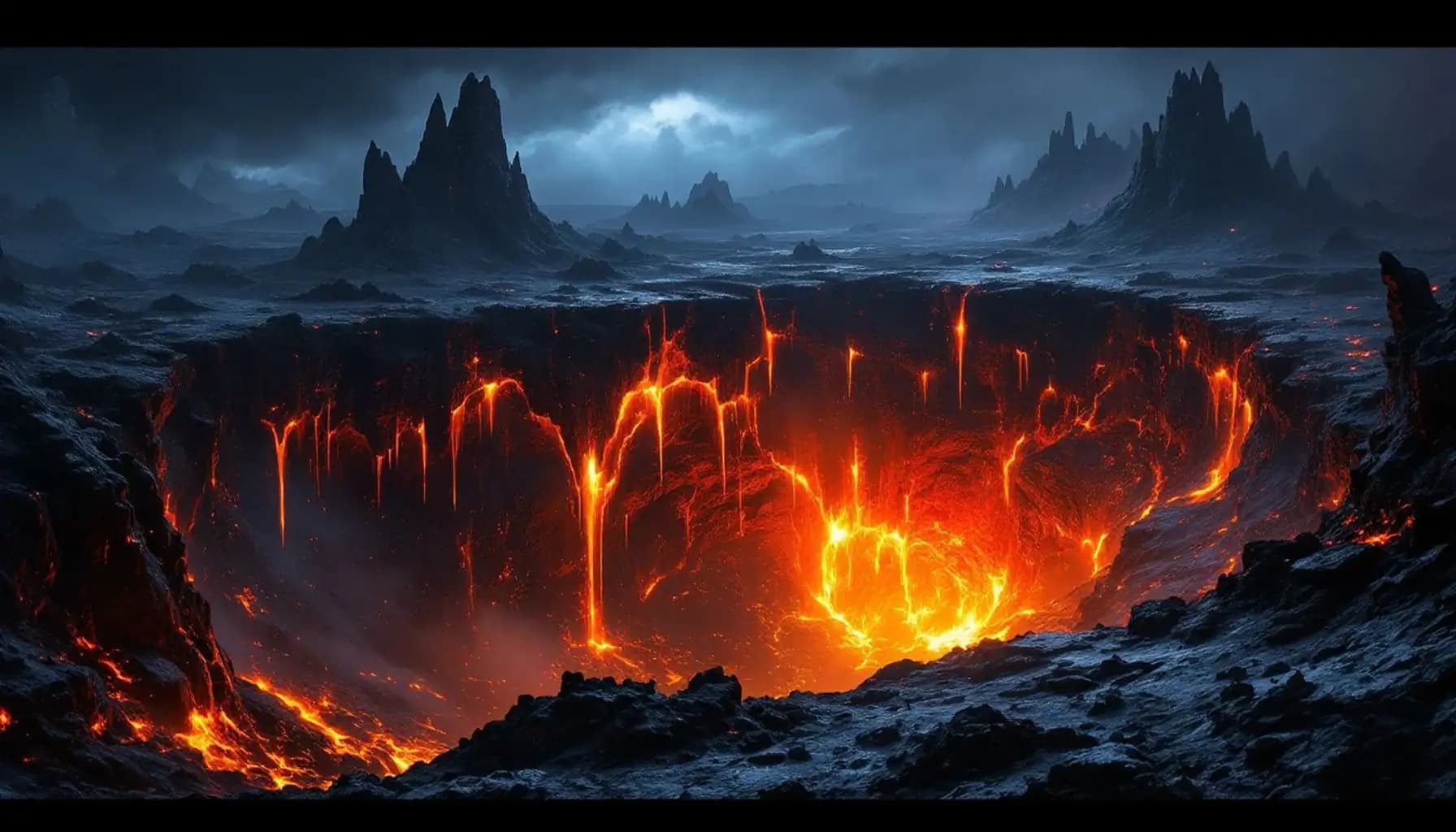

In a groundbreaking discovery, scientists have unveiled a new geological process occurring beneath the Earth’s crust. This phenomenon, known as lithospheric drip, reveals how the crust can recycle itself without traditional plate tectonics. The implications of this discovery are vast, affecting not only our planet but potentially others as well.
Key Takeaways
- Lithospheric drip is a newly discovered geological process.
- It allows the Earth’s crust to recycle itself without plate tectonics.
- The process has been observed in at least two locations: the Andes and Turkey.
- This could have significant implications for understanding geological activity on other planets.
Understanding Lithospheric Drip
Lithospheric drip is a fascinating process that resembles the behavior of viscous liquids. To illustrate this, consider the Pitch Drop Experiment, which has been running for nearly a century. This experiment demonstrates that substances we perceive as solid can behave like liquids over time.
- Pitch’s Viscosity: 230 billion times that of water.
- Last Drop Recorded: 2014, with the next expected around 2028.
Just like pitch, the Earth’s crust can drip over extended periods, albeit at a much slower rate. A single drop from the crust can take millions of years to form.
Advertisement
First Discovery in the Andes
The first significant evidence of lithospheric drip was found in the Central Andes. Researchers discovered that at temperatures around 800°C, the crust begins to drip, creating enormous drops that eventually enter the mantle. This process has been reshaping the landscape for millions of years, leading to dramatic changes in topography.
- Location: Altiplano Puna Plateau.
- Impact: Uplift of approximately 1 km in the last 10 million years.
Second Discovery in Turkey
Just two years later, a second location was identified in Turkey, specifically in the COA Basin. Here, the crust is descending rather than ascending, indicating a different phase of the drip process. This discovery was made possible through satellite observations, revealing a unique circular feature on the surface.
Advertisement