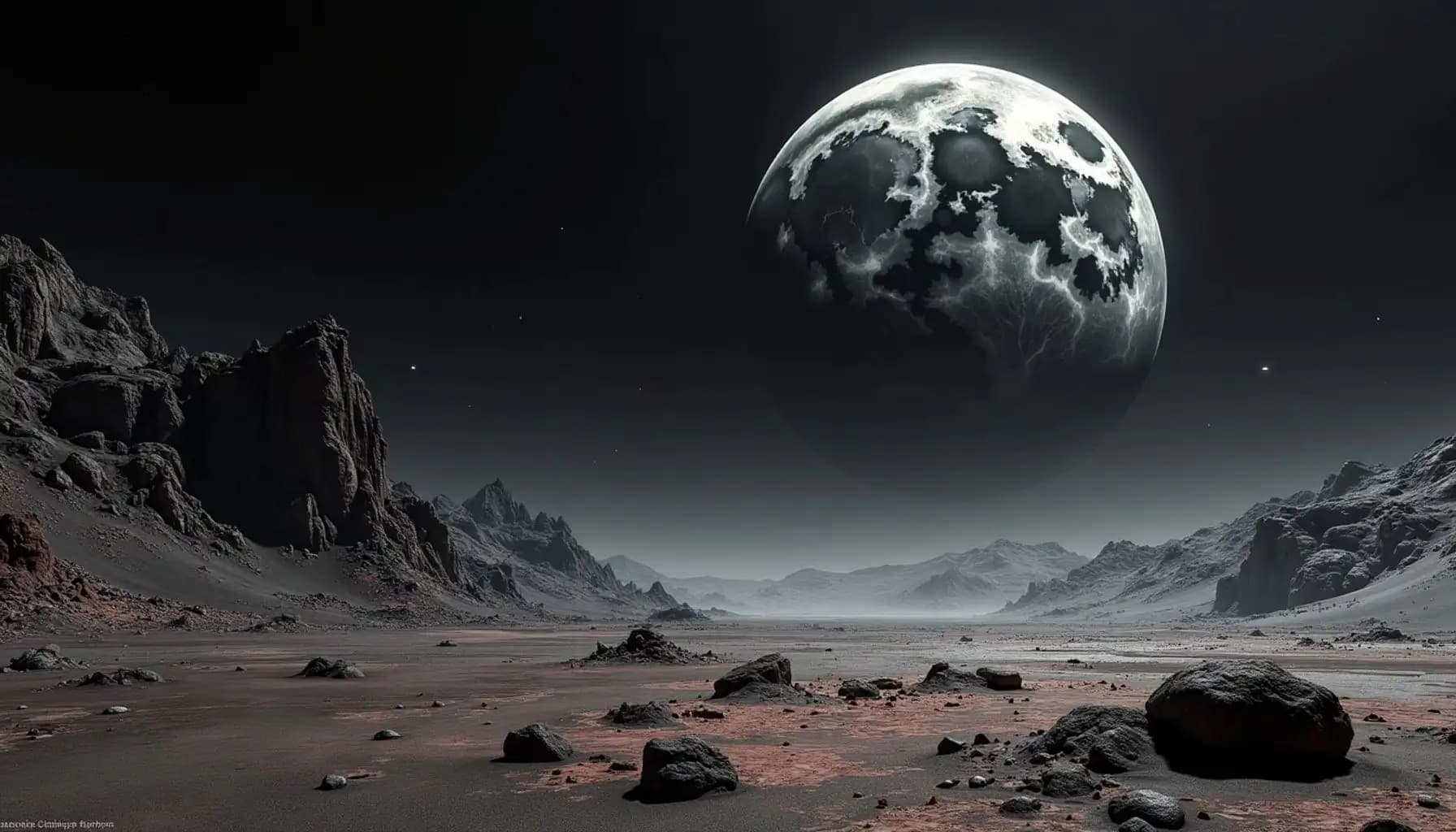

Imagine standing on a planet where the sky burns with a crimson hue and the landscape is a vast expanse of rust-colored plains and towering volcanoes. This is Mars, our neighboring planet that has captivated human imagination for centuries. But what do we truly know about this alien world? In this article, we explore the latest findings from Mars, revealing hidden features that scientists are just beginning to understand.
Key Takeaways
- Mars has a complex atmosphere that has changed dramatically over time.
- The MAVEN mission has revolutionized our understanding of Mars through ultraviolet imaging.
- Seasonal changes on Mars affect its atmospheric composition significantly.
- Future missions will build on MAVEN’s findings to explore the potential for past life on Mars.
The Allure of Mars
From ancient astronomers to modern rovers, Mars has always been a source of mystery. Its elusive nature has sparked countless debates and inspired many science fiction stories. But the real story of Mars is even more intriguing than fiction.
The MAVEN Mission
Launched in 2013, NASA’s Mars Atmosphere and Volatile Evolution (MAVEN) mission focuses on studying the upper atmosphere of Mars. Unlike rovers that explore the surface, MAVEN orbits the planet, examining the thin gas veil that covers it. Since 2014, MAVEN has been observing how solar radiation interacts with the Martian atmosphere, providing insights into how Mars lost much of its atmosphere over time.
Advertisement
Ultraviolet Imaging: A New Perspective
One of the most significant advancements in Mars exploration is the development of imaging technology. MAVEN’s Imaging Ultraviolet Spectrograph (IUVS) captures ultraviolet light, revealing details invisible to the naked eye. This technology allows scientists to study the complex interactions between the Martian atmosphere and solar radiation.
- Ultraviolet Light Wavelengths:
- 110 nm – Blue
- 180 nm – Green
- 340 nm – Red
By assigning colors to different wavelengths, IUVS creates images that show the distribution of various gases in the Martian atmosphere. The brightness of each color indicates the intensity of ultraviolet light, providing a comprehensive picture of atmospheric conditions.
Seasonal Changes on Mars
MAVEN’s images taken at different times of the year reveal dramatic changes in the Martian atmosphere. For instance:
Advertisement