White House 'Ballroom' Dig: What They're Not Saying
Politics
White House ‘Ballroom’ Dig: What They’re Not Saying
Key Takeaways from the Project Public claim: The White House announced a privately funded 90,000 sq ft “ballroom” project on July 31, 2025, naming Clark Construction as general contractor, AECOM as engineer, and McCrery…
Art Grindstone is the hard-nosed storyteller behind Unexplained.co, a veteran investigator whose life’s work sits at the crossroads of the paranormal, fringe science, and the shadows most people try not to look into. With decades spent chasing impossible stories — black-budget psychic programs, vanished Cold War experiments, desert rituals that sparked UFO waves, and the strange phenomena buried in America’s forgotten backroads — Art brings a rare combination of skepticism, awe, and journalistic precision. He’s not here to debunk. He’s not here to blindly believe. He follows the evidence wherever it leads — even when it leads someplace deeply uncomfortable. Known for his immersive, cinematic style and his ability to turn obscure research into gripping narrative, Art has built a devoted following across podcasts, long-form features, documentaries, and serialized investigations. His interviews are direct. His analysis is unflinching. His voice has become a staple in the modern paranormal renaissance — the guy people turn to when a story is too strange, too complex, or too dangerous for anyone else to touch. Off-mic, Art works with a distributed network of researchers, archivists, and field operatives who help surface the stories mainstream media ignores. On-mic, he transforms their findings into meticulous, high-impact reporting that refuses to insult the intelligence of true believers. His philosophy is simple: Take the phenomenon seriously. Treat the audience with respect. Tell the story as if the world depends on it — because sometimes it does. When Art Grindstone digs into a case, he isn’t just chasing a mystery. He’s tracing the fault lines of reality itself.
5 min · 1,207 words
In This Report(7)
Key Takeaways from the Project
Public claim: The White House announced a privately funded 90,000 sq ft “ballroom” project on July 31, 2025, naming Clark Construction as general contractor, AECOM as engineer, and McCrery Architects for design. Sources include the White House brief, ENR, and Construction Dive.
Physical and procurement signals: East Wing demolition in October 2025, on-site activity with heavy generators, telecom/utility trucks, and continuous below-grade work, plus the donor list and contractor specialties, point to substantial below-grade infrastructure beyond just ceremonial space. Backed by ENR, BBC, AP, and The Drey Dossier.
Open questions: No public equipment inventory or full permit/NCPC/GSA records match the scope; the National Trust lawsuit filed on Dec 12, 2025, led to court guidance allowing below-ground work to continue while limiting above-ground efforts, with the administration citing national-security exemptions without detailed disclosure.
A Night of Machines: The Scene on the South Lawn
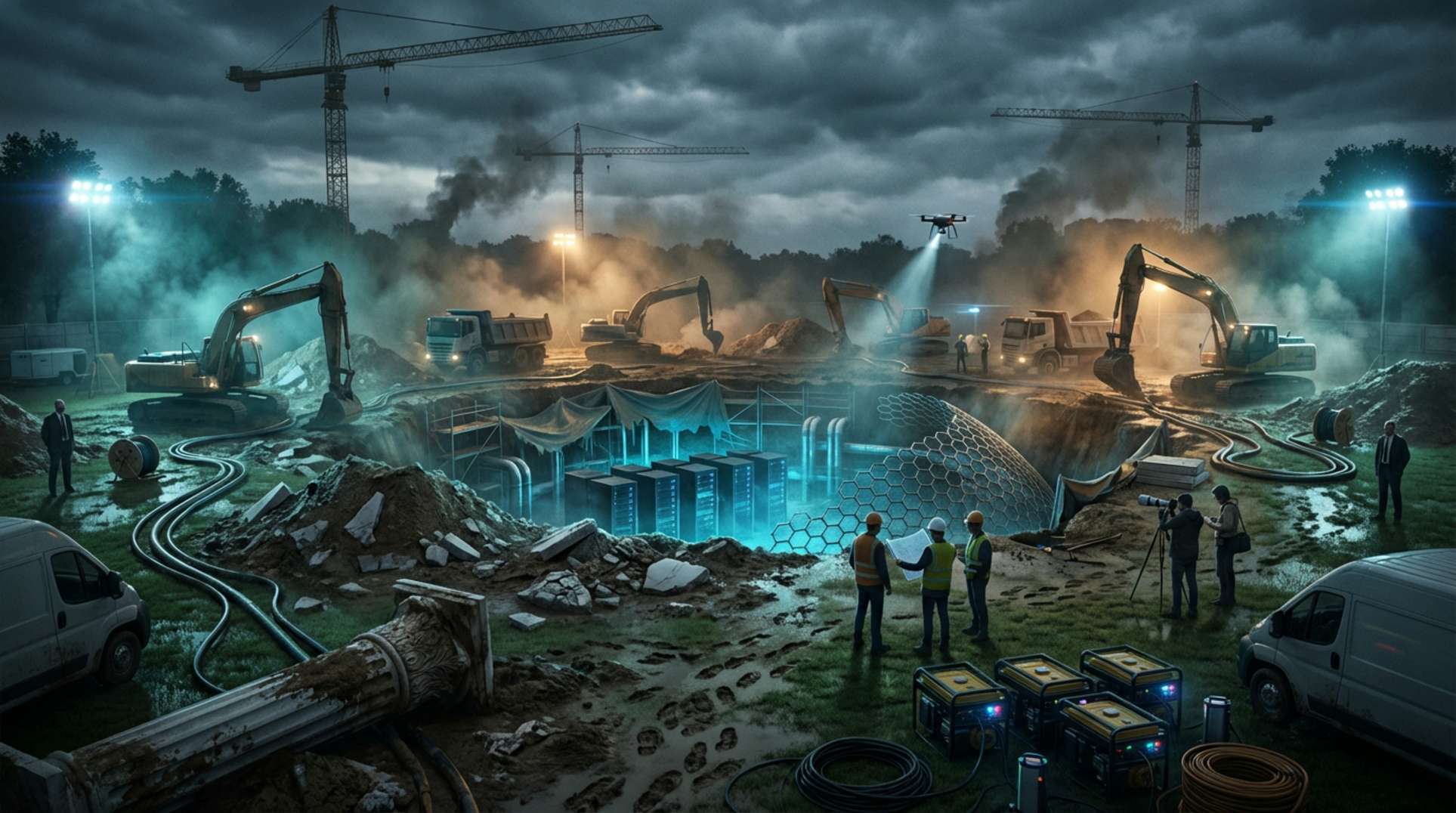
Picture the South Lawn under floodlights, well past midnight. Cranes loom over piles of rubble where the East Wing once stood, demolished in October 2025. Heavy machinery grinds away, audible even from blocks away, as crews push through below-ground operations. Reporters and observers captured this in real time—images from Reuters, BBC, and AP show the relentless activity, far from the quiet build of a simple event space.
Eyewitness accounts flood social media: night shifts with infrastructure trucks rolling in, generators humming, and the constant churn of earth. Preservationists call it a rush job, sidestepping the usual oversight. Neighbors sense something off—an intensity that doesn’t match the ballroom story. The air hangs heavy with dust and unanswered questions.
What Witnesses and Analysts Report
Preservationists from the National Trust for Historic Preservation have been vocal. They argue the project bypassed standard design reviews, environmental assessments, and public input, leading to their lawsuit on Dec 12, 2025. Their press releases, covered by PBS and BBC, highlight how the work moved forward without the checks that protect historic sites like this.
Advertisement
Independent researchers, particularly through The Drey Dossier, piece together contractor specialties and visible gear. They note heavy generators, telecom systems, EMP/EM shielding, and data-center cooling—elements that don’t align with a conventional ballroom. These are interpretive claims, but they’re grounded in photos and expertise, raising hypotheses about what’s really going underground.
What exactly did the White House announce about this project?
What evidence suggests this might not just be a ballroom?
How have officials responded to the lawsuit and scrutiny?
Who are the donors funding this, and why does it matter?
What are the next steps for investigating this?
Advertisement
Frequently Asked Questions
What exactly did the White House announce about this project?
The White House announced a privately funded 90,000 sq ft ballroom project on July 31, 2025, naming Clark Construction as general contractor, AECOM as engineer, and McCrery Architects for design. Initial cost estimates were around $200M, later rising to up to $400M.
What evidence suggests this might not just be a ballroom?
On-site activity includes heavy generators, telecom trucks, and continuous below-grade work, plus contractor specialties in infrastructure that go beyond ceremonial space. The Drey Dossier analyzes visible equipment like EMP shielding and data-center cooling, raising questions about alternative purposes.
How have officials responded to the lawsuit and scrutiny?
The administration cites national-security exemptions to justify continued work, with some details shared in camera during litigation. A federal judge allowed below-ground efforts to proceed while limiting above-ground construction, pending further review.
Who are the donors funding this, and why does it matter?
The White House released a list of 37 donors, including tech firms, defense contractors, and crypto interests. This has prompted congressional probes into potential conflicts and terms, highlighting questions of accountability and influence in a project invoking security exemptions.
What are the next steps for investigating this?
Plans include filing FOIA requests for procurement and review records from GSA, NCPC, and NPS. We'll also examine court documents for redactions and match public photos of equipment to technical specs to compare against ballroom versus secure-facility needs.
A ‘Black Hole Star’ May Be Hiding Inside the Early Universe’s Red Dots
One crimson point in the infant universe is so bright that ordinary starlight cannot explain it. A new Nature study argues it may be a dense gas envelope powered from within by a growing black hole.
Aug 20, 2026 • 8 min read
UFO & Aliens
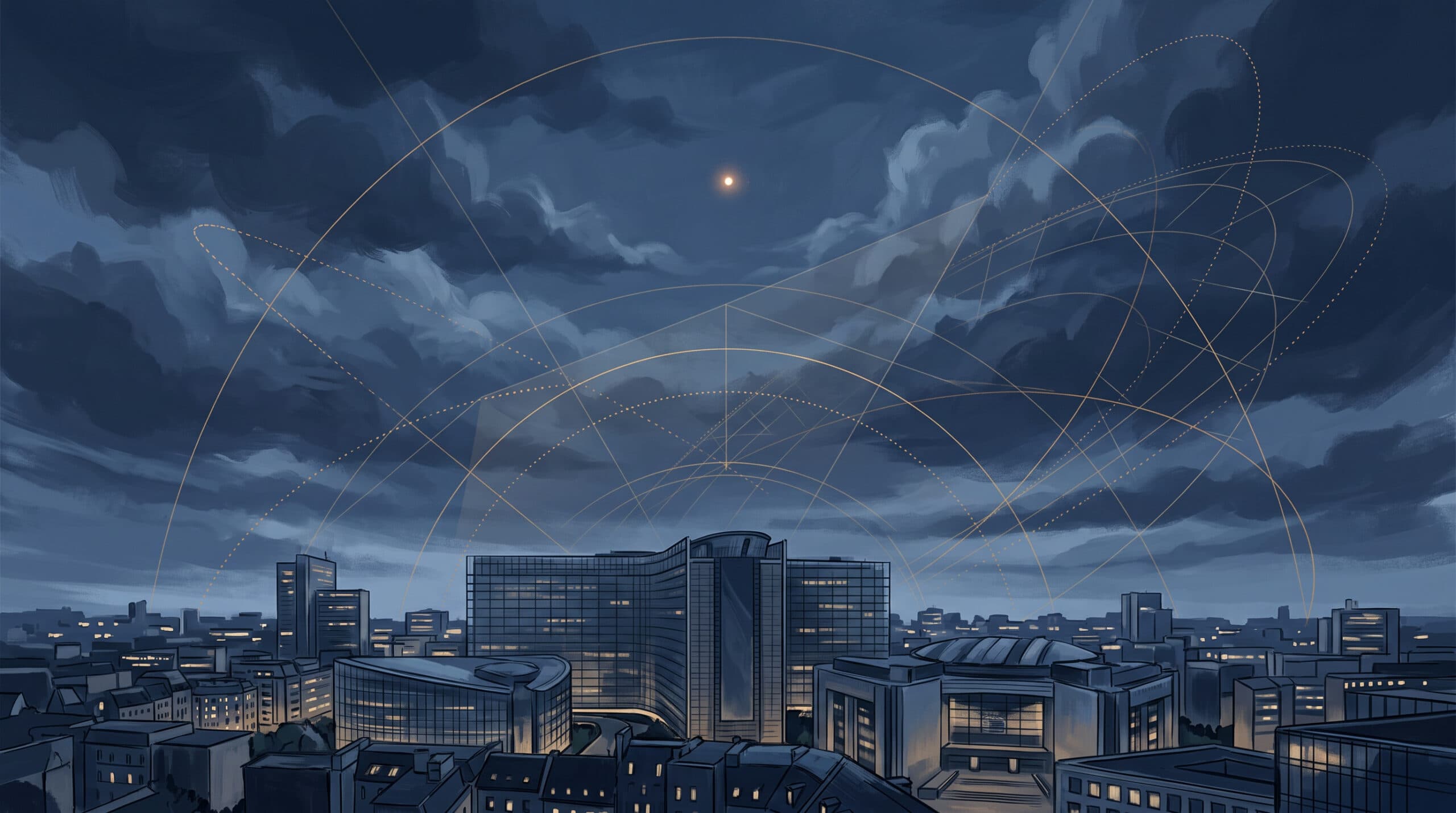
Europe Has Been Quietly Tracking UAP Reports Since 2023
Documents reveal how the European Commission handled UAP images, what it promised to improve, and why Europe still lacks a public investigation office.
Aug 17, 2026 • 8 min read
Cryptozoology
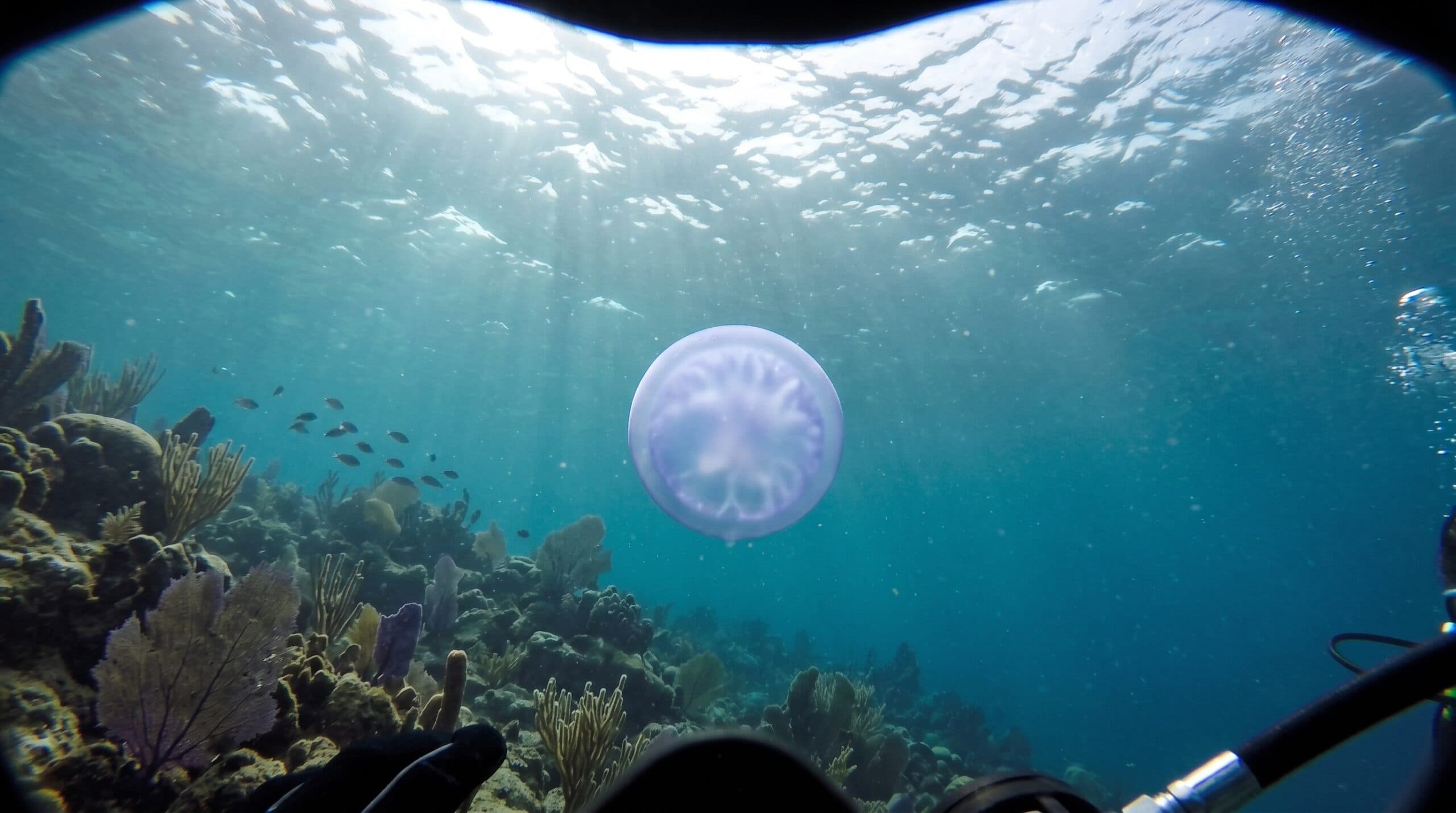
The Deep Sea Sphere: 1990s SCUBA Divers Filmed Something in the Bahamas That Still Defies Classification
A clip from the 1990s shows SCUBA divers encountering a strange, perfectly spherical creature in the Bahamas. Decades later, the footage is resurfacing — and cryptid researchers, marine biologists, and UAP watchers all have different theories about what it is.
May 14, 2026 • 6 min read
Donor scrutiny adds another layer. The White House released a list of 37 donors, including tech firms, defense contractors, and crypto players. This sparked congressional letters and probes into potential conflicts, as reported by Fortune, AP, and the Senate EPW committee. Witnesses and analysts alike see patterns here that demand a closer look.
Timelines, Tracks, and Hard Data
The story unfolds in clear steps, backed by sources. It starts with the announcement on July 31, 2025, via White House press release. Demolition hit in October 2025, per ENR, BBC, and AP. Costs climbed from an initial $200M estimate to reports of $300M and up to $400M, cited in White House statements, Reuters, and NBC.
Contractors are named: Clark Construction as GC, AECOM for engineering, McCrery Architects on design—from White House briefs, ENR, and Construction Dive. The donor list counts 37, detailed in Fortune and AP. The National Trust lawsuit landed on Dec 12, 2025, with press from their release, Politico, and Reuters. Court rulings allow below-ground work to proceed, holding off above-ground until at least April 2026, as per Reuters, AP, and NBC.
Metric
Value
Source
Announcement Date
July 31, 2025
White House brief
Planned Floor Area
~90,000 sq ft
ENR reporting
Public Cost Estimates
~$200M initial; up to $400M
White House / Reuters / NBC
Named Construction Team
Clark Construction (GC), AECOM (engineer), McCrery Architects (design)
White House / ENR / Construction Dive
Demolition
East Wing razed in October 2025
ENR / BBC / AP
Donors
37 donors listed
Fortune / AP
Lawsuit
Filed Dec 12, 2025 by National Trust
National Trust press release / Politico / Reuters
Court Posture
Below-ground work continues; above-ground delayed to April 2026 earliest
Reuters / AP / NBC
Official Story vs. What the Data Suggests
The White House frames this as a privately funded modernization, adding a ballroom with contractors like McCrery, Clark, and AECOM. They promise updates, as per their briefs. In court, the administration and DOJ lean on presidential authority and national-security needs to keep work going, sharing some details in camera or redacted forms, reported by Politico, AP, and Reuters.
Yet oversight remains murky. Questions linger on required permits, NCPC consultations, or environmental reviews for below-grade versus above-ground phases. GSA, NCPC, and NPS roles add complexity, as noted in Factually, The Hill, and BBC. Witnesses and data point to gaps—official statements cover the surface, but don’t address the mismatches.
Alternative views emerge from contractor capabilities, visible equipment, and donor profiles, overlapping with telecom, defense, and data-center work. The Drey Dossier and press images highlight these. No official equipment list exists, leaving room for plausible inquiries into what’s truly being built.
What It All Might Mean
The strongest evidence stands firm: the July 2025 announcement, named contractors, October 2025 demolition, 37-donor list, cost jumps to $300M, and the Dec 12, 2025 lawsuit with court approval for below-ground continuation. Sources like White House, ENR, BBC, AP, Fortune, and Reuters confirm these.
Unresolved points cut to the core: what’s the exact below-grade equipment and its capacity? Where are the full permit, NCPC, GSA, and NPS records? What are the donor amounts and any strings attached? On what basis do national-security exemptions apply? These gaps touch preservation, transparency, security, and accountability.
This matters because it tests how far official narratives stretch against observable facts. For follow-up, we’ll file FOIA requests for GSA, NCPC, NPS, and contractor records. We’ll seek the full court complaint and DOJ response, mapping redactions. And we’ll cross-reference public photos with tech specs—comparing ballroom needs to secure-facility setups. Stay tuned; the patterns are emerging.
Frequently Asked Questions
Advertisement
The White House announced a privately funded 90,000 sq ft ballroom project on July 31, 2025, naming Clark Construction as general contractor, AECOM as engineer, and McCrery Architects for design. Initial cost estimates were around $200M, later rising to up to $400M.
On-site activity includes heavy generators, telecom trucks, and continuous below-grade work, plus contractor specialties in infrastructure that go beyond ceremonial space. The Drey Dossier analyzes visible equipment like EMP shielding and data-center cooling, raising questions about alternative purposes.
The administration cites national-security exemptions to justify continued work, with some details shared in camera during litigation. A federal judge allowed below-ground efforts to proceed while limiting above-ground construction, pending further review.
The White House released a list of 37 donors, including tech firms, defense contractors, and crypto interests. This has prompted congressional probes into potential conflicts and terms, highlighting questions of accountability and influence in a project invoking security exemptions.
Plans include filing FOIA requests for procurement and review records from GSA, NCPC, and NPS. We’ll also examine court documents for redactions and match public photos of equipment to technical specs to compare against ballroom versus secure-facility needs.
Art Grindstone is the hard-nosed storyteller behind Unexplained.co, a veteran investigator whose life’s work sits at the crossroads of the paranormal, fringe science, and the shadows most people try not to look into. With decades spent chasing impossible stories — black-budget psychic programs, vanished Cold War experiments, desert rituals that sparked UFO waves, and the strange phenomena buried in America’s forgotten backroads — Art brings a rare combination of skepticism, awe, and journalistic precision. He’s not here to debunk. He’s not here to blindly believe. He follows the evidence wherever it leads — even when it leads someplace deeply uncomfortable. Known for his immersive, cinematic style and his ability to turn obscure research into gripping narrative, Art has built a devoted following across podcasts, long-form features, documentaries, and serialized investigations. His interviews are direct. His analysis is unflinching. His voice has become a staple in the modern paranormal renaissance — the guy people turn to when a story is too strange, too complex, or too dangerous for anyone else to touch. Off-mic, Art works with a distributed network of researchers, archivists, and field operatives who help surface the stories mainstream media ignores. On-mic, he transforms their findings into meticulous, high-impact reporting that refuses to insult the intelligence of true believers. His philosophy is simple: Take the phenomenon seriously. Treat the audience with respect. Tell the story as if the world depends on it — because sometimes it does. When Art Grindstone digs into a case, he isn’t just chasing a mystery. He’s tracing the fault lines of reality itself.