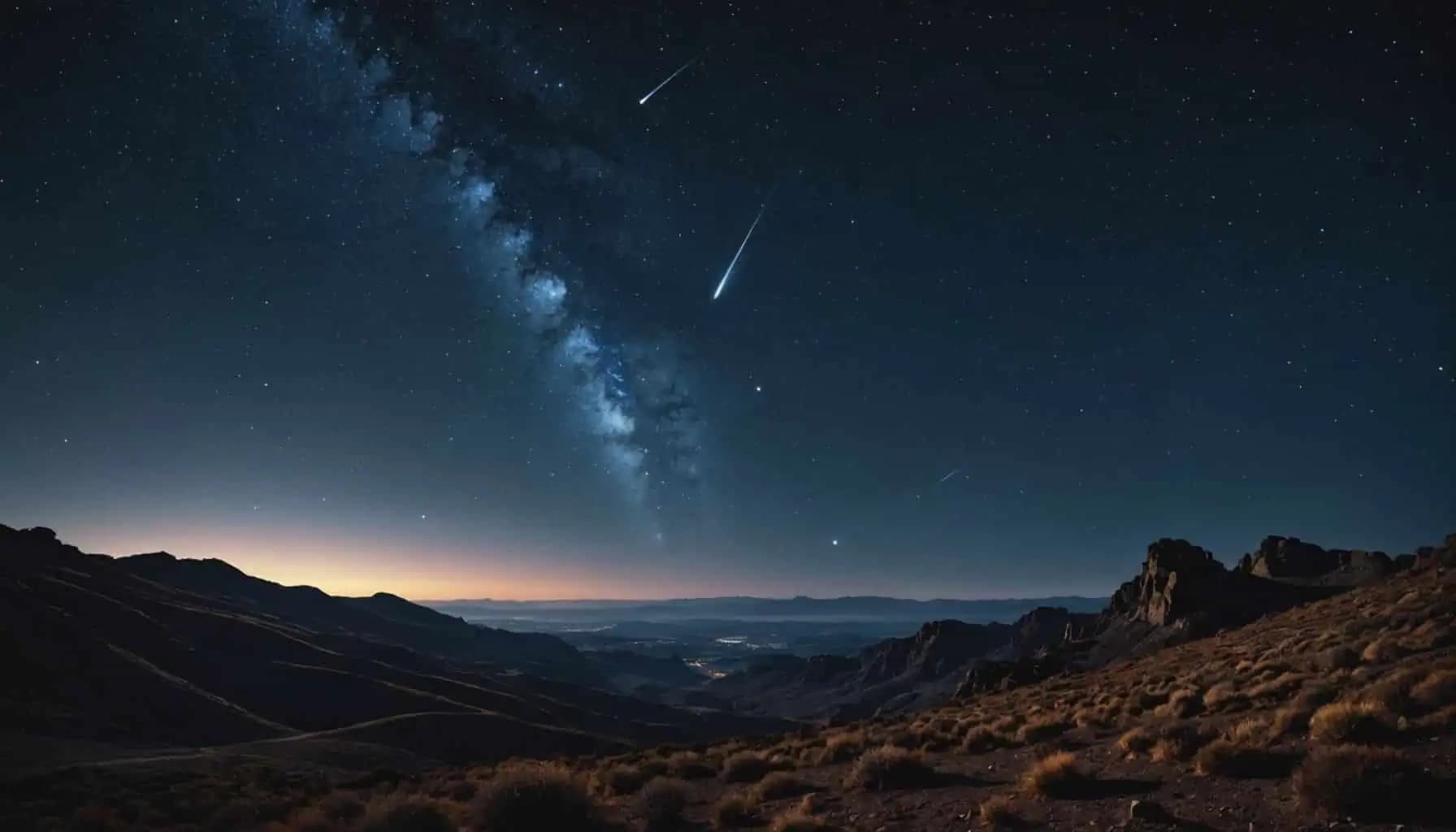

A dazzling comet is on its way to our night sky, promising to outshine even the brightest stars. Named C/2023 A3 (Tsuchinshan-ATLAS), this comet was discovered in early 2023 and is expected to be a spectacular sight for skywatchers, especially in the northern hemisphere.
Key Takeaways
- Comet C/2023 A3 is expected to be brighter than Comet NEOWISE.
- The comet will create a stunning tail as it approaches the Sun.
- Best viewing opportunities will be in October 2023.
The Discovery of C/2023 A3
The story of Comet C/2023 A3 began on February 22, 2023, when it was spotted by the ATLAS telescope in South Africa. This robotic system is designed to detect near-Earth asteroids. Initially, the comet was a faint object located between the orbits of Jupiter and Saturn. Interestingly, it had been observed earlier on January 9, 2023, by the Purple Mountain Observatory in China.
The comet was designated as a non-periodic comet, meaning it comes from the distant Oort Cloud and may only pass through our solar system once or take thousands of years to return. The designation 2023 A3 indicates it was the third object discovered in the first half of January 2023.
Advertisement
What Makes This Comet Special?
There are three main reasons why C/2023 A3 is generating excitement:
- Visibility: It could end the long wait for a naked-eye comet, expected to be much brighter than Comet NEOWISE.
- Tail Formation: As it approaches the Sun, its icy core will heat up, creating a beautiful tail that could stretch across the night sky.
- Northern Hemisphere Favor: The comet will be particularly favorable for viewers in the northern hemisphere, reminiscent of the spectacular Comet Hale-Bopp in 1997.
Visibility Timeline
To catch a glimpse of Comet A3, timing is crucial. Here’s a month-by-month breakdown:
Advertisement
- August 2023: The comet remains beyond naked-eye visibility.
- September 2023: It will brighten to a magnitude of 7 and will be visible in the southern hemisphere.
- September 27, 2023: The comet will make its closest approach to the Sun, known as , coming within 58 million km of the Sun.