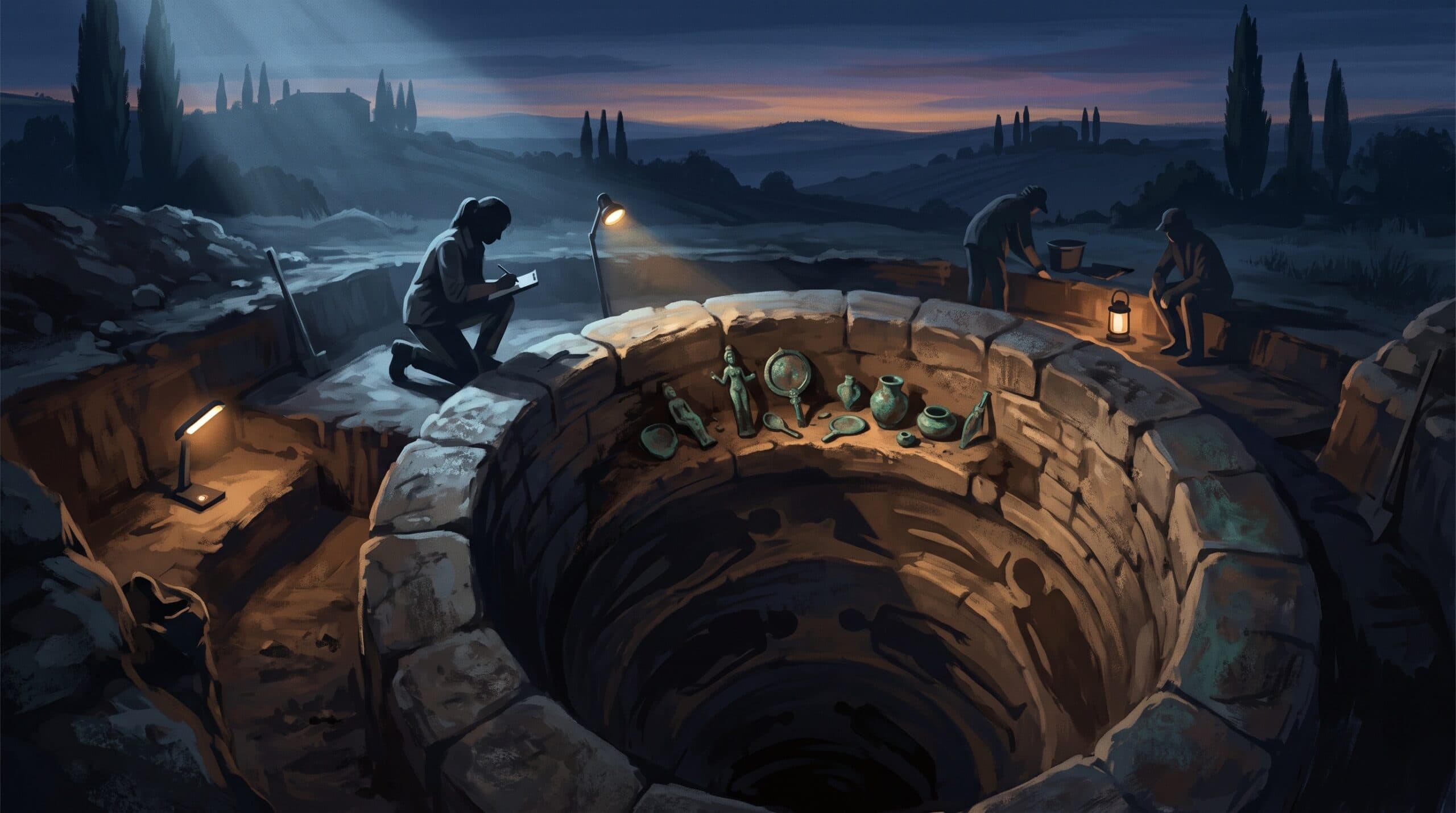

Key Takeaways
– Aleister Crowley recorded a ritual in the Great Pyramid’s King’s Chamber in March 1904 and later transcribed The Book of the Law (Liber AL) on April 8–10, 1904, which he attributed to a voice named Aiwass. The Stele of Revealing (later Egyptian Museum A 9422) figures in his account and was once inventoried as 666 in the old Bulaq catalog.
– Cultural echoes appear in later decades: Crowley is depicted on the Beatles’ 1967 Sgt. Pepper cover; Jimmy Page owned Crowley’s former Boleskine House from about 1971 to 1992; Led Zeppelin pressings contain runout etchings that reference Thelemic phrasing; and musician Danny Carey has documented Crowley-related materials tied to Tool’s 2019 album era.
– Gaps remain: independent contemporaneous corroboration for the precise March–April 1904 episodes is limited, and the link from a private ritual to broad cultural effects is interpretive rather than strictly empirical.
A March Night in the King’s Chamber
Advertisement
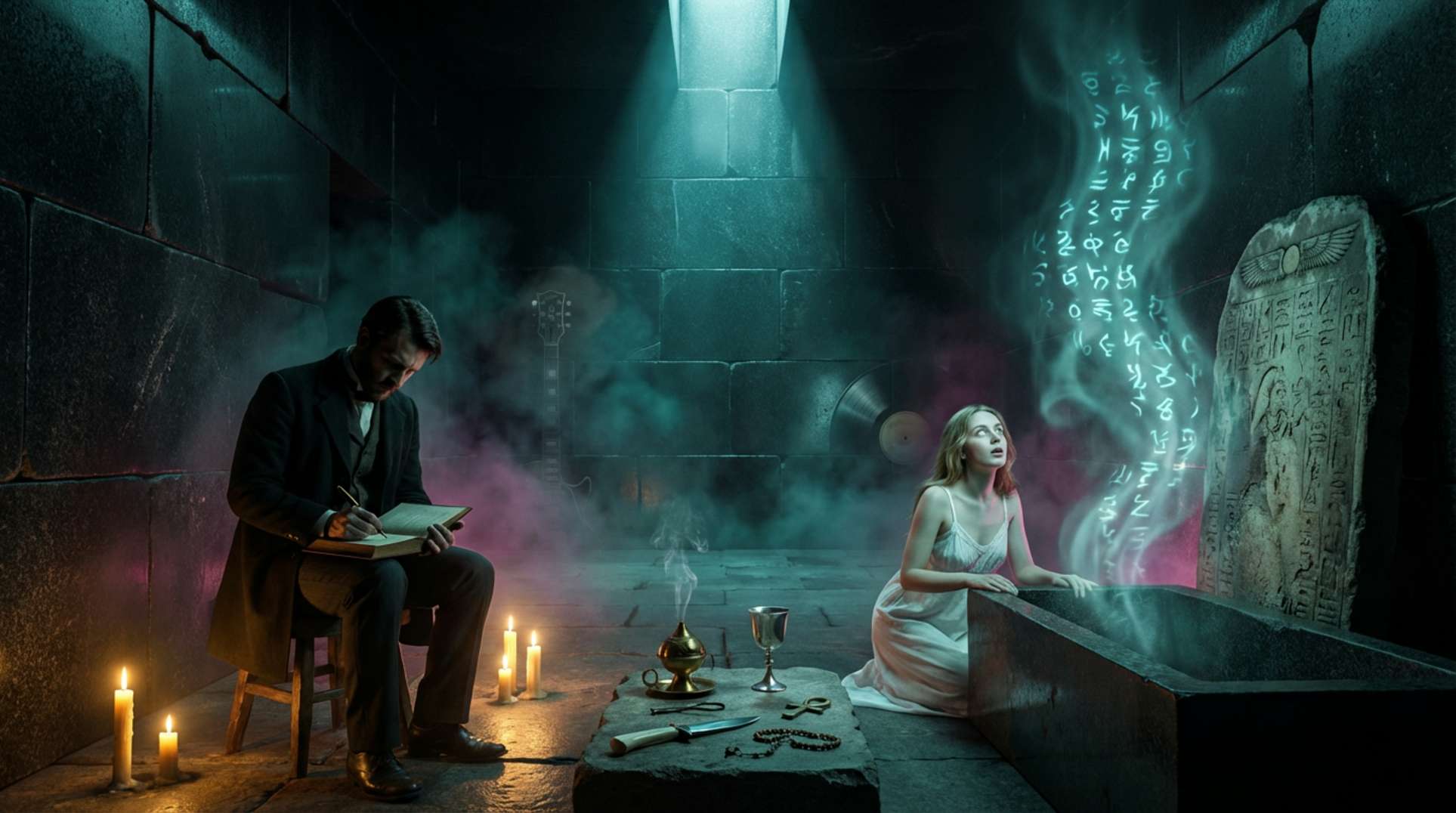
Imagine the King’s Chamber in the Great Pyramid in March 1904. Crowley describes setting up ritual implements, entering a focused, private working, and involving his wife Rose Edith Kelly in a role that, in his accounts, shifts the working from personal to revelatory. According to Crowley, Rose experienced utterances or visions connected to a Cairo artifact they later identified as the Stele of Revealing.
Crowley records a specific ritual around March 16. He then describes three days, April 8–10, when he says a voice dictated material he transcribed as the Book of the Law. These are the core events that later Thelemic tradition treats as foundational.
Voices from Cairo to Culture
Primary sources for the chain are Crowley’s diaries and his later publications, such as The Equinox of the Gods and Confessions. In Thelemic communities these texts are regarded as revelatory; scholars treat them as important primary documents but analyze them critically.
Artists and musicians have borrowed imagery and phrases associated with Crowley and Thelema. Crowley appears on the Sgt. Pepper cover in 1967; Jimmy Page purchased Boleskine House in the early 1970s; Led Zeppelin pressings from around 1970 include evocative etchings; and modern rock musicians have acknowledged Crowley-related interests. These are documented instances of cultural transmission, though their meanings differ by interpreter.
Timelines, Tracks, and Hard Data
– 16 Mar 1904: Crowley notes a pyramid ritual in his diary.
– 8–10 Apr 1904: Crowley records receipt/transcription of Liber AL (Book of the Law).
– c. 680–670 BCE: Rough manufacture date for the Stele of Revealing (museum cataloged later as Bulaq 666, now A 9422).
– 1967: Crowley pictured on Sgt. Pepper album artwork.
– 1970–1971: Led Zeppelin pressings and Jimmy Page’s acquisition of Boleskine House occur in this era.
– 2019: Tool’s Fear Inoculum debuts at No. 1; Danny Carey has publicly referenced Crowley materials.
Sources include Crowley’s own publications and diaries, museum catalogs for the stele, album artwork and pressing notes, property histories for Boleskine House, and public statements or interviews from musicians.
Official Story vs. Interpretive Claims
Egyptologists and museum professionals describe the Stele of Revealing as a Late Period funerary object with a traceable provenance; they do not treat it as evidence of supernatural events. Historians of religion and scholars treat Crowley’s diary entries and later claims as primary material that require corroboration. Journalistic and music-historical sources reliably document artists’ borrowings of Crowley-related imagery but generally do not assert occult causation.
Advertisement
What It All Might Mean
The clearest findings are: Crowley documented the 1904 events and later publicized them; an identifiable stele connects to his account; and artists across decades have drawn on Crowley-related motifs. Where interpretation becomes speculative is in asserting that the pyramid working itself produced large-scale cultural change. That causal step is interpretive: documented influence exists, but mechanisms (intentional transmission, symbolic adoption, or coincidence) vary by case.
Research Gaps and Next Steps
– Independent archival corroboration for the March–April 1904 days (hotel registers, consular correspondence, museum visitor logs) would strengthen the historical case.
– More transcription and publication of Crowley’s original diary pages and museum records would help. Consulting Egyptologists, music historians, and Thelemic scholars in tandem would clarify provenance, reception, and cultural pathways.
FAQ
Q: What exactly happened in the Great Pyramid in 1904?
A: Crowley’s diaries report a ritual in the King’s Chamber around March 16, 1904; he later described receiving the Book of the Law by dictation on April 8–10, 1904. These are his firsthand claims, treated as primary documents by scholars and as revelation by Thelemites.
Q: Is there evidence for the musical and cultural echoes?
A: Yes. Documented examples include Crowley’s appearance on the Sgt. Pepper cover (1967), Jimmy Page’s ownership of Boleskine House (c.1971–1992), Led Zeppelin pressings with suggestive etchings (circa 1970), and public statements about Crowley-related collections by musicians such as Danny Carey.
Q: How do historians and institutions view these claims?
A: Museums catalog the stele without supernatural attribution; historians treat Crowley’s accounts as important but not automatically factual without independent corroboration. Music historians document borrowings of imagery and phrasing but typically stop short of endorsing occult explanations.
Q: What remains unresolved?
A: The biggest open issues are independent contemporaneous evidence for the exact March–April 1904 sequence and a precise causal account of how a private ritual translated into broader cultural motifs. Further archival work could help.
Summary
Crowley’s 1904 Cairo working and the resulting Book of the Law are well attested within his corpus and later Thelemic tradition. Museum records confirm the stele’s antiquity and catalog history. Cultural echoes in music and art are verifiable, but moving from verified borrowings to claims about occult causation requires interpretation and further historical corroboration. For deeper clarity, prioritized next steps are archival searches in early 20th-century Cairo records and closer cross-disciplinary study of provenance and cultural transmission.