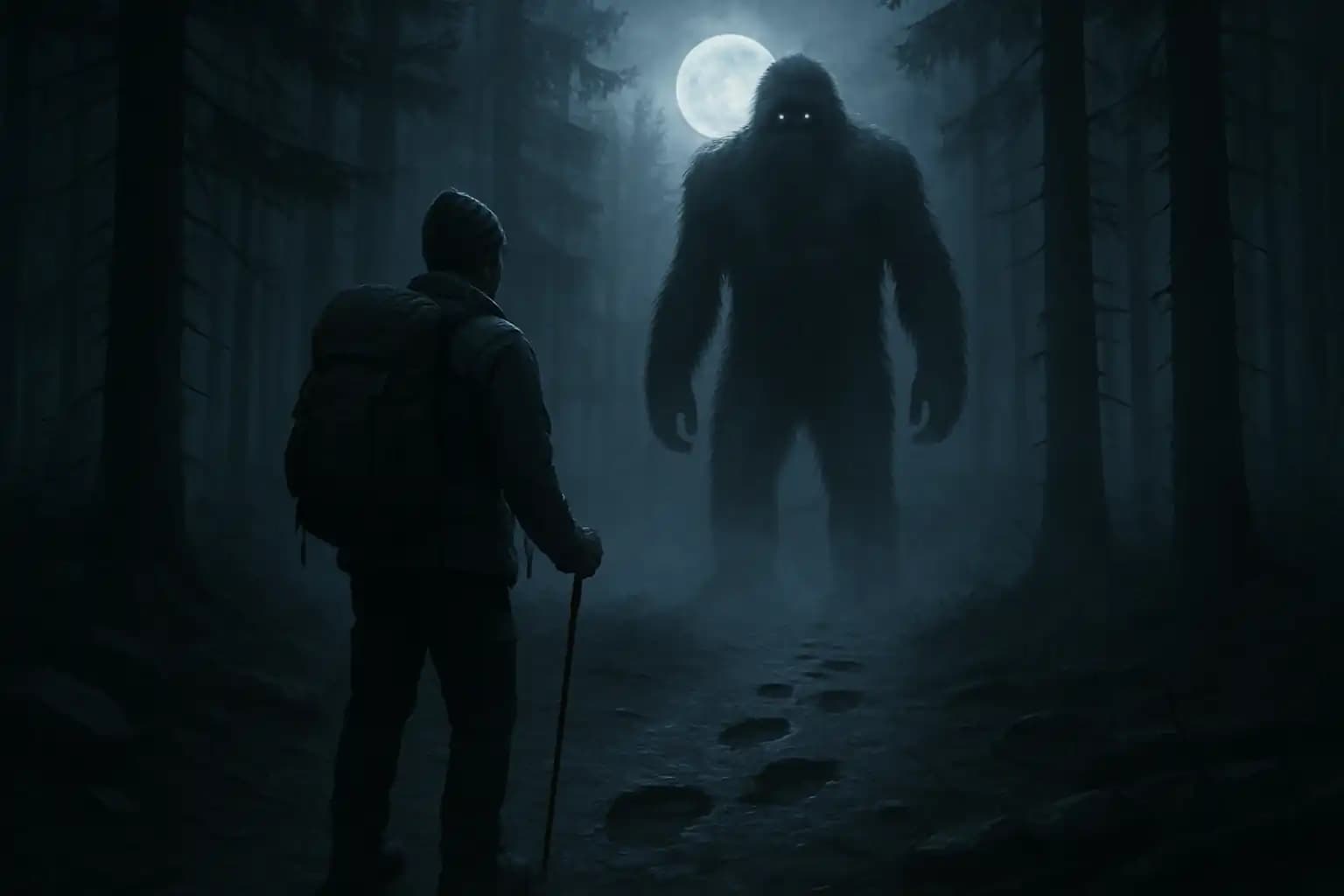

When night falls on Alberta’s vast conifer forests, few think about folklore—they just hope not to sprain an ankle. For Steve, a hiker, those shadowy woods became the backdrop for a “Class A” Bigfoot encounter that rattled even seasoned adventurers. His story adds to a growing list of unnerving eyewitness accounts that keep Sasquatch alive as both icon and nightmare.
The mythology of Bigfoot—known as Sasquatch in Canada—might seem like a campfire tale. Yet, Steve’s experience shows how cozy legends can quickly turn into breathless fear with a single horrifying sighting. He recalls a night alone in the Alberta backcountry when a hulking creature blocked his path: bipedal, hairy, and making a sound he had never heard from any bear or moose. Frozen in shock, he had to watch as the apparition watched him back; the silence of the wilderness was pierced by the pounding of primal fear, as detailed in the genre-defining BFRO report classification system and reflected in countless Canadian and American cases.
What Makes a Bigfoot Encounter “Class A”?
A true “Class A” encounter is the holy grail for Sasquatch believers: a close-range sighting under conditions that rule out misidentification. In Steve’s account, he gained more detail than he expected. This wasn’t just rustling foliage or a mysterious howl; it was a direct, visual confrontation with a figure too massive, upright, and disturbingly human to explain away. According to bigfoot report analysts, Class A encounters reveal details—limb proportions, motion, hair, and even unsettling intelligence behind the eyes—making it harder to dismiss the sighting as a bear, a prank, or wishful thinking.
Advertisement
The sheer number of similar reports, some on mainstream platforms and others as whispered backwoods stories, showcases the cultural power of Sasquatch. Encounters like Steve’s connect with broader patterns: remote wilderness, sudden chills, and, after the adrenaline fades, a complicated mix of fear, wonder, and skepticism. Meanwhile, urban legends, unreliable footage, and hoaxes ensure the debate remains vibrant, as discussed in the thorough analysis on Wikipedia’s Bigfoot page.
From Folklore to Field Reports: Bigfoot in Canadian and Indigenous Lore
Bigfoot’s Canadian identity isn’t mere tabloid fodder—it’s woven into First Nations traditions and settler tales. The creature has many names, appearing as a hairy, powerful wildman or an elusive guardian of the forest depending on who tells the tale. Folklorists have traced similar beings worldwide, from the Yeti of Asia to the Australian Yowie, reinforcing that mythologies about mysterious woods-dwellers are entrenched in human culture.