Comet 3I/ATLAS & The 25 Hz Spike: Signal or Glitch?
UFO & Aliens
Comet 3I/ATLAS & The 25 Hz Spike: Signal or Glitch?
Key Takeaways from the Incident Interstellar comet 3I/ATLAS (C/2025 N1) made its closest approach to Earth on 19 December 2025 at roughly 1.8 AU, or about 268–270 million km, according to NASA and Space.com. Independent…
Art Grindstone is the hard-nosed storyteller behind Unexplained.co, a veteran investigator whose life’s work sits at the crossroads of the paranormal, fringe science, and the shadows most people try not to look into. With decades spent chasing impossible stories — black-budget psychic programs, vanished Cold War experiments, desert rituals that sparked UFO waves, and the strange phenomena buried in America’s forgotten backroads — Art brings a rare combination of skepticism, awe, and journalistic precision. He’s not here to debunk. He’s not here to blindly believe. He follows the evidence wherever it leads — even when it leads someplace deeply uncomfortable. Known for his immersive, cinematic style and his ability to turn obscure research into gripping narrative, Art has built a devoted following across podcasts, long-form features, documentaries, and serialized investigations. His interviews are direct. His analysis is unflinching. His voice has become a staple in the modern paranormal renaissance — the guy people turn to when a story is too strange, too complex, or too dangerous for anyone else to touch. Off-mic, Art works with a distributed network of researchers, archivists, and field operatives who help surface the stories mainstream media ignores. On-mic, he transforms their findings into meticulous, high-impact reporting that refuses to insult the intelligence of true believers. His philosophy is simple: Take the phenomenon seriously. Treat the audience with respect. Tell the story as if the world depends on it — because sometimes it does. When Art Grindstone digs into a case, he isn’t just chasing a mystery. He’s tracing the fault lines of reality itself.
5 min · 1,186 words
In This Report(8)
Key Takeaways from the Incident
Interstellar comet 3I/ATLAS (C/2025 N1) made its closest approach to Earth on 19 December 2025 at roughly 1.8 AU, or about 268–270 million km, according to NASA and Space.com.
Independent geophysicist Stefan Burns posted a video claiming an ‘ultra-rare 25 Hz’ burst in Schumann resonance spectrogram data shortly after the comet’s perigee, suggesting it as a potential earthquake precursor.
Public monitoring feeds like those from Tomsk, HeartMath/GCI, and others show standard resonances around 7.8, 14, 20, 26, and 33 Hz, with occasional transients that communities often analyze.
Peer-reviewed studies note some SR anomalies before earthquakes, but results are inconsistent, and mainstream seismology accepts no reliable short-term predictors based on them.
Official sources including NASA and USGS confirm 3I/ATLAS posed no impact threat and stress that earthquakes can’t be predicted with specific timing or magnitude.
Unresolved questions include the exact source and timing of the 25 Hz burst, whether it was global or local, and any physical link between the distant comet and Earth’s resonances.
A Quiet Alarm: The Night the Earth Hummed
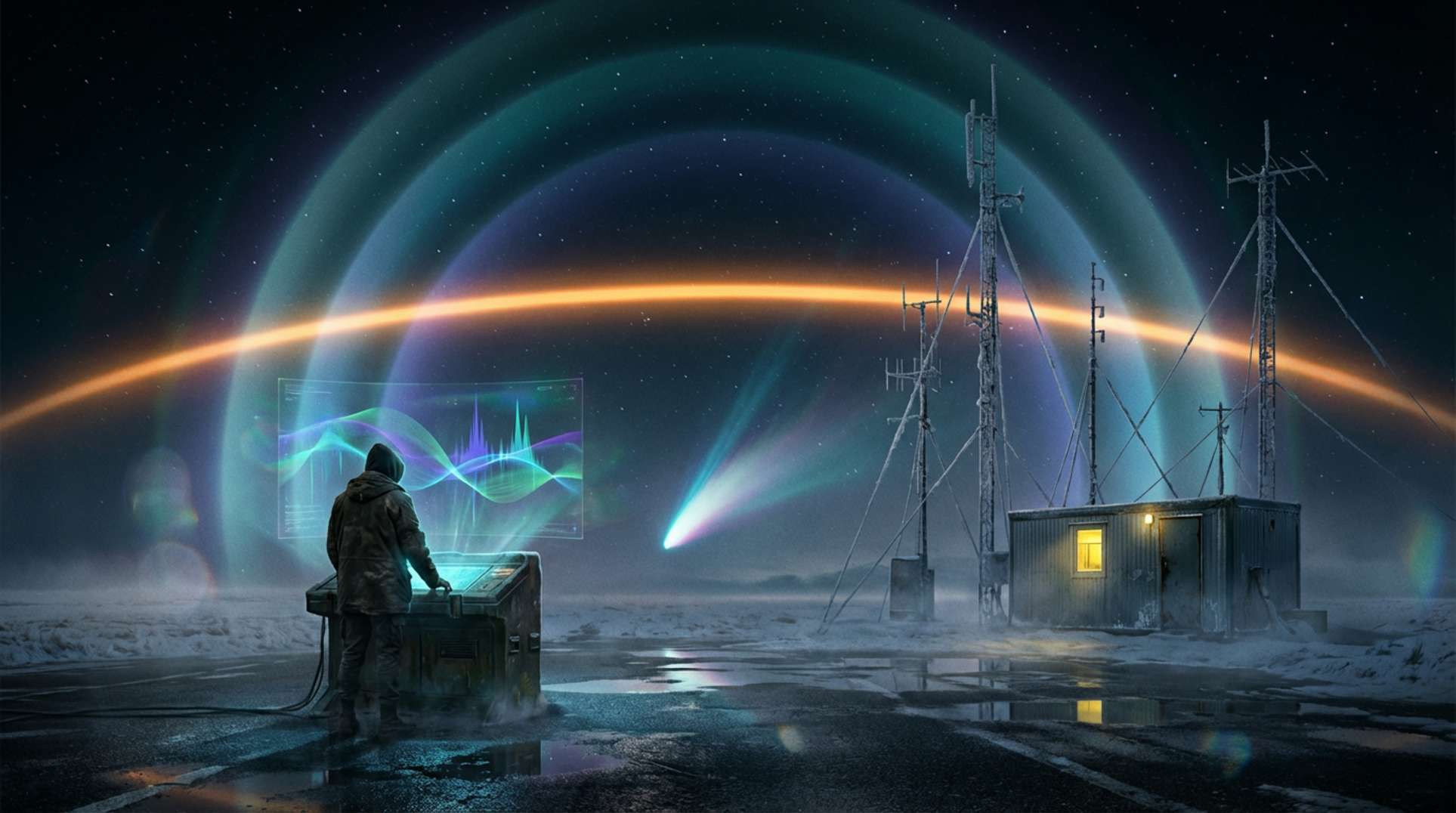
It was the early hours of 19 December 2025. The interstellar comet 3I/ATLAS reached its closest point to Earth around 06:00 UTC, a routine event tracked by astronomers. But in the shadows of online forums and live data streams, something stirred. Independent researchers, wellness trackers, and anomaly hunters stared at their screens as Schumann resonance feeds lit up. Bright bands appeared, interpreted by many as signals of unrest. Then Stefan Burns dropped his video that same day, pointing to a 25 Hz feature timed with the comet’s pass. He tied it to earthquake risks. Social platforms buzzed. Concern spread fast among those who’ve long watched these patterns.
What Witnesses and Analysts Report
Stefan Burns, a geophysicist creating independent content, called the 25 Hz burst ‘ultra-rare’ in his YouTube video. He presented screen captures and timestamps, framing it as a sign of coming earthquakes. Community monitors echoed this, sharing spectrograms with intense bands or whiteouts. They often link such features to seismic events or global shifts. Past examples fuel this view—videos and articles retrospective tie SR spikes to major quakes. For analysts, the 25 Hz hit close to the canonical 26 Hz harmonic, suggesting a powerful excitation. Some see it matching electromagnetic precursors noted in certain studies. Respect to those piecing this together from raw feeds.
Did the comet 3I/ATLAS really cause a 25 Hz Schumann resonance burst?
What do official agencies say about earthquake risks from this event?
How can I verify the 25 Hz claim myself?
Why is the community concerned about this?
What would prove a real connection here?
Advertisement
Frequently Asked Questions
Did the comet 3I/ATLAS really cause a 25 Hz Schumann resonance burst?
Stefan Burns claimed a rare 25 Hz burst in SR data timed with the comet's closest approach on 19 December 2025. However, the feature's provenance and global replication remain unverified, and no accepted physics links a distant comet to Earth's resonances. Verification requires checking multiple independent stations for confirmation.
What do official agencies say about earthquake risks from this event?
NASA stated 3I/ATLAS posed no impact threat at 1.8 AU. USGS and seismological organizations maintain that earthquakes cannot be predicted with specific timing or magnitude, and SR anomalies are not a reliable forecasting tool. They emphasize probabilistic forecasts only.
How can I verify the 25 Hz claim myself?
Obtain exact UTC timestamps and station IDs from Burns' video. Download raw data from sites like Tomsk, HeartMath/GCI, and others for the same window. Compare across geographically distant stations, check for artifacts, and consult lightning or space-weather data for alternative explanations.
Why is the community concerned about this?
Monitors interpret bright SR bands, like the claimed 25 Hz near a canonical harmonic, as potential precursors based on past patterns linked to quakes. The timing with 3I/ATLAS amplified worries. Peer-reviewed studies show inconsistent SR-quake ties, but communities see meaningful signals in the data.
What would prove a real connection here?
Multiple independent stations confirming a simultaneous, high-amplitude 25 Hz transient in raw data, with logs ruling out artifacts. Add peer-reviewed replications of similar events leading to quakes, plus a testable mechanism for comet-Earth coupling. Without that, it remains an open question.
Ukrainian Defense Ministry Advisor Posts Star-Shaped UAP Video — and the Close-Ups Look Nothing Like a Drone
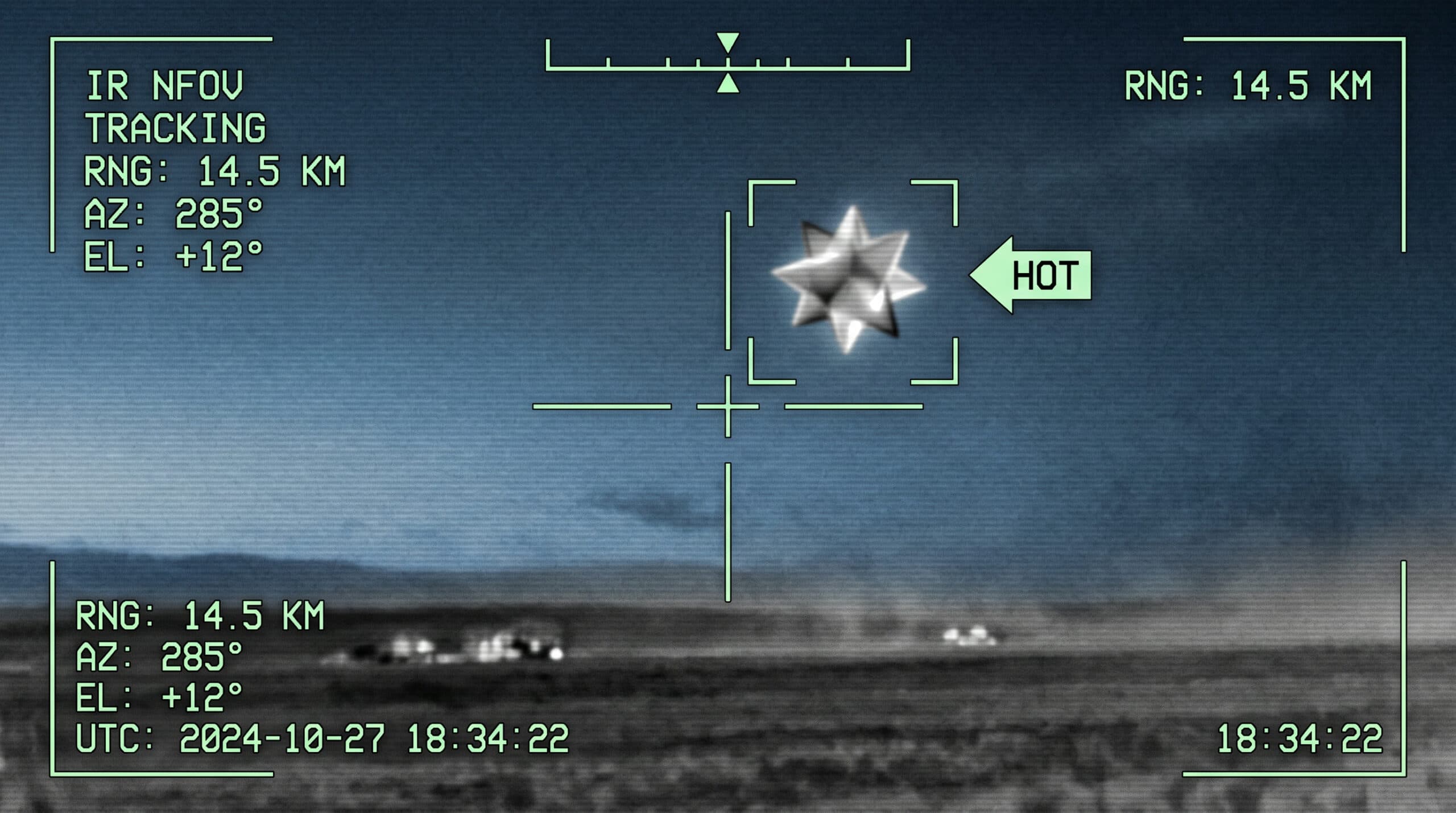
Serhii ‘Flash’ Beskrestnov released footage of a structured, star-shaped craft over Ukraine that has UFO researchers examining every frame for proof.
May 14, 2026 • 6 min read
Conspiracy Theories
Japan Just Confirmed It Has UAP Footage — and Is Analyzing Pentagon Files Near Its Borders
Japan’s formal entry into the UAP transparency wave signals an international domino effect. What the country knows about UAP encounters near Japanese territory and why it matters now.
May 13, 2026 • 5 min read
UFO & Aliens
Europe Has Been Quietly Tracking UAP Reports Since 2023
Documents reveal how the European Commission handled UAP images, what it promised to improve, and why Europe still lacks a public investigation office.
Aug 17, 2026 • 8 min read
Timelines, Tracks, and Hard Data
Here’s the backbone: 3I/ATLAS swung by at 1.8 AU on 19 December 2025, as detailed by Space.com and NASA. Burns’ video, uploaded that day, spotlights the 25 Hz burst—embed it if you can. Check public sources like Tomsk Space Observing System, HeartMath’s Global Coherence Initiative, GeoCenter, schumann-resonance.org, and zapper-pro for live spectrograms. Standard resonances sit at 7.8 Hz fundamental, with harmonics at 14, 20, 26, and 33 Hz—key for spotting outliers like 25 Hz. Reviews in MDPI Applied Sciences (2017) and ScienceDirect surveys mention SR anomalies before some quakes, but highlight replication issues. USGS and seismological groups repeat: no precise predictions possible; forecasts are probabilistic. For verification, grab station IDs and UTC times from Burns’ clips. Download raw data for that window from multiple sites. Cross-check Tomsk, HeartMath, and distant stations. Scan logs for calibration glitches.
Advertisement
Official Story vs. What the Data Suggests
NASA describes 3I/ATLAS as a scientific curiosity, no threat at 1.8 AU. USGS and networks like PNSN hold firm: short-term quake predictors don’t exist, and SR signals aren’t proven for forecasting. On the other side, communities point to the 25 Hz burst as rare, synced with the comet’s perigee—hinting at direct influence or triggered energy release, possibly seismic. But physics offers no clear way a small comet that far out could jolt Earth’s ionosphere cavity at 25 Hz. That demands solid proof, like confirmations from separate stations. Weakeners include local interference, lightning echoes, or data artifacts—rule them out first.
Official Position
Community Interpretation
No comet threat; no reliable quake prediction
Rare SR burst linked to comet, potential quake signal
SR anomalies unproven for forecasting
25 Hz as strong harmonic excitation, matching past patterns
No physical mechanism for comet-SR link
Possible electromagnetic interaction or energy trigger
How to Verify the 25 Hz Claim (A Practical Checklist)
Get exact UTC timestamps and station IDs from Burns’ video or contact him. Download spectrograms and magnetometer data for that window from Tomsk, HeartMath/GCI, and another distant station. Compare across sites—is the feature everywhere, or isolated? Review logs for maintenance, calibration, or EMI issues; query operators on artifacts. Match against lightning maps and space-weather data for 20–30 Hz harmonics. Consult SR experts on analysis methods, like FFT settings or scaling. If it’s real and global, seek a technical note on mechanisms and quake odds—remember, literature doesn’t back SR for big predictions.
Extract timestamps/stations from source.
Pull data from multiple global feeds.
Test for global consistency.
Check logs and external events.
Scrutinize methods with experts.
Assess implications if verified.
What It All Might Mean
Verified so far: 3I/ATLAS passed at 1.8 AU on 19 December 2025; a video claims a timed 25 Hz burst; public feeds are out there for checks. Limits hit hard— the burst’s source isn’t confirmed, SR-quake ties are spotty, and no physics explains a comet link at that range. Shift the story with multi-station raw data showing a strong, simultaneous transient, clean logs, replicated patterns with quakes, or a solid mechanism. This matters because real-time data and sharp minds can spark urgent alerts. Verify carefully to cut through noise. Readers, watch USGS for risks, track station verifications, and await academic takes before locking in views.
Advertisement
Frequently Asked Questions
Stefan Burns claimed a rare 25 Hz burst in SR data timed with the comet’s closest approach on 19 December 2025. However, the feature’s provenance and global replication remain unverified, and no accepted physics links a distant comet to Earth’s resonances. Verification requires checking multiple independent stations for confirmation.
NASA stated 3I/ATLAS posed no impact threat at 1.8 AU. USGS and seismological organizations maintain that earthquakes cannot be predicted with specific timing or magnitude, and SR anomalies are not a reliable forecasting tool. They emphasize probabilistic forecasts only.
Obtain exact UTC timestamps and station IDs from Burns’ video. Download raw data from sites like Tomsk, HeartMath/GCI, and others for the same window. Compare across geographically distant stations, check for artifacts, and consult lightning or space-weather data for alternative explanations.
Monitors interpret bright SR bands, like the claimed 25 Hz near a canonical harmonic, as potential precursors based on past patterns linked to quakes. The timing with 3I/ATLAS amplified worries. Peer-reviewed studies show inconsistent SR-quake ties, but communities see meaningful signals in the data.
Multiple independent stations confirming a simultaneous, high-amplitude 25 Hz transient in raw data, with logs ruling out artifacts. Add peer-reviewed replications of similar events leading to quakes, plus a testable mechanism for comet-Earth coupling. Without that, it remains an open question.
↑
06
How to Verify the 25 Hz Claim (A Practical Checklist)
Art Grindstone is the hard-nosed storyteller behind Unexplained.co, a veteran investigator whose life’s work sits at the crossroads of the paranormal, fringe science, and the shadows most people try not to look into. With decades spent chasing impossible stories — black-budget psychic programs, vanished Cold War experiments, desert rituals that sparked UFO waves, and the strange phenomena buried in America’s forgotten backroads — Art brings a rare combination of skepticism, awe, and journalistic precision. He’s not here to debunk. He’s not here to blindly believe. He follows the evidence wherever it leads — even when it leads someplace deeply uncomfortable. Known for his immersive, cinematic style and his ability to turn obscure research into gripping narrative, Art has built a devoted following across podcasts, long-form features, documentaries, and serialized investigations. His interviews are direct. His analysis is unflinching. His voice has become a staple in the modern paranormal renaissance — the guy people turn to when a story is too strange, too complex, or too dangerous for anyone else to touch. Off-mic, Art works with a distributed network of researchers, archivists, and field operatives who help surface the stories mainstream media ignores. On-mic, he transforms their findings into meticulous, high-impact reporting that refuses to insult the intelligence of true believers. His philosophy is simple: Take the phenomenon seriously. Treat the audience with respect. Tell the story as if the world depends on it — because sometimes it does. When Art Grindstone digs into a case, he isn’t just chasing a mystery. He’s tracing the fault lines of reality itself.