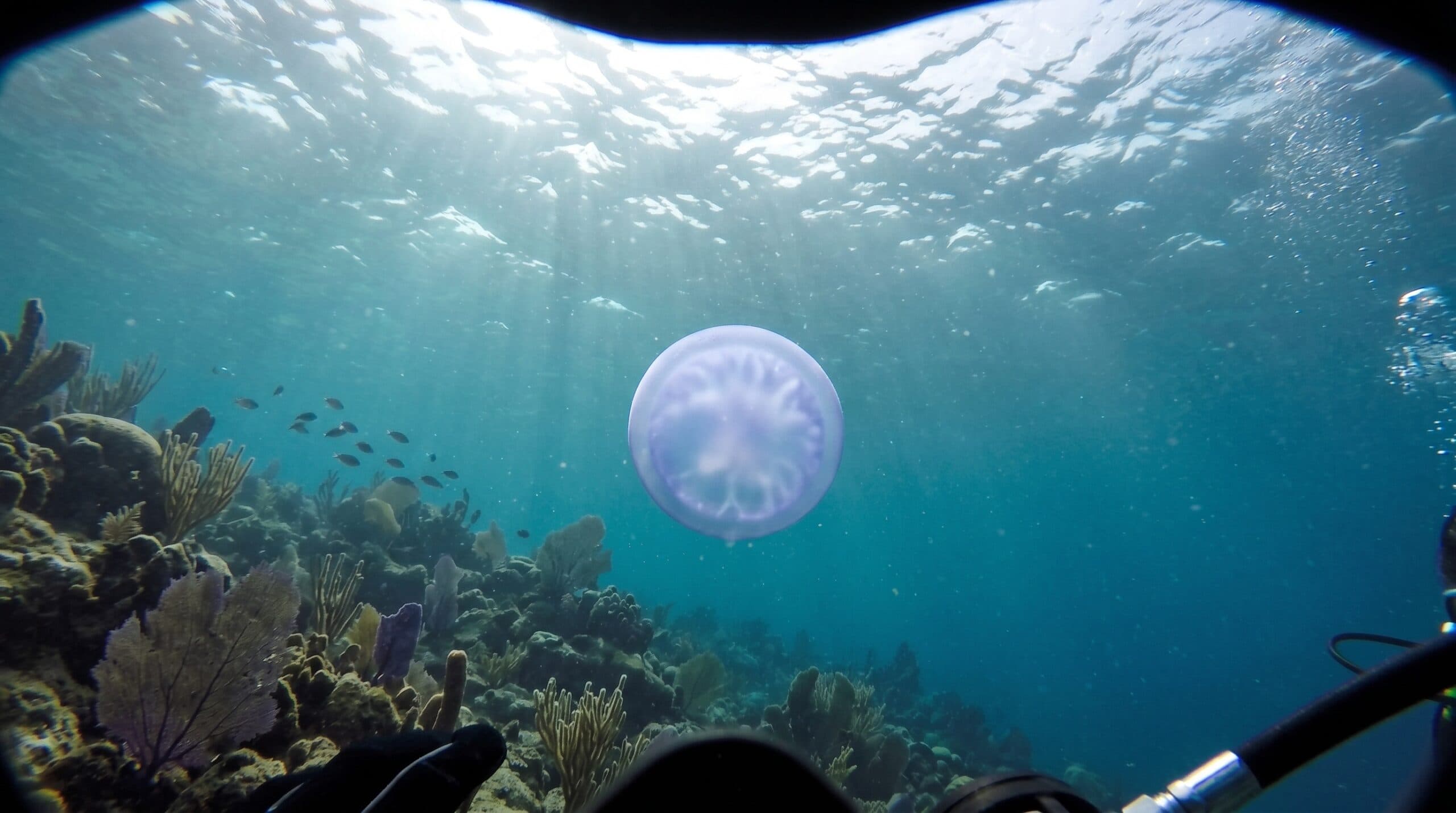
Viral “bioluminescent humanoid” clips are effective because they combine two things the internet loves: ocean mystery and visual ambiguity. A glowing shape near dark water can look uncanny in seconds, especially once…
Art Grindstone is the hard-nosed storyteller behind Unexplained.co, a veteran investigator whose life’s work sits at the crossroads of the paranormal, fringe science, and the shadows most people try not to look into. With decades spent chasing impossible stories — black-budget psychic programs, vanished Cold War experiments, desert rituals that sparked UFO waves, and the strange phenomena buried in America’s forgotten backroads — Art brings a rare combination of skepticism, awe, and journalistic precision. He’s not here to debunk. He’s not here to blindly believe. He follows the evidence wherever it leads — even when it leads someplace deeply uncomfortable. Known for his immersive, cinematic style and his ability to turn obscure research into gripping narrative, Art has built a devoted following across podcasts, long-form features, documentaries, and serialized investigations. His interviews are direct. His analysis is unflinching. His voice has become a staple in the modern paranormal renaissance — the guy people turn to when a story is too strange, too complex, or too dangerous for anyone else to touch. Off-mic, Art works with a distributed network of researchers, archivists, and field operatives who help surface the stories mainstream media ignores. On-mic, he transforms their findings into meticulous, high-impact reporting that refuses to insult the intelligence of true believers. His philosophy is simple: Take the phenomenon seriously. Treat the audience with respect. Tell the story as if the world depends on it — because sometimes it does. When Art Grindstone digs into a case, he isn’t just chasing a mystery. He’s tracing the fault lines of reality itself.
5 min · 1,140 words
In This Report(13)
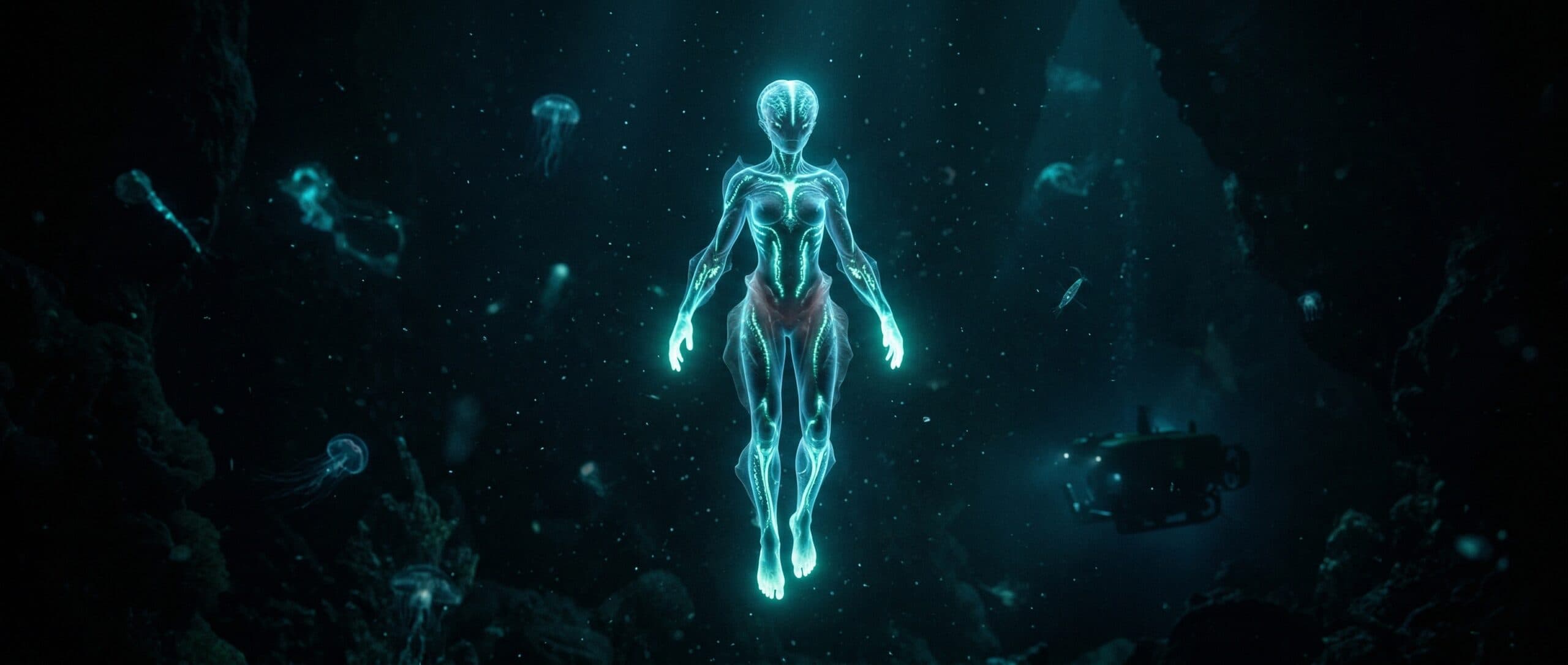
Viral “bioluminescent humanoid” clips are effective because they combine two things the internet loves: ocean mystery and visual ambiguity. A glowing shape near dark water can look uncanny in seconds, especially once edits, slow motion, and suggestive captions push viewers toward one interpretation. But the evidence points toward a much more familiar explanation: natural bioluminescence, optical distortion, and social-media framing doing the heavy lifting.
The short answer is simple. There is no verified evidence that these clips show glowing humanoid entities. What is actually happening is that real marine light phenomena—such as glowing plankton, algae, and other bioluminescent organisms—are being edited, miscaptioned, or narratively framed to look like something far stranger than they are.
That makes this a useful story for unexplained audiences, because it shows how a compelling mystery image can outrun context almost immediately. The video looks weird first. The explanation arrives later, if it arrives at all. Background science from NOAA and marine explainers from MBARI make clear that bioluminescence can already appear otherworldly without requiring a supernatural reading.
Advertisement
What This Story Actually Says
In early April 2026, a cluster of viral posts began circulating footage described as “bioluminescent humanoids” seen in or near coastal waters. The clips typically show glowing shapes, trails, or partial forms against dark backgrounds, then rely on text overlays or dramatic voiceovers to guide viewers toward a paranormal reading.
The visual material itself is not necessarily fake in the simplest sense. In many cases, the underlying glow can come from real bioluminescent phenomena. What changes the meaning is the edit. Slow-motion treatment, cropped framing, overlays, and high-emotion captions can all shift the viewer’s perception from “interesting marine light effect” to “possible unknown entity.”
That distinction is crucial because it means many of these clips work by reinterpreting real footage rather than fabricating every element from scratch. The strangeness is often real. The conclusion is where the distortion begins.
Why Ocean Mystery Content Spreads So Easily
The ocean is one of the easiest places to project mystery. Most viewers are not experts in marine life, underwater optics, or low-light video artifacts. That knowledge gap gives unusual footage enormous narrative power.
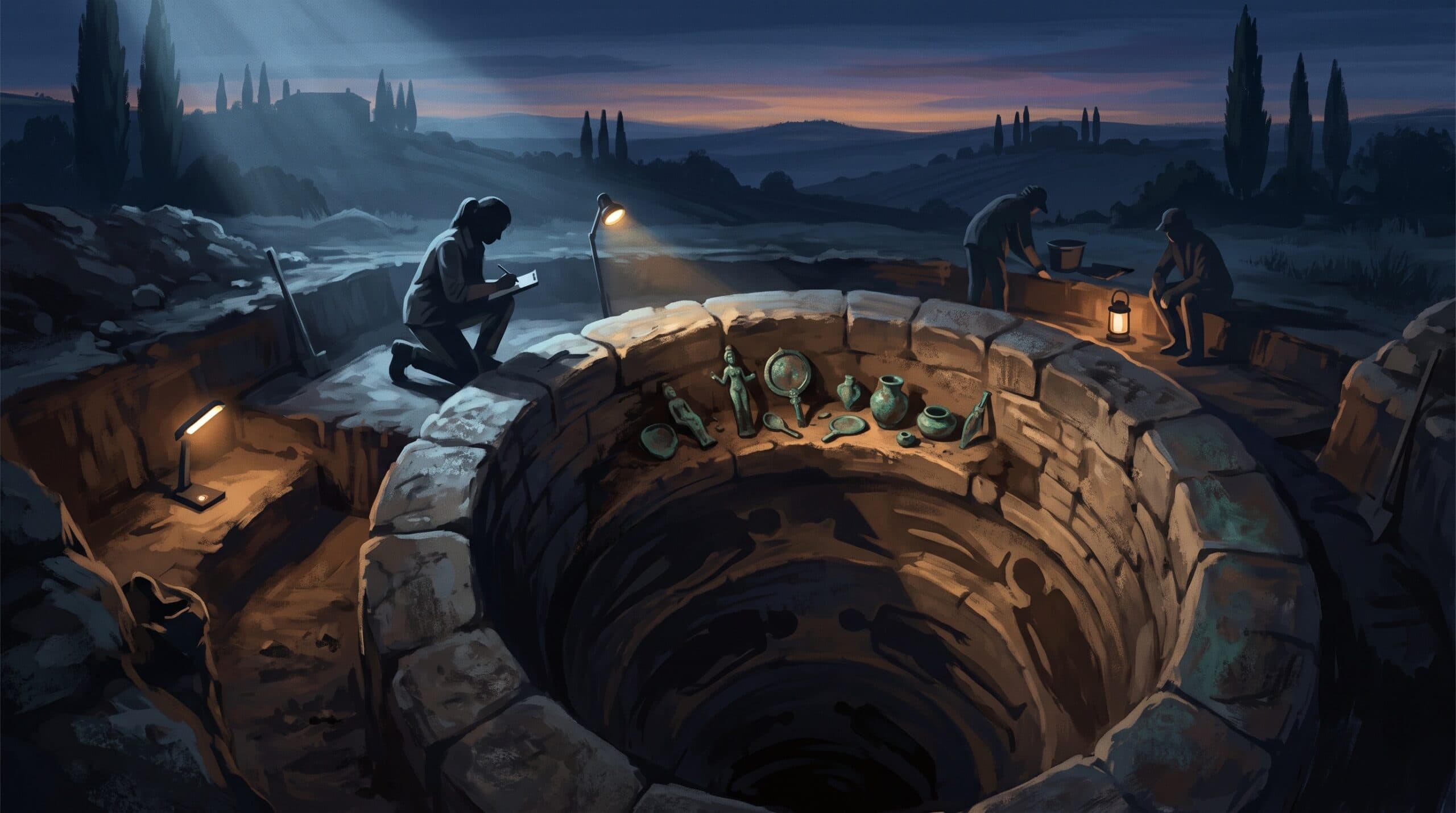
The Etruscan Well Sealed With Human Remains Is Stranger Than a Sacrifice Story
A newly reported Etruscan well in Italy was opened with offerings and sealed with human remains. The evidence reveals a ritual mystery, not a simple sacrifice tale.
Aug 18, 2026 • 7 min read
Conspiracy Theories
Ukrainian Defense Ministry Advisor Posts Star-Shaped UAP Video — and the Close-Ups Look Nothing Like a Drone
Serhii ‘Flash’ Beskrestnov released footage of a structured, star-shaped craft over Ukraine that has UFO researchers examining every frame for proof.
May 14, 2026 • 6 min read
Conspiracy Theories
Ukrainian Defense Ministry Advisor Posts Star-Shaped UAP Video — and the Close-Ups Look Nothing Like a Drone
Serhii ‘Flash’ Beskrestnov released footage of a structured, star-shaped craft over Ukraine that has UFO researchers examining every frame for proof.
May 13, 2026 • 6 min read
Bioluminescence is especially vulnerable to sensational framing because it is already visually unreal. Blue glow in dark water looks supernatural before any explanation is added. Once creators pair that imagery with claims about humanoid forms, hidden species, or unexplained sightings, the content becomes instantly shareable.
There is also a built-in credibility effect. Because the glow is real, the paranormal interpretation feels more plausible than a purely fabricated clip might. Viewers can see that something unusual is happening. The leap is in assuming that unusual automatically means unknown or non-human.
What the Evidence Actually Supports
The strongest evidence supports known marine and visual explanations. Bioluminescent algae, plankton blooms, disturbed microorganisms, deep-sea organisms, and reflective light conditions can all produce eerie moving forms, especially in low-resolution or compressed footage. Add camera shake, darkness, and selective editing, and the result can look astonishingly creature-like.
Photographers, marine biologists, and science communicators have repeatedly pointed out that human perception is especially vulnerable in low-light scenes. We impose pattern on moving light. We search for symmetry. We read partial shapes as bodies. In a social feed, where viewers are primed for revelation, that tendency becomes even stronger.
So the evidence does not point to glowing humanoid entities. It points to a collision between natural marine phenomena and narrative packaging. Readers who want a stronger grounding can compare public-facing resources from NOAA Ocean Service and broader marine science reporting from KQED Science.
What Skeptics and Marine Experts Would Say
Mainstream experts would emphasize that extraordinary marine claims need chain-of-custody evidence, location context, high-quality source files, and species-level analysis where possible. Viral clips almost never provide that. They arrive detached from place, time, and verifiable documentation.
Skeptics would also note that ocean content has long been fertile territory for hoaxes, misidentifications, and amplified folklore. The combination of darkness, distance, water distortion, and biological unfamiliarity makes the sea one of the easiest environments in which to misread what is visible.
That does not make the footage worthless. It makes it incomplete. And incomplete evidence is exactly the kind that social platforms are built to overinterpret.
Why This Story Still Matters
This matters because false ocean mysteries can erode trust in real marine science while training audiences to prefer mythic interpretations over grounded ones. It also matters because the same attention mechanics that boost paranormal claims can bury expert correction just as quickly.
Advertisement
For unexplained media, this is fertile territory when handled well. The smarter story is not “the debunk killed the mystery.” It is that the mystery became popular because natural phenomena can be genuinely beautiful, visually shocking, and easy to misunderstand.
That approach preserves wonder without rewarding misinformation. It respects the emotional power of the footage while still separating what is visible from what is merely being suggested.
The Bigger Pattern Behind Viral Sea Myths
Bioluminescent humanoid clips fit a broader digital pattern: authentic visual strangeness gets pulled into sensational storytelling because ambiguity performs better than explanation. The sea becomes a blank screen onto which viewers project monsters, hidden beings, or lost truths.
That pattern will keep repeating because it works. Every new glowing beach, strange underwater clip, or unclear night video offers another opportunity for the same cycle—wonder, speculation, virality, and only later, context.
Final Assessment
The viral “bioluminescent humanoid” wave says more about attention culture than about unknown ocean entities. What viewers are mostly seeing is real bioluminescence reframed through editing, suggestion, and the internet’s appetite for mystery. The deeper lesson is not that marine science has explained away wonder. It is that wonder becomes easiest to exploit when viewers are shown the glow before they are given the context.
Frequently Asked Questions
Are bioluminescent humanoid clips real?
The glow in many clips may be real, but there is no verified evidence that the videos show actual humanoid entities. Natural marine light effects are the stronger explanation.
Why do these videos look so convincing?
Because bioluminescence already looks uncanny, and editing choices like cropping, slow motion, and dramatic captions can make natural shapes appear creature-like.
What should viewers look for before believing a clip?
Check for original source files, exact location, recording context, expert review, and whether the footage has been edited or stripped of important background information.
Does debunking remove the mystery?
Not necessarily. Real bioluminescence is fascinating on its own. The point is to preserve wonder without confusing natural phenomena with unsupported claims.
Art Grindstone is the hard-nosed storyteller behind Unexplained.co, a veteran investigator whose life’s work sits at the crossroads of the paranormal, fringe science, and the shadows most people try not to look into. With decades spent chasing impossible stories — black-budget psychic programs, vanished Cold War experiments, desert rituals that sparked UFO waves, and the strange phenomena buried in America’s forgotten backroads — Art brings a rare combination of skepticism, awe, and journalistic precision. He’s not here to debunk. He’s not here to blindly believe. He follows the evidence wherever it leads — even when it leads someplace deeply uncomfortable. Known for his immersive, cinematic style and his ability to turn obscure research into gripping narrative, Art has built a devoted following across podcasts, long-form features, documentaries, and serialized investigations. His interviews are direct. His analysis is unflinching. His voice has become a staple in the modern paranormal renaissance — the guy people turn to when a story is too strange, too complex, or too dangerous for anyone else to touch. Off-mic, Art works with a distributed network of researchers, archivists, and field operatives who help surface the stories mainstream media ignores. On-mic, he transforms their findings into meticulous, high-impact reporting that refuses to insult the intelligence of true believers. His philosophy is simple: Take the phenomenon seriously. Treat the audience with respect. Tell the story as if the world depends on it — because sometimes it does. When Art Grindstone digs into a case, he isn’t just chasing a mystery. He’s tracing the fault lines of reality itself.