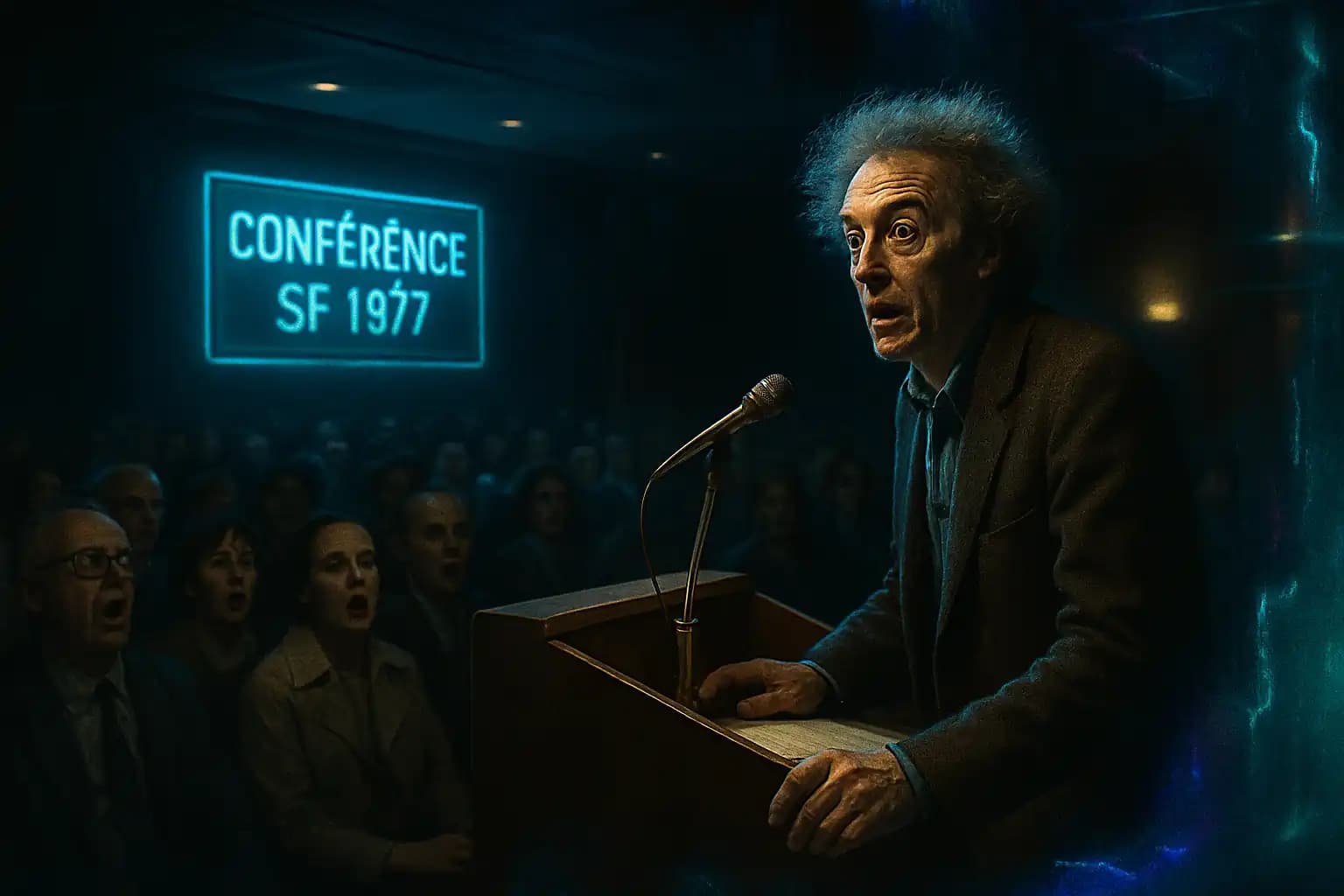

In September 1977, legendary sci-fi writer Philip K. Dick stepped onto a stage in Metz, France, leaving the audience reeling. In a speech that has entered literary lore, Dick boldly asserted, “We are living in a computer-programmed reality.” Delivered at the Second Metz International Science Fiction Festival, his talk—now known as the “Metz speech”—hinted at glitches in consensus reality itself. This event marked a pivotal moment for Dick and speculative fiction, foreshadowing debates on simulation theory and modern AI concerns long before they entered mainstream consciousness (Metz speech summary).
The Metz Speech: Declaring a Simulated World
In 1977, the idea that reality might be manipulated sounded more like a mental breakdown than a prophecy. Dick’s Metz address, titled “If You Find This World Bad, You Should See Some of the Others,” sparked both confusion and awe. According to an Open Culture analysis, Dick described déjà vu as a “programming clue,” suggesting we glimpse other realities only when our simulated environment glitches. This radical view now reads like a Rosetta Stone for films like The Matrix and today’s digital debates on simulation. The event positioned Dick not only as a storyteller but also as a techno-prophet whose literary paranoia was chillingly prescient—an observation echoed by critics exploring his confessional novels and personal visions in features like Silicon Valley’s imagination crisis.
Strange Visions and Life Unraveling
Guests were unprepared for how personally Dick’s message resonated. Years before Metz, he experienced a series of unexplained visions—marked by blinding lights, cryptic knowledge, and a feeling that his life intersected multiple timelines. Metz was the first time he publicly aired these convictions, changing him significantly. According to a 2025 Gazetteller investigation, Dick exhibited erratic behavior and growing paranoia after the conference. Rumors swirled of surveillance, mysterious break-ins, and covert harassment—a chapter eerily echoed in the technological and psychological threats found in this crisis analysis and PKD’s own “Valis” novel. Whether Dick’s fears were justified or symptoms of genius under duress, his later life was marked by controversy and an obsession with the boundaries of reality.