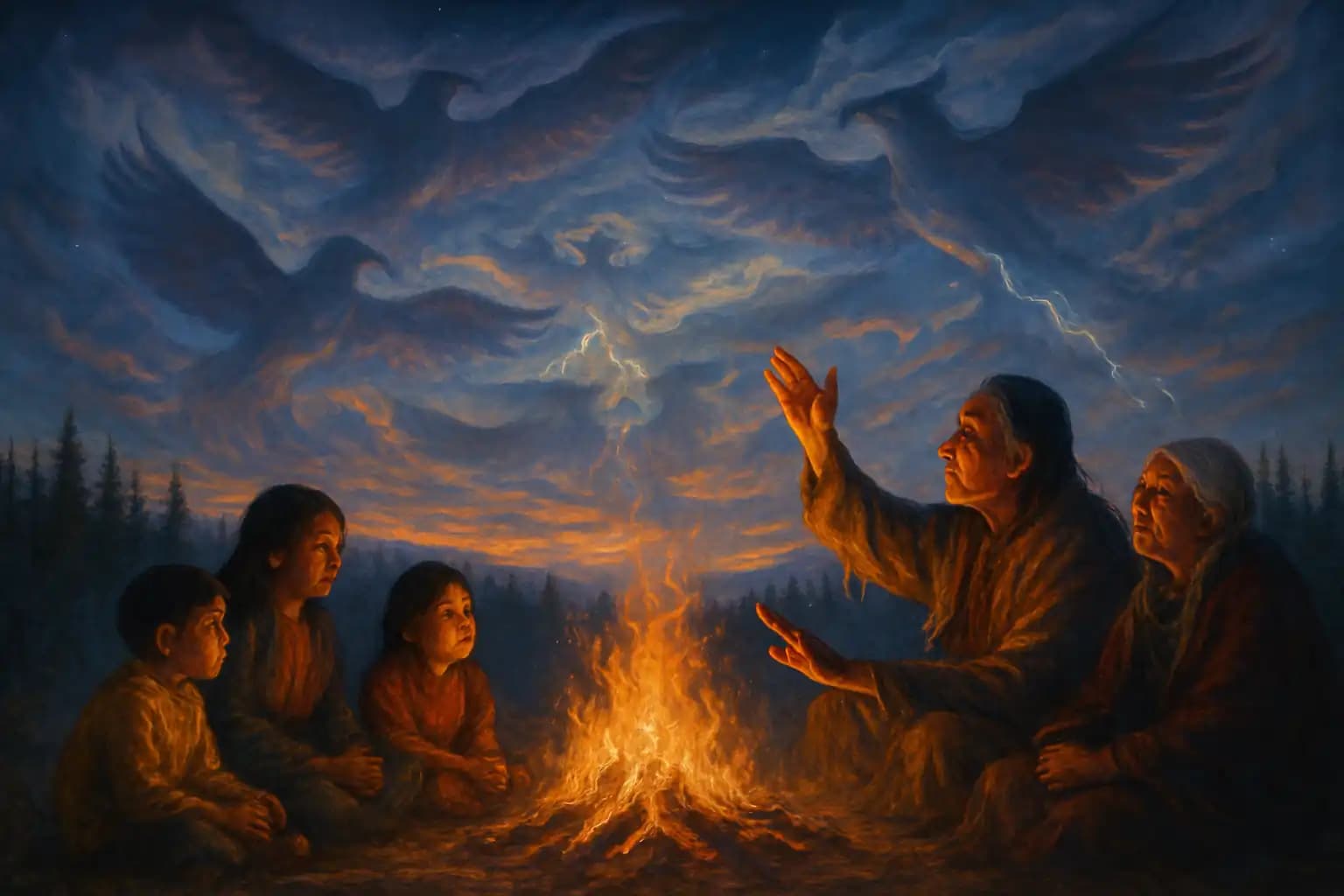

Thunder echoes across northern lakes, reviving ancient stories. In Cree communities throughout Canada, the Thunderbird embodies more than myth—it is a force woven into the seasonal rhythm, a mighty spirit whose wings can unleash storms and command respect. This creature isn’t a mere bird; it soars through Cree tales as a supernatural sovereign, blending awe and cultural significance at every feathered turn.
This legendary being appears in oral traditions from Ontario’s Sandy Lake through Manitoba to the vast prairies. Explore the evocative Northern Campfire Stories to hear accounts. Whether recounted by a fire or discussed in modern explorations of unexplained phenomena—like the enduring intrigue over northern monsters chronicled in Alberta’s Bigfoot encounters—the Thunderbird remains a symbol of nature’s power and a totem of identity.
Cree Storytelling: The Living World of Thunderbird Lore
Cree elders animate the Thunderbird with thunder, lightning, and storm unpredictability. At Sandy Lake, Ontario, stories recount how these spirits lived in all four directions, migrating with the seasons and meting out justice for breaking moral codes. Such tales merge the spiritual with the tangible—reflecting wider Algonquian traditions detailed in this Wikipedia entry: thunder represents mighty wings beating, with lightning flashing from the Thunderbird’s eyes.
Advertisement
These stories ripple across Canadian mysteries, from the seething powers beneath the earth’s crust to local legends of unexplained events. Within Cree cosmology, the Thunderbird isn’t just a weather god; it’s an ambassador between worlds, maintaining a delicate balance between chaos and creation, destruction and renewal.
Thunderbird Maidens of Rock: Spirit, Sacrifice, and Setting
Among the Rock Cree and Plains Cree, female Thunderbird figures—known as the Thunderbird Maidens—carry profound lessons and mysteries. Maidens Rock, a site rich in natural drama and cultural storytelling, tells legends of spirit women shaping storms, guiding heroes, and forewarning of consequences. These women are not passive; they unleash rain and command winds, embodying both nurturing and wrath. Their legends resonate with other sacred landscapes where supernatural intervention intertwines with local disasters or deliverance, as discussed in .