EMP Apocalypse: Why the ‘90% Die’ Claim Is Wrong | Unexplained
Ancient Civilizations
EMP Apocalypse: Why the ‘90% Die’ Claim Is Wrong
Key Takeaways A nationwide electromagnetic pulse from a high-altitude nuclear detonation or severe geomagnetic storm could trigger catastrophic infrastructure failures, as warned by the bipartisan EMP Commission in 2004…
Art Grindstone is the hard-nosed storyteller behind Unexplained.co, a veteran investigator whose life’s work sits at the crossroads of the paranormal, fringe science, and the shadows most people try not to look into. With decades spent chasing impossible stories — black-budget psychic programs, vanished Cold War experiments, desert rituals that sparked UFO waves, and the strange phenomena buried in America’s forgotten backroads — Art brings a rare combination of skepticism, awe, and journalistic precision. He’s not here to debunk. He’s not here to blindly believe. He follows the evidence wherever it leads — even when it leads someplace deeply uncomfortable. Known for his immersive, cinematic style and his ability to turn obscure research into gripping narrative, Art has built a devoted following across podcasts, long-form features, documentaries, and serialized investigations. His interviews are direct. His analysis is unflinching. His voice has become a staple in the modern paranormal renaissance — the guy people turn to when a story is too strange, too complex, or too dangerous for anyone else to touch. Off-mic, Art works with a distributed network of researchers, archivists, and field operatives who help surface the stories mainstream media ignores. On-mic, he transforms their findings into meticulous, high-impact reporting that refuses to insult the intelligence of true believers. His philosophy is simple: Take the phenomenon seriously. Treat the audience with respect. Tell the story as if the world depends on it — because sometimes it does. When Art Grindstone digs into a case, he isn’t just chasing a mystery. He’s tracing the fault lines of reality itself.
5 min · 1,229 words
In This Report(7)
Key Takeaways
A nationwide electromagnetic pulse from a high-altitude nuclear detonation or severe geomagnetic storm could trigger catastrophic infrastructure failures, as warned by the bipartisan EMP Commission in 2004 and 2008, which recommended specific hardening measures for protection.
Verified evidence shows real vulnerabilities: events like the 1859 Carrington solar storm and the 1989 Quebec blackout disrupted power and communications, while long lead times for replacing large power transformers—often 36 months or more—could severely delay recovery, according to DOE and CISA reports.
Major questions linger: the EMP Commission’s unclassified reports don’t provide a single nationwide casualty figure, and the often-cited ‘90% fatality’ claim stems from testimony, advocacy, and fiction rather than official documents; debates continue on attack feasibility, precise damage patterns, and recovery timelines.
A Midnight Without a Switch
Imagine the clock strikes midnight, and the world flips off. Streetlights flicker out, plunging boulevards into shadow. Traffic signals go dark, cars grinding to a halt amid sudden confusion. In hospitals, monitors flatline as backup generators stutter under unexpected strain. Grocery stores lose their hum—refrigerators warming, shelves untouched in the blackout. Phones drop signals, ATMs refuse cards, and emergency lines echo silence. Fear creeps in, the kind that starts with a question: What’s happening? This isn’t just a local outage. It’s everywhere.
History offers glimpses of how this could play out. The Carrington Event of 1859 sent sparks flying from telegraph lines, shocking operators and setting papers ablaze. In 1989, a geomagnetic storm hit Quebec, leaving six million in the dark for nine hours—transformers fried, power grid crippled. No verified national EMP attack has struck the U.S. yet. But these real events paint a picture of vulnerabilities that could turn a hypothetical pulse into widespread chaos.
What Witnesses and Analysts Report
Across forums and reports, voices from the community describe scenes that sound pulled from nightmares: a sudden blackout sweeping the nation, hospitals overwhelmed, food chains breaking down, communications severed. Witnesses in online threads and local meetups share stories of flickering lights and dead electronics, piecing together patterns that suggest something deliberate—or cosmic.
Advertisement
Fiction has shaped much of this narrative. William R. Forstchen’s novel One Second After draws from EMP Commission materials, spinning tales of societal collapse with extreme casualty projections. Advocacy voices, including former commission members, echo this in testimony, labeling EMP threats as existential. These accounts gain traction, respected for highlighting risks mainstream outlets often overlook.
Has a nationwide EMP attack actually happened in the U.S.?
Where does the ‘90% fatality’ claim come from?
What evidence supports grid vulnerabilities to EMP?
What can be done to mitigate these risks?
How do official reports differ from community narratives?
Advertisement
Frequently Asked Questions
Has a nationwide EMP attack actually happened in the U.S.?
No verified national EMP attack has occurred in the U.S. Historical examples are natural geomagnetic storms like the 1859 Carrington Event or the 1989 Quebec blackout, and tests like 1962's Starfish Prime. The scenarios discussed are hypothetical, based on real vulnerabilities.
Where does the '90% fatality' claim come from?
The figure originates in testimony, advocacy statements, and fiction like William R. Forstchen's novel One Second After, not from a single estimate in the EMP Commission's unclassified reports. It's been amplified in viral posts and AI-generated content, often without source details.
What evidence supports grid vulnerabilities to EMP?
Historical events like the Carrington storm and Quebec blackout show geomagnetic effects on power systems. The EMP Commission's 2004 and 2008 reports detail risks, and DOE/CISA note long lead times for transformers—36 months or more—as a recovery hurdle.
What can be done to mitigate these risks?
The EMP Commission recommends grid hardening, estimated at $2 billion for key measures. Practical steps include spare transformers, microgrids, and household protections like Faraday cages and generators, as outlined in DOE and CISA materials.
How do official reports differ from community narratives?
Official sources like the EMP Commission warn of catastrophic potential without specific nationwide casualty numbers, focusing on mitigation. Community and advocacy voices often highlight extreme scenarios, sometimes drawing from fiction and testimony to emphasize existential threats.
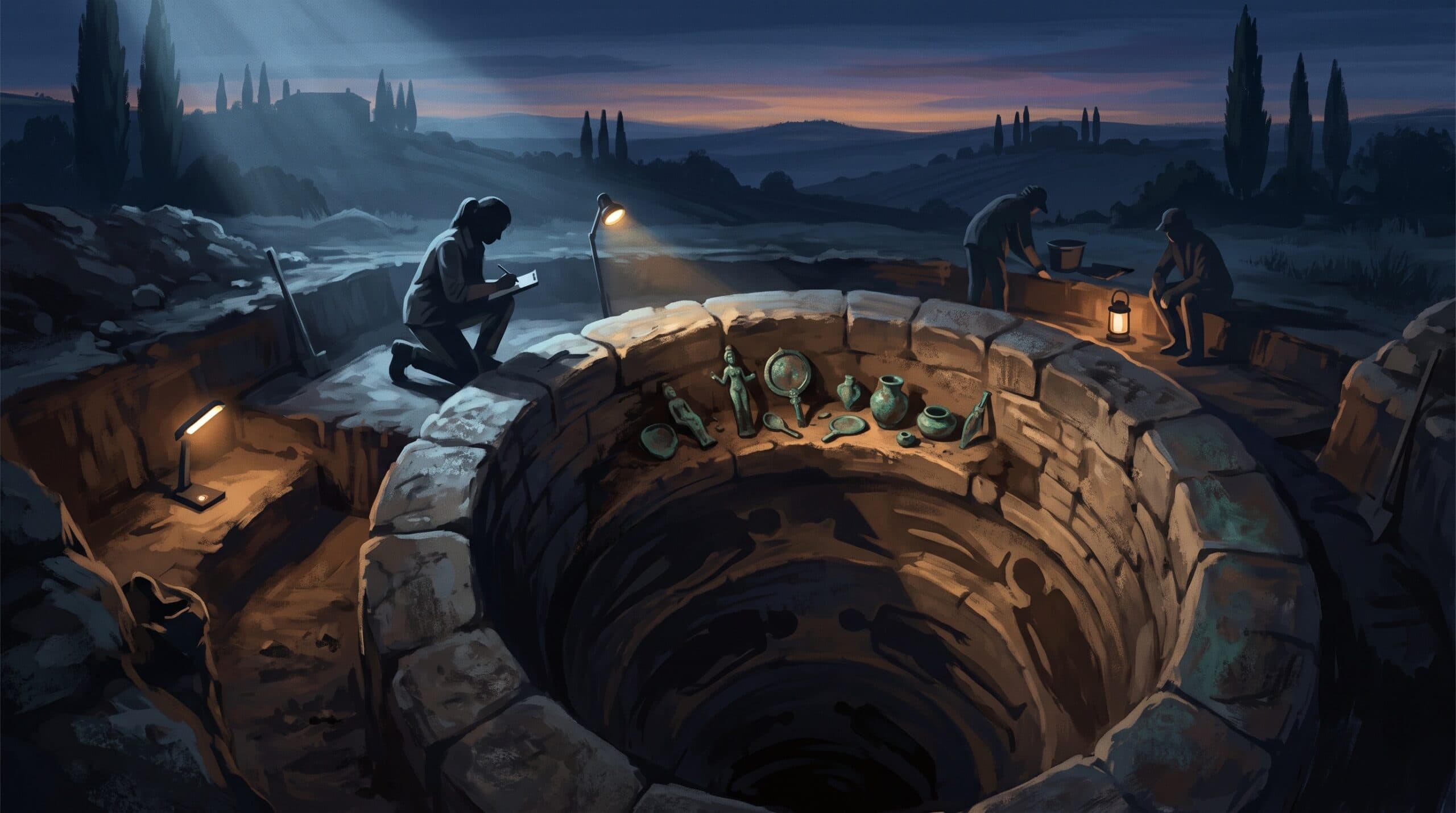
The Etruscan Well Sealed With Human Remains Is Stranger Than a Sacrifice Story
A newly reported Etruscan well in Italy was opened with offerings and sealed with human remains. The evidence reveals a ritual mystery, not a simple sacrifice tale.
Aug 18, 2026 • 7 min read
Articles
The Lonely Rock That Led Archaeologists to a 3,700-Year-Old Ritual Site
A single stone spotted by a student led archaeologists to a 3,700-year-old ritual site—and raised new questions about how ancient landscapes were read.
Aug 17, 2026 • 4 min read
UFO & Aliens
Europe Has Been Quietly Tracking UAP Reports Since 2023
Documents reveal how the European Commission handled UAP images, what it promised to improve, and why Europe still lacks a public investigation office.
Aug 17, 2026 • 8 min read
Then there’s the viral surge: late 2024 and 2025 saw social posts and outlets like Hot1047 circulating AI-generated scenarios, claiming ‘90% fatalities’ or chatbot predictions without digging into sources. We treat these respectfully—they tap into real fears—but their origins matter. Grounded reports stick to natural events like geomagnetic storms or documented tests, such as the 1962 Starfish Prime nuclear explosion, which lit up Hawaiian skies and knocked out satellites. No recent deliberate HEMP attack on the U.S. has been confirmed.
Timelines, Tracks, and Hard Data
The trail starts with official documents. The EMP Commission’s 2004 Executive Report and 2008 follow-up on Critical National Infrastructures lay out the threats plainly, urging mitigation like grid hardening. They warn of cascading failures in power, water, and transport.
History backs this up. The 1859 Carrington Event zapped telegraphs worldwide. On March 13, 1989, a geomagnetic storm blacked out Quebec for hours. Starfish Prime in 1962 showed nuclear HEMP effects on a smaller scale, damaging satellites and telecoms.
Grid facts hit hard: large power transformers take about 36 months to replace, with industry reports citing 80–210 weeks due to manufacturing bottlenecks, per DOE and CISA. Mitigation costs? The 2008 report pegged selected protections at around $2 billion.
NOAA uses the G-scale (G1–G5) and Kp index for storm warnings. As for that ‘90% die’ figure—it’s from testimony and books like Forstchen’s, not the Commission’s unclassified reports.
Report Name
Year
Key Point
EMP Commission Executive Report
2004
Warns of catastrophic EMP effects; recommends hardening infrastructure.
EMP Commission Critical National Infrastructures
2008
Details vulnerabilities and mitigation costs around $2 billion.
Carrington Event
1859
Disrupted telegraphs globally via geomagnetic storm.
Quebec Blackout
1989
Geomagnetic storm caused 9-hour outage for 6 million.
Starfish Prime
1962
Nuclear test produced EMP effects on satellites and telecoms.
Official Story vs. What the Data Suggests
Agencies paint a picture of managed risk. The EMP Commission, a congressional body, stresses that EMP or geomagnetic disturbances could devastate infrastructure, pushing for hardening without pinning down a nationwide death toll in unclassified docs. NOAA and NASA track space weather with G-scale forecasts, treating storms as predictable hazards based on events like 1989’s blackout.
NERC, FERC, DOE, and CISA emphasize grid standards for geomagnetic risks, highlighting transformer supply chains as a weak link—long lead times could stretch recovery. Yet community narratives and advocacy push further, with former officials calling threats existential and floating high casualty estimates in hearings.
Advertisement
Here’s the gap: those dire numbers often exceed the reports’ evidence. Open debates swirl around how many transformers would fail in a real scenario, whether a foreign actor could deliver a U.S.-wide HEMP undetected, and what recovery might actually look like. Data constrains the story, but rhetoric sometimes races ahead.
What It All Might Mean
The evidence points to real cracks in the system: the U.S. grid faces threats from HEMP or severe storms, and those long waits for transformers could turn outages into prolonged crises. We know interdependencies—with food, medicine, and transport—amplify the danger.
But casualty figures? The ‘90% die’ claim traces back to testimony and stories, not a unified model in the Commission’s reports. It matters because even without doomsday stats, the risks are serious enough to act on—hardening grids, stocking spares, building microgrids—all feasible and cost-effective.
For those tracking this, dig into primary sources: I can pull excerpts from the 2004 and 2008 reports on mitigations. At home, think Faraday cages for devices, offline backups, and generator plans—straight from DOE and CISA guides. When viral claims pop up, check dates, agencies, and originals before sharing. Mysteries remain on attacks, attribution, and fallout—worth watching, not assuming settled.
Frequently Asked Questions
No verified national EMP attack has occurred in the U.S. Historical examples are natural geomagnetic storms like the 1859 Carrington Event or the 1989 Quebec blackout, and tests like 1962’s Starfish Prime. The scenarios discussed are hypothetical, based on real vulnerabilities.
The figure originates in testimony, advocacy statements, and fiction like William R. Forstchen’s novel One Second After, not from a single estimate in the EMP Commission’s unclassified reports. It’s been amplified in viral posts and AI-generated content, often without source details.
Historical events like the Carrington storm and Quebec blackout show geomagnetic effects on power systems. The EMP Commission’s 2004 and 2008 reports detail risks, and DOE/CISA note long lead times for transformers—36 months or more—as a recovery hurdle.
The EMP Commission recommends grid hardening, estimated at $2 billion for key measures. Practical steps include spare transformers, microgrids, and household protections like Faraday cages and generators, as outlined in DOE and CISA materials.
Official sources like the EMP Commission warn of catastrophic potential without specific nationwide casualty numbers, focusing on mitigation. Community and advocacy voices often highlight extreme scenarios, sometimes drawing from fiction and testimony to emphasize existential threats.
Art Grindstone is the hard-nosed storyteller behind Unexplained.co, a veteran investigator whose life’s work sits at the crossroads of the paranormal, fringe science, and the shadows most people try not to look into. With decades spent chasing impossible stories — black-budget psychic programs, vanished Cold War experiments, desert rituals that sparked UFO waves, and the strange phenomena buried in America’s forgotten backroads — Art brings a rare combination of skepticism, awe, and journalistic precision. He’s not here to debunk. He’s not here to blindly believe. He follows the evidence wherever it leads — even when it leads someplace deeply uncomfortable. Known for his immersive, cinematic style and his ability to turn obscure research into gripping narrative, Art has built a devoted following across podcasts, long-form features, documentaries, and serialized investigations. His interviews are direct. His analysis is unflinching. His voice has become a staple in the modern paranormal renaissance — the guy people turn to when a story is too strange, too complex, or too dangerous for anyone else to touch. Off-mic, Art works with a distributed network of researchers, archivists, and field operatives who help surface the stories mainstream media ignores. On-mic, he transforms their findings into meticulous, high-impact reporting that refuses to insult the intelligence of true believers. His philosophy is simple: Take the phenomenon seriously. Treat the audience with respect. Tell the story as if the world depends on it — because sometimes it does. When Art Grindstone digs into a case, he isn’t just chasing a mystery. He’s tracing the fault lines of reality itself.