
The James Webb Space Telescope (JWST) has made a groundbreaking discovery by capturing the first real image linked to the origins of the universe. This monumental achievement not only enhances our understanding of the Big Bang Theory but also opens new avenues for research into the cosmos.
Key Takeaways
- The JWST has revolutionized our understanding of the universe.
- It captured the first real image related to the Big Bang.
- The image provides insights into the early universe’s chaotic environment.
- This discovery enhances our understanding of dark matter and dark energy.
- The JWST’s capabilities allow for unprecedented exploration of cosmic history.
The Big Bang Theory: A Brief Overview
The Big Bang Theory is the most widely accepted model explaining the universe’s origin. It posits that the universe began as a hot, dense singularity approximately 13.8 billion years ago, rapidly expanding to form the cosmos we observe today. While supported by various lines of evidence, direct visual evidence of the initial moments of this cosmic birth had never been captured—until now.
The James Webb Space Telescope: A Technological Marvel
Launched in 2021, the JWST orbits nearly a million miles from Earth, free from atmospheric disturbances. Equipped with cutting-edge infrared technology, it can detect light that has traveled billions of years across the cosmos. This capability allows the telescope to peer into the past, capturing images from just moments after the Big Bang.
Advertisement
A Glimpse Into the Early Universe
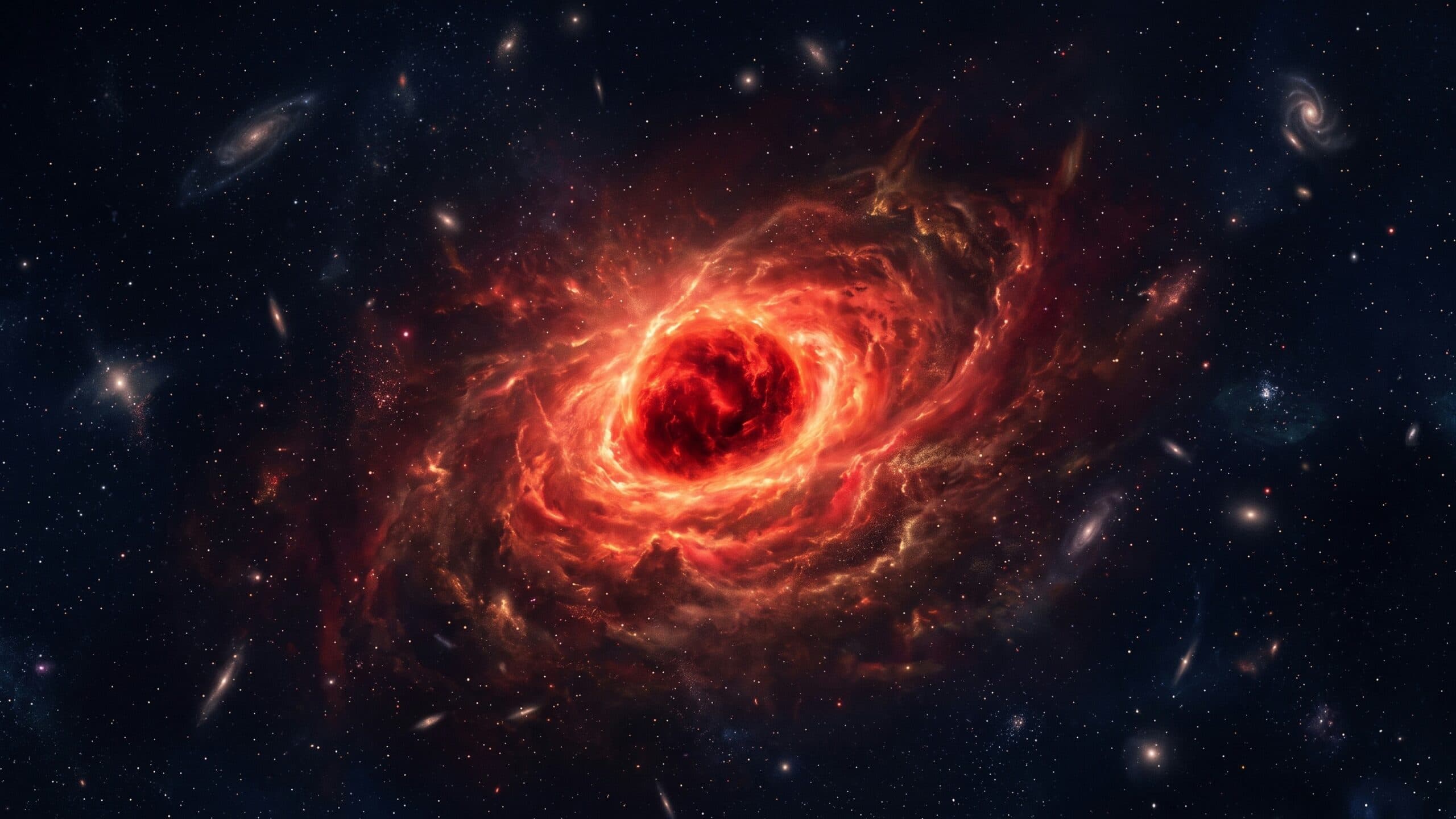
The image captured by the JWST showcases a swirling mass of gas and energy, revealing the universe when it was less than a few hundred million years old. This snapshot illustrates the chaotic environment where galaxies were forming in clusters, hinting at the violence and intensity of this early period.
Validation of Cosmological Models
The colors and patterns in the image represent light that has been redshifted, a phenomenon predicted by the Big Bang Theory. Observing this process provides strong validation for existing cosmological models and helps scientists refine their understanding of how galaxies, stars, and other cosmic structures formed.
Advertisement