Kyiv’s Vanishing Skyline: Blackout, Not the Paranormal
World War 3
Kyiv’s Vanishing Skyline: Blackout, Not the Paranormal
Key Takeaways A Kyiv resident wakes to an unprecedented, total blackout of the skyline, in a city already used to rolling outages and air raids. Russia has systematically targeted Ukraine’s power grid since 2022,…
Art Grindstone is the hard-nosed storyteller behind Unexplained.co, a veteran investigator whose life’s work sits at the crossroads of the paranormal, fringe science, and the shadows most people try not to look into. With decades spent chasing impossible stories — black-budget psychic programs, vanished Cold War experiments, desert rituals that sparked UFO waves, and the strange phenomena buried in America’s forgotten backroads — Art brings a rare combination of skepticism, awe, and journalistic precision. He’s not here to debunk. He’s not here to blindly believe. He follows the evidence wherever it leads — even when it leads someplace deeply uncomfortable. Known for his immersive, cinematic style and his ability to turn obscure research into gripping narrative, Art has built a devoted following across podcasts, long-form features, documentaries, and serialized investigations. His interviews are direct. His analysis is unflinching. His voice has become a staple in the modern paranormal renaissance — the guy people turn to when a story is too strange, too complex, or too dangerous for anyone else to touch. Off-mic, Art works with a distributed network of researchers, archivists, and field operatives who help surface the stories mainstream media ignores. On-mic, he transforms their findings into meticulous, high-impact reporting that refuses to insult the intelligence of true believers. His philosophy is simple: Take the phenomenon seriously. Treat the audience with respect. Tell the story as if the world depends on it — because sometimes it does. When Art Grindstone digs into a case, he isn’t just chasing a mystery. He’s tracing the fault lines of reality itself.
6 min · 1,291 words
In This Report(8)
Key Takeaways
A Kyiv resident wakes to an unprecedented, total blackout of the skyline, in a city already used to rolling outages and air raids.
Russia has systematically targeted Ukraine’s power grid since 2022, including a December 2015 cyber-attack impacting over 230,000 people and massive missile/drone strikes in August and November 2024 that triggered widespread blackouts and 10–12-hour daily outages in some periods.
Gaps persist around how cyber and physical attacks interact, whether any unusual environmental or electromagnetic phenomena accompany these events, and how the psychological ‘high-strangeness’ of a modern capital going fully dark shapes witness perception and folklore-like narratives.
The Morning After a Vanished Skyline
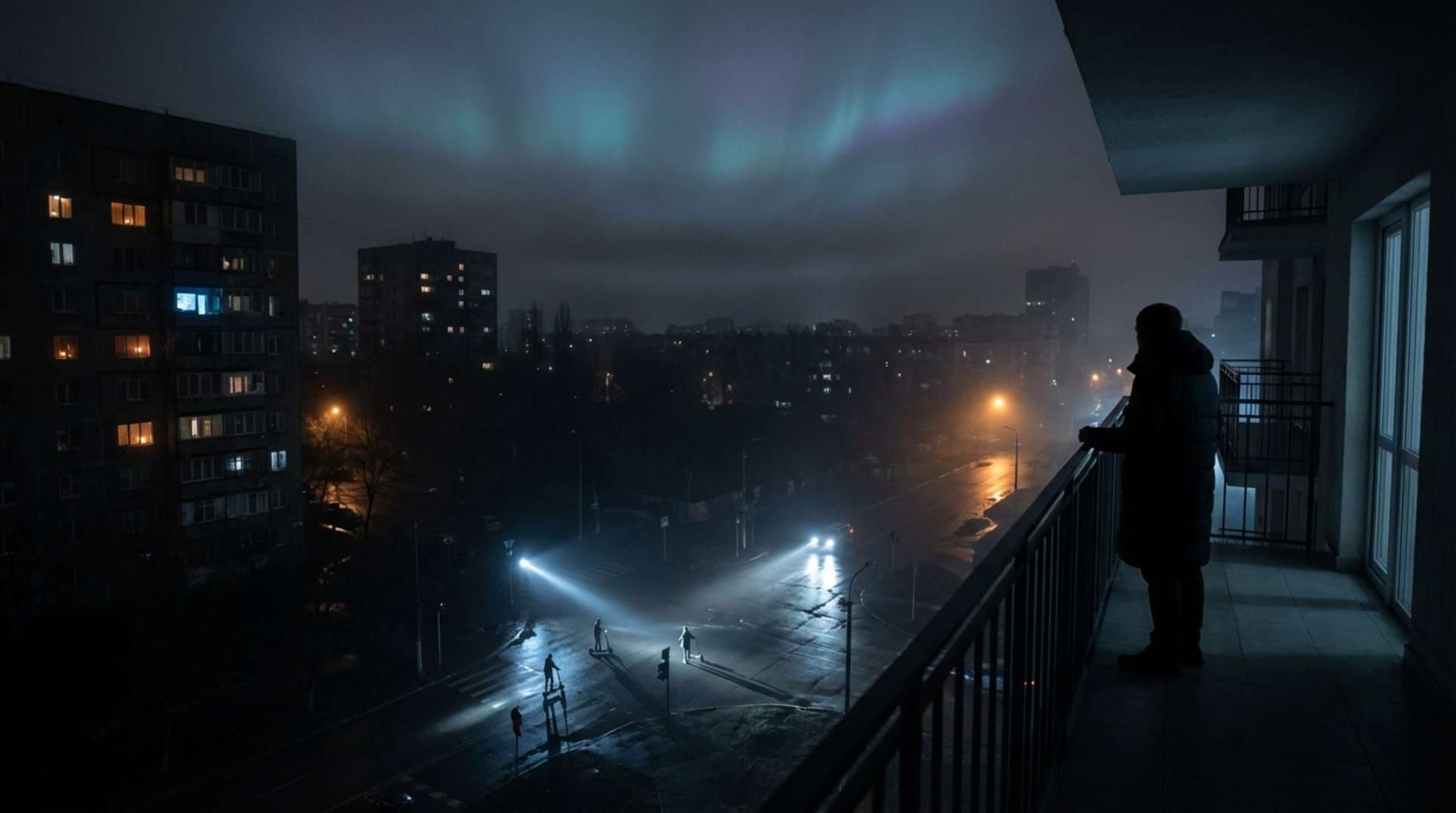
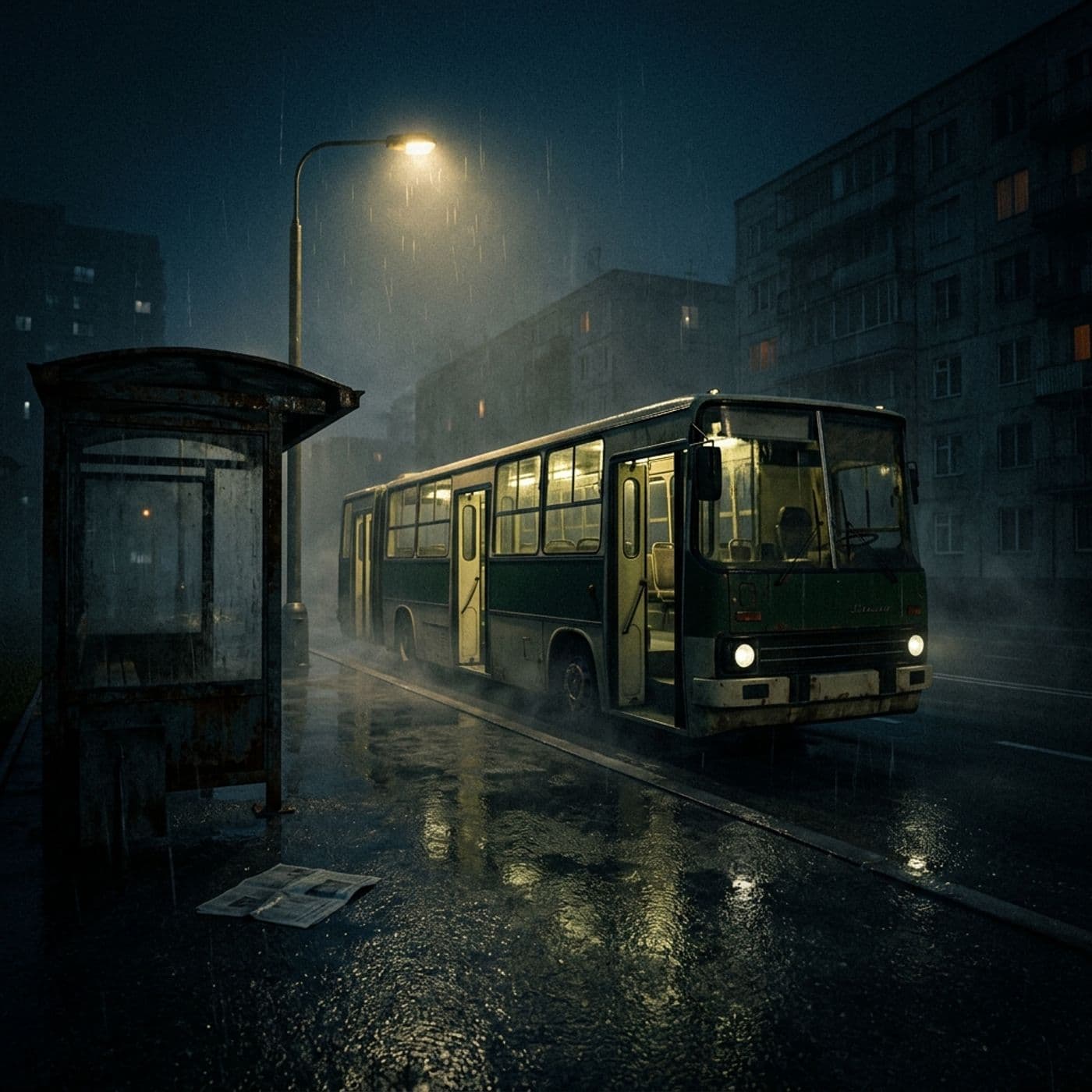
Imagine stirring awake in Kyiv, a sprawling European capital where, even amid war, the night usually holds some flicker of life—headlights cutting through the streets, isolated windows glowing, a distant urban hum. But on this morning, nothing. The skyline is gone, swallowed by absolute black. No outlines of high-rises, no horizon glow. Streets below rely on flashlight beams and the occasional car headlight. The usual city noise? Replaced by an eerie quiet, broken only by footsteps and murmured voices.
This isn’t new territory entirely. Rolling blackouts have hit Kyiv hard since June 2024, with some periods stretching to 10-12 hours a day. Residents adapt, timing their lives around power schedules. Yet this scale feels different. Total. The darkness presses in, mixing disorientation with a strange resilience—folks fire up generators, light candles, charge power banks. No panic, just quiet determination. Still, in that void, time seems to pause. The city feels like it’s slipped out of its normal rhythm, if only for a moment.
What Kyiv Residents and Remote Watchers Are Describing
From the ground in Kyiv, accounts paint a picture of entire blocks and high-rises plunged into shadow. People navigate stairwells with phone flashlights, wait for buses under the beams of idling cars. Scooters zip through unlit streets, dodging hazards by instinct. In homes, kids huddle around tablets playing cartoons—the only light piercing the gloom. Families juggle chores and showers during fleeting windows of power, adapting to the unpredictability.
Advertisement
The war adds its own surreal layer. Witnesses call the missile and drone strikes ‘terrible fireworks’—flashes lighting the sky, then silence as the grid falters. Some report houses tilting or shaking from blasts near dams or key sites, heightening the sense of unreality. Terms like ‘surreal,’ ‘hellish,’ ‘time stops,’ ‘like another world’ crop up repeatedly, echoing phrases from high-strangeness reports, even though these stem from conventional events.
Did a total blackout really happen in Kyiv?
What evidence supports Russian involvement in these attacks?
Are there any paranormal elements to these blackouts?
How have officials responded to the grid attacks?
What broader implications do these events have?
Advertisement
Frequently Asked Questions
Did a total blackout really happen in Kyiv?
Yes, residents described an unprecedented total blackout of the skyline, consistent with unscheduled outages following massive Russian strikes, such as those on November 17–18, 2024, which affected millions nationwide.
What evidence supports Russian involvement in these attacks?
Agencies like CISA attribute the 2015 cyber-attack to Russian state-linked actors, while the IEA and Ukrainian officials document ongoing missile and drone strikes since 2022 as deliberate targeting of the energy grid, causing over $11.4 billion in damage.
Are there any paranormal elements to these blackouts?
No solid evidence points to paranormal causes; the events align with wartime infrastructure attacks. However, the uncanny atmosphere—described as surreal or time-stopping—echoes high-strangeness reports, shaped by psychological and cultural factors.
How have officials responded to the grid attacks?
Ukrenergo publishes blackout schedules and emphasizes resilience measures like LED programs and European grid connections. Officials maintain that complete collapse has been avoided, framing the situation as managed duress despite the attacks.
What broader implications do these events have?
They highlight hybrid warfare's impact on infrastructure, potentially revealing patterns in system failures and human perception. For those following unexplained events, Kyiv's blackouts show how conventional crises can produce high-strangeness experiences.
A ‘Black Hole Star’ May Be Hiding Inside the Early Universe’s Red Dots
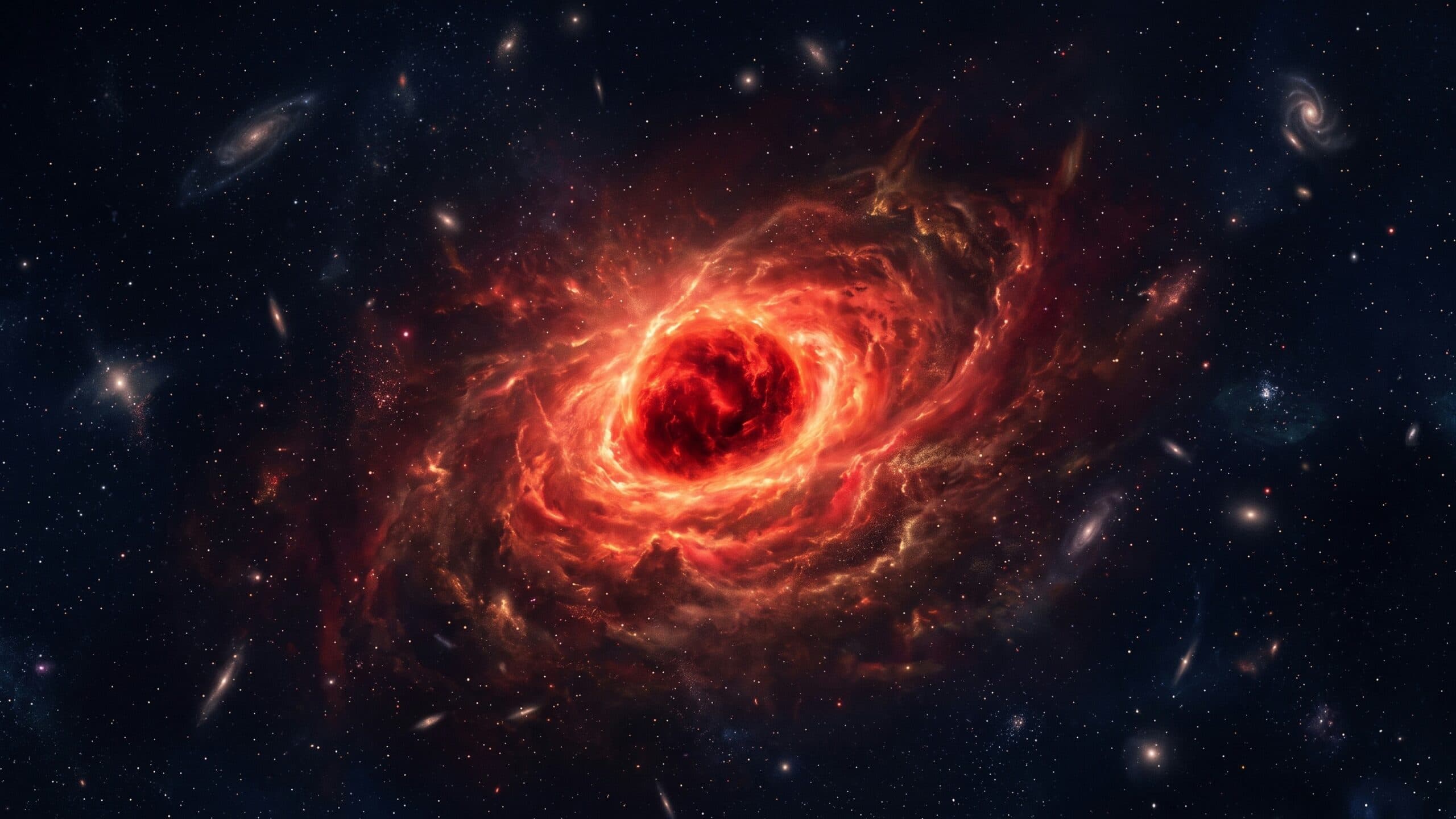
One crimson point in the infant universe is so bright that ordinary starlight cannot explain it. A new Nature study argues it may be a dense gas envelope powered from within by a growing black hole.
Aug 20, 2026 • 8 min read
Paranormal
The Mushroom That Makes People See Tiny People—and the Chemical Nobody Has Found
Reports from China, Papua New Guinea and the Philippines describe the same unnerving vision after eating one mushroom: crowds of tiny people. Researchers have now connected the cases to Lanmaoa asiatica, but the active chemical remains unknown.
Aug 20, 2026 • 9 min read
UFO & Aliens
Europe Has Been Quietly Tracking UAP Reports Since 2023
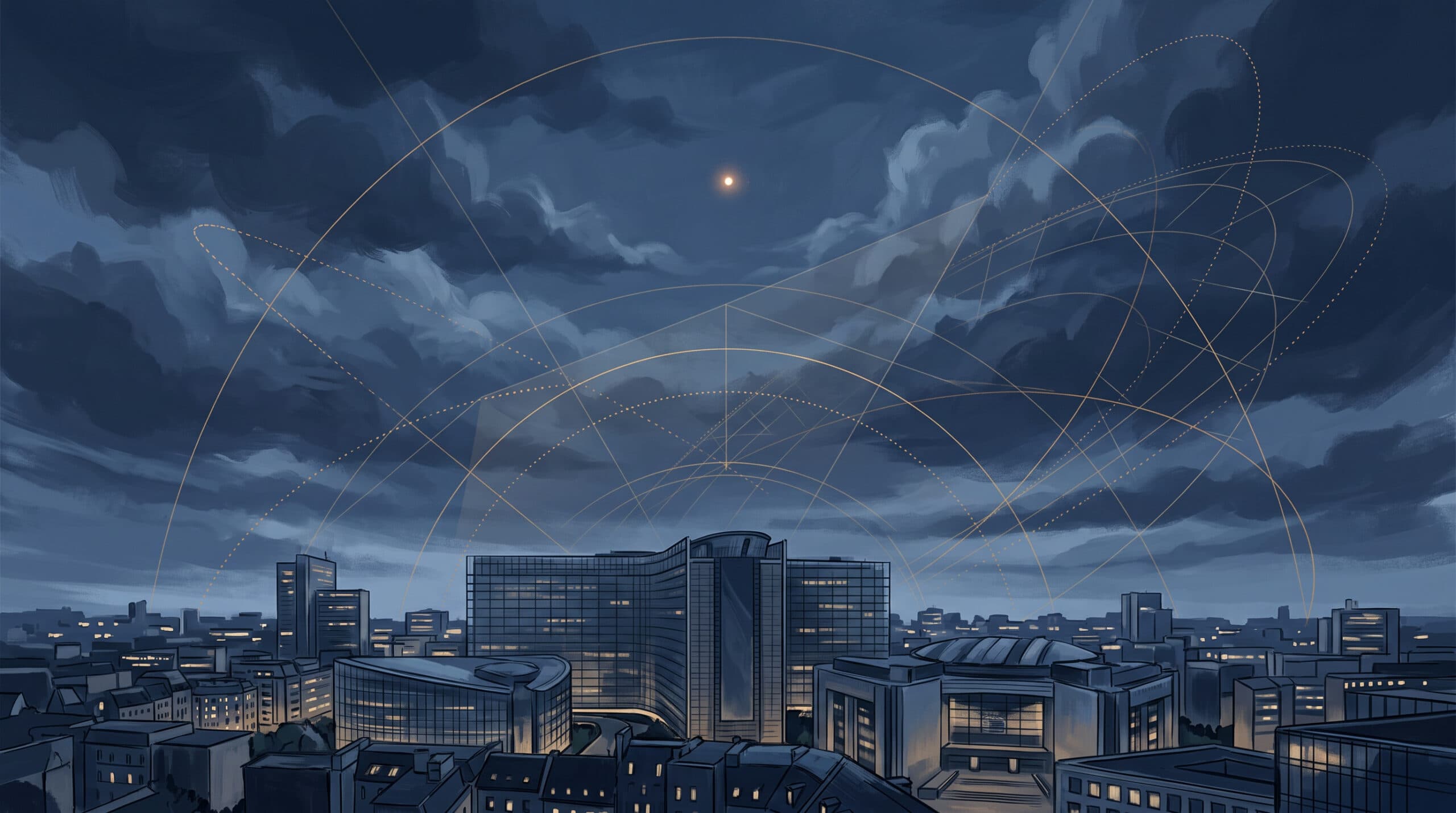
Documents reveal how the European Commission handled UAP images, what it promised to improve, and why Europe still lacks a public investigation office.
Aug 17, 2026 • 8 min read
So far, no overt paranormal claims from locals. But the atmosphere—the glowless skies, the silenced capital—feels uncanny, stirring echoes of old folklore about ominous darkness. Remote watchers, from YouTube analysts to OSINT groups and paranormal circles, track these as part of wider infrastructure strains and cyber patterns, piecing together global threads without locking into one theory.
Timelines, Strikes, and the Fragile Power Grid
Ukraine’s energy grid has faced relentless pressure for years, blending cyber incursions with physical bombardments. Damage tallies exceed $11.4 billion since 2022, per the IEA. The system, once boasting 59 GW of capacity in 2021, now grapples with sustained assaults aimed at multiple nodes for cascading failures.
To track the pattern, here’s a summary of key events:
Date
Type of Attack
Scale of Impact
Kyiv-Specific Notes
December 2015
Cyber
Outages for over 230,000 residents in Ivano-Frankivsk region, lasting up to six hours
N/A (regional focus)
August 26, 2024
Kinetic (missiles and drones)
Over 200 projectiles targeting energy infrastructure, triggering widespread blackouts
Contributed to rolling outages in Kyiv
June 2024 onward
Ongoing grid stress from prior attacks
10–12 hour daily outages in some periods
Rolling blackouts implemented in Kyiv
November 17–18, 2024
Kinetic (drones and missiles)
Nationwide blackouts affecting millions, at least seven deaths; one wave with 458 drones and 45 missiles
Unscheduled outages in Kyiv, first since November 2022
Operators like Ukrenergo release blackout schedules to manage the strain, but intense strikes can overwhelm them, leading to sudden, city-wide failures.
Official Storylines and the View from the Dark Streets
Agencies like CISA attribute events such as the 2015 cyber-attack to Russian state-linked actors. The IEA and Ukrainian officials describe the barrage as a calculated effort to dismantle the energy system, not random mishaps. They point to resilience efforts: published schedules, LED programs, links to European grids, and assurances that total collapse has been averted.
On the streets, though, it hits differently. When the skyline vanishes and schedules crumble into unscheduled voids, control feels like an illusion. Residents report vulnerability, exposed in the dark. This gap breeds dissonance—official claims of managed duress clash with the lived reality of a lightless city, sparking rumors and deeper scrutiny.
Some locals and analysts suspect understated cyber elements in recent strikes, possibly fueling glitches or unexplained cascades not detailed publicly. While no official ties to environmental anomalies exist, witnesses mention odd silences, explosion lights, and physical sensations that push beyond basic outages. Even accepting the attacks as Russian-led doesn’t cover every peculiar system quirk or perception.
When War Edges into High-Strangeness
What if these blackouts hide subtler layers? Unreported anomalies—unusual lights, electromagnetic quirks, device glitches—that don’t fit standard outage molds? The 2015 hack proved code can ripple into physical chaos; newer ops might blend cyber and kinetic in ways that spawn odd behaviors, undocumented in open sources.
Advertisement
Ukraine’s grid serves as a hybrid warfare lab: strikes, fixes, reroutes, cross-border ties. In such chaos, side effects could surface—glitches, interference—hard to spot. Culturally, deep darkness in Ukrainian lore signals omens or trauma; a blacked-out capital revives those threads, tinting descriptions.
Witness words mirror high-strangeness: time warps, vivid flashes in the dark, a world paused. Evidence points squarely to military action and grid wear, not unknowns. Yet the uncanny feel is real, part of the narrative. If this unfolds in a watched warzone, what slips unnoticed elsewhere in failing grids?
What Nights Like This Might Be Telling Us
We stand on firm facts: systematic attacks since 2015, escalating to 2022’s hybrid assaults, yielding billions in damage and outages like those in August and November 2024. The described total blackout aligns with unscheduled failures post-strike.
The simplest read? Wartime targeting and degradation, no exotic tech or phenomena. Still, questions linger: full disclosure on cyber roles and anomalies? Overlooked electromagnetic effects? How darkness narratives influence memory?
For those tracking unexplained patterns, Kyiv offers a window into colliding worlds—warfare, infrastructure, perception. The weirdness might stem from system failures and human response, not skies or secrets. Listening closely to these accounts, without dismissal or hype, sharpens our view for what’s next—whether from code, conflict, or beyond.
Frequently Asked Questions
Yes, residents described an unprecedented total blackout of the skyline, consistent with unscheduled outages following massive Russian strikes, such as those on November 17–18, 2024, which affected millions nationwide.
Agencies like CISA attribute the 2015 cyber-attack to Russian state-linked actors, while the IEA and Ukrainian officials document ongoing missile and drone strikes since 2022 as deliberate targeting of the energy grid, causing over $11.4 billion in damage.
No solid evidence points to paranormal causes; the events align with wartime infrastructure attacks. However, the uncanny atmosphere—described as surreal or time-stopping—echoes high-strangeness reports, shaped by psychological and cultural factors.
Ukrenergo publishes blackout schedules and emphasizes resilience measures like LED programs and European grid connections. Officials maintain that complete collapse has been avoided, framing the situation as managed duress despite the attacks.
They highlight hybrid warfare’s impact on infrastructure, potentially revealing patterns in system failures and human perception. For those following unexplained events, Kyiv’s blackouts show how conventional crises can produce high-strangeness experiences.
Art Grindstone is the hard-nosed storyteller behind Unexplained.co, a veteran investigator whose life’s work sits at the crossroads of the paranormal, fringe science, and the shadows most people try not to look into. With decades spent chasing impossible stories — black-budget psychic programs, vanished Cold War experiments, desert rituals that sparked UFO waves, and the strange phenomena buried in America’s forgotten backroads — Art brings a rare combination of skepticism, awe, and journalistic precision. He’s not here to debunk. He’s not here to blindly believe. He follows the evidence wherever it leads — even when it leads someplace deeply uncomfortable. Known for his immersive, cinematic style and his ability to turn obscure research into gripping narrative, Art has built a devoted following across podcasts, long-form features, documentaries, and serialized investigations. His interviews are direct. His analysis is unflinching. His voice has become a staple in the modern paranormal renaissance — the guy people turn to when a story is too strange, too complex, or too dangerous for anyone else to touch. Off-mic, Art works with a distributed network of researchers, archivists, and field operatives who help surface the stories mainstream media ignores. On-mic, he transforms their findings into meticulous, high-impact reporting that refuses to insult the intelligence of true believers. His philosophy is simple: Take the phenomenon seriously. Treat the audience with respect. Tell the story as if the world depends on it — because sometimes it does. When Art Grindstone digs into a case, he isn’t just chasing a mystery. He’s tracing the fault lines of reality itself.