
Key Takeaways
- A fresh theory points to the Dyatlov Pass deaths as fallout from a Soviet weapons test involving thermobaric blasts and radiological exposure, challenging official avalanche narratives.
- Key evidence includes unexplained radiation on clothing, blast-like injuries, and signs of a hasty cover-up, reframing the incident as a Cold War crime scene.
- This perspective highlights ongoing risks from clandestine military programs, urging better preparedness against unseen hazards and state-controlled information flows.
It’s late, the static on the shortwave crackles, and you’re out there scanning the horizons for patterns that don’t add up. We’ve all heard the Dyatlov Pass story—the nine hikers found dead in the Urals back in 1959, their tent slashed open from the inside, bodies scattered in the snow with injuries that scream something more than bad weather. But a new angle cuts through the fog: what if they wandered into a live Soviet weapons test? Not just any test, but one packing thermobaric punch and radiological traces. This isn’t about chasing ghosts; it’s about connecting dots to a systemic playbook that’s still in use today.
The Night That Froze the Truth
Picture this: February 1959, a group of experienced Soviet hikers sets up camp on a slope in the northern Ural Mountains. They were young, fit, led by Igor Dyatlov—engineers and students with a taste for the wild. What followed was chaos. Rescuers found their tent abandoned, ripped from within, footprints leading into the night. Bodies turned up over weeks: some with crushed skulls and chests, others with missing eyes or tongues, one with radiation on his clothes. Official word? Avalanche or katabatic winds. But those explanations have always felt thin, like a veil over something sharper.
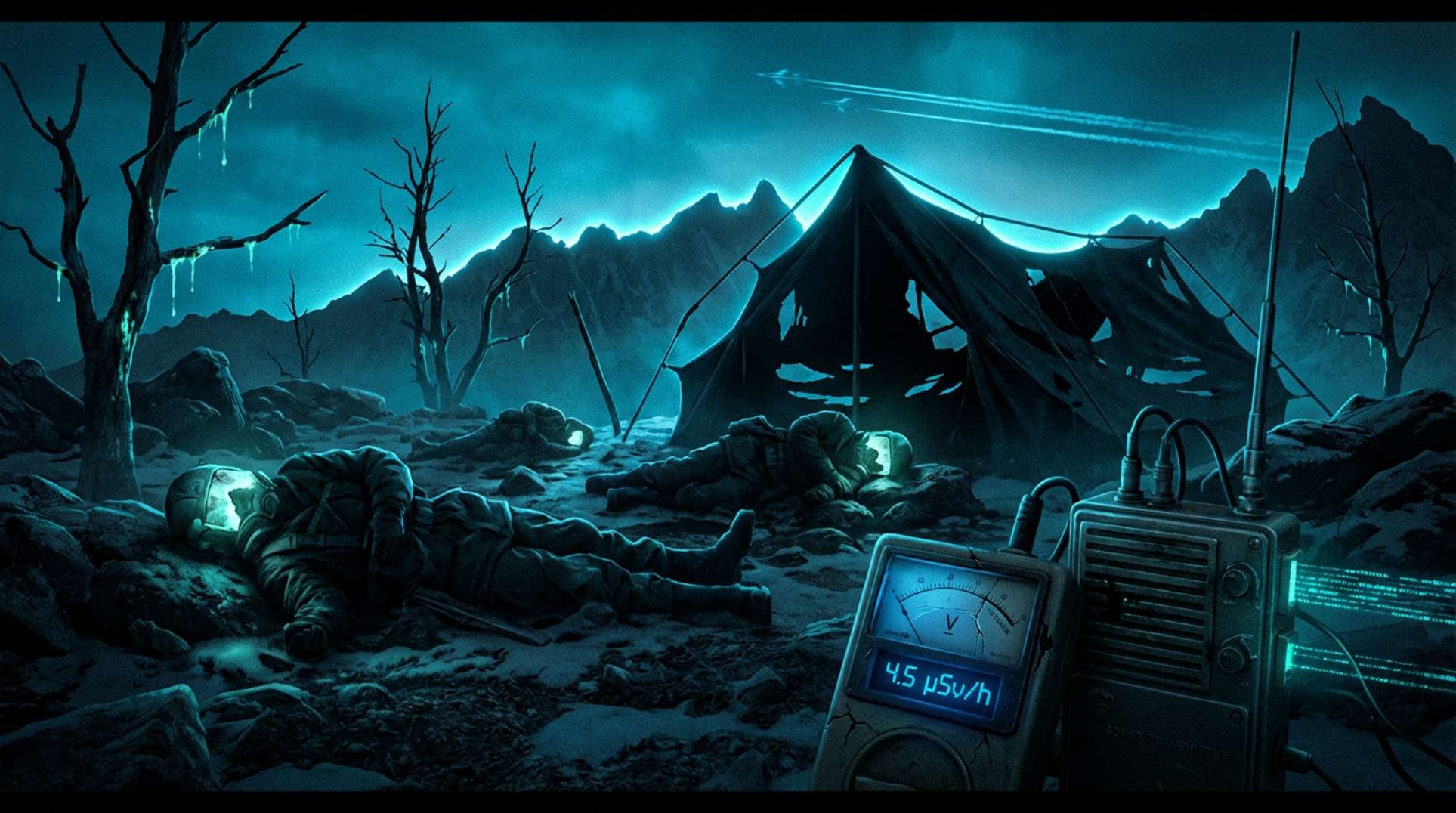
Enter this new lens from researchers piecing together declassified hints and forensic reexaminations. The hikers might have stumbled into a restricted zone where the Soviets were testing advanced munitions—thermobaric weapons that generate massive pressure waves without shrapnel, or perhaps early radiological devices. The Urals were a hotbed for secret ops back then, with nuclear facilities nearby. Imagine a blast wave ripping through the dark, slamming bodies without leaving craters, followed by a cleanup crew to stage the scene.
Advertisement
Evidence That Radiates Suspicion
Let’s sift through the traces. Autopsies showed injuries consistent with explosive overpressure: rib cages caved in like they’d been hit by an invisible hammer, no external wounds to match. One hiker’s jacket carried beta radiation levels off the chart—enough to suggest fallout from a dirty test. Photos from the site show a scorched tree line, as if a fireball had passed through. And the cover-up? Diaries and film rolls went missing, bodies were autopsied in secret, and witnesses reported orange spheres in the sky that night—maybe flares or test artifacts.
What makes this weapons-test theory different from past Dyatlov explanations? How does radiation factor into the new theory? Why should this old incident matter to trackers of modern anomalies? What practical steps can we take based on this theory?