Key Takeaways
- The verified record from ODNI’s 2021 preliminary assessment reviewed 144 UAP reports from 2004 to March 2021, with 143 unexplained and 18 showing unusual flight characteristics.
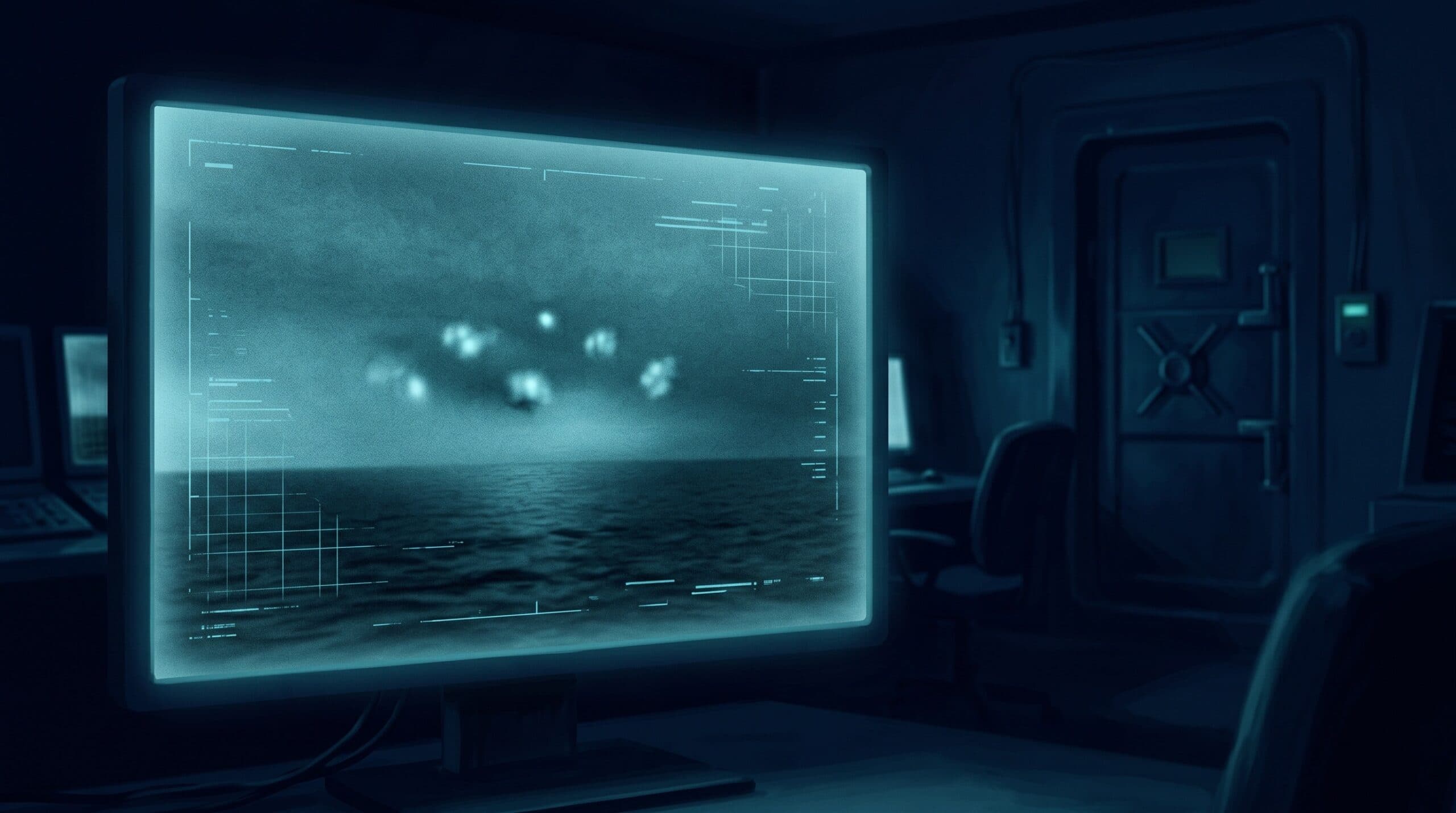
- Credible witnesses, including Navy pilots like David Fravor and Ryan Graves, report unexpected maneuvering backed by sensor data and videos such as Gimbal and FLIR1.
- Unresolved risks include data quality issues highlighted by NASA‘s 2023 UAPIST report, which found no unclassified evidence of extraterrestrial origins but called for better standardized collection to address lingering mysteries.
A Quiet Storm Gathering
It’s late at night in the dimly lit halls of power. Agencies that once brushed off reports of strange lights in the sky now huddle over classified briefs. The mood is tense, heavy with the weight of secrets. This isn’t just curiosity anymore. The Department of Defense reorganized its UAP efforts into the All-domain Anomaly Resolution Office in 2022, a clear sign they’re taking this seriously. Bipartisan hearings in Congress through 2023 and 2024, plus NASA’s appointment of a UAP research director, add to the pressure. What started as dismissal has shifted to structured reporting and oversight. Something’s building, and it’s got the institutions on edge.
What Witnesses and Analysts Are Saying
Those on the front lines—trained military aviators who’ve stared down the unknown—deserve a fair hearing. Navy pilots like David Fravor and Ryan Graves have described objects defying physics, moving in ways no known aircraft can match. Their accounts are backed by infrared videos released by the Navy, such as Gimbal and FLIR1, showing corroborating sensor data. Then there’s David C. Grusch, a former intelligence officer, who testified before Congress on July 26, 2023. He claimed officials informed him of a decades-long program involving crash retrievals and reverse-engineering of non-human craft and materials. Whistleblowers and experiencers continue to share interviews and internal complaints, fueling networks of independent journalists and researchers. These voices, with their career credentials and sensor-backed stories, demand attention.
Timelines, Tracks, and the Hard Facts
The paper trail starts with the ODNI’s unclassified Preliminary Assessment on Unidentified Aerial Phenomena, released June 25, 2021. It covered reports from November 2004 to March 2021, analyzing 144 incidents. Of those, 143 stayed unexplained in the unclassified version, and 18 displayed unusual flight characteristics. NASA’s UAP Independent Study Team issued its final report on September 14, 2023, stating no unclassified evidence points to extraterrestrial origins but urging better data collection. The All-domain Anomaly Resolution Office, formed in mid-2022, has since released historical reports in 2023 and 2024, applying structured analysis. Grusch’s testimony on July 26, 2023, alleged recovery programs, though no public, peer-reviewed physical evidence has surfaced.
| Metric | Value | Source |
|---|---|---|
| ODNI Assessment Release Date | 25 June 2021 | ODNI Preliminary Assessment |
| Dataset Period | November 2004–March 2021 | ODNI Preliminary Assessment |
| Reports Reviewed | 144 | ODNI Preliminary Assessment |
| Unexplained Reports | 143 | ODNI Preliminary Assessment |
| Incidents with Unusual Characteristics | 18 | ODNI Preliminary Assessment |
| NASA UAPIST Report Date | 14 September 2023 | NASA UAPIST Final Report |
| AARO Formation | Mid-2022 | DoD Releases |
| Grusch Testimony Date | 26 July 2023 | Congressional Transcript |
Official Narratives vs. Emerging Patterns
Agencies like ODNI and DoD frame UAP as threats to aviation safety and national security. They point out that most incidents remain unexplained and push for better reporting. AARO applies intelligence methods and science to resolve cases across domains. NASA, in its 2023 report, highlights data flaws—poor sensor calibration and missing metadata—and suggests a supporting role in scientific analysis without jumping to origins. On the other side, witnesses and researchers see the unexplained cases and whistleblower claims as hints of recovery programs or non-human tech. Mainstream coverage acknowledges these allegations but notes the absence of verifiable evidence. The divide often stems from classified barriers, reporting stigma among pilots, and fragmented records that block independent checks.
Gaps in the Record — Questions That Linger
Why do 143 of the 144 cases in ODNI’s unclassified summary stay unexplained? Is it due to weak sensors, missing metadata, isolated reporting, or truly anomalous traits? On retrieval claims like Grusch’s, where are the verifiable documents or artifacts? What legal paths could allow independent review? For those 18 incidents with odd flight patterns, what sensor data exists in unclassified form, and how does it align with natural or man-made explanations? How deep is Congressional and inspector-general access, and are classification rules or contractor protections blocking oversight? To move forward, we need standardized civilian apps, calibrated public sensors, satellite data, and mandatory pilot reports with metadata—echoing NASA’s calls for better standards.
What This Could Signal
Agencies have pivoted. ODNI’s 2021 assessment, AARO’s creation in 2022, and NASA’s 2023 study mark a turn from ignoring UAP to treating them as real concerns. Yet the unclassified record lacks peer-reviewed proof of non-human craft, even as whistleblowers allege otherwise without open substantiation. This matters for safe skies, secure borders, scientific progress, and trust in institutions. Reporters should chase sensor details on key cases, demand material provenance, advocate for access to classified files, and monitor how AARO and NASA apply new data rules. The patterns are there—let’s track them.
Frequently Asked Questions
The ODNI’s 2021 preliminary assessment reviewed 144 UAP reports from 2004 to March 2021, finding 143 unexplained and 18 with unusual flight characteristics. It emphasizes aviation safety and national security risks but doesn’t attribute origins in the unclassified version.
David Grusch is a former intelligence officer who testified before Congress on July 26, 2023. He alleged a multi-decade program for crash retrieval and reverse-engineering of non-human craft and materials, based on what officials reportedly told him, though no public physical evidence has been produced.
NASA’s UAPIST report from September 14, 2023, found no unclassified evidence of extraterrestrial origins. It stressed low-quality data and recommended standardized collection methods to improve analysis.
The formation of AARO in 2022, bipartisan Congressional hearings in 2023–2024, and NASA’s research role signal a shift from dismissal to formalized study. This reflects concerns over aviation safety, security, and the need for better data amid persistent unexplained reports.
Witnesses like Navy pilots provide accounts backed by sensor data and videos such as Gimbal and FLIR1. Whistleblowers offer testimony, but the unclassified record lacks peer-reviewed physical proof, highlighting gaps in data quality and access.