
The Unexplained Company Logo
Sign In
Peter Thiel’s Antichrist Lectures in Rome: The Tech Billionaire Bringing Apocalyptic Ideas to the Vatican’s Doorstep

Peter Thiel’s Antichrist Lectures in Rome: The Tech Billionaire Bringing Apocalyptic Ideas to the Vatican’s Doorstep

Art Grindstone

March 16, 2026

A tech billionaire known for co-founding PayPal and Palantir is holding a closed-door lecture series on the Antichrist just steps from the Vatican — and Catholic institutions want nothing to do with it.

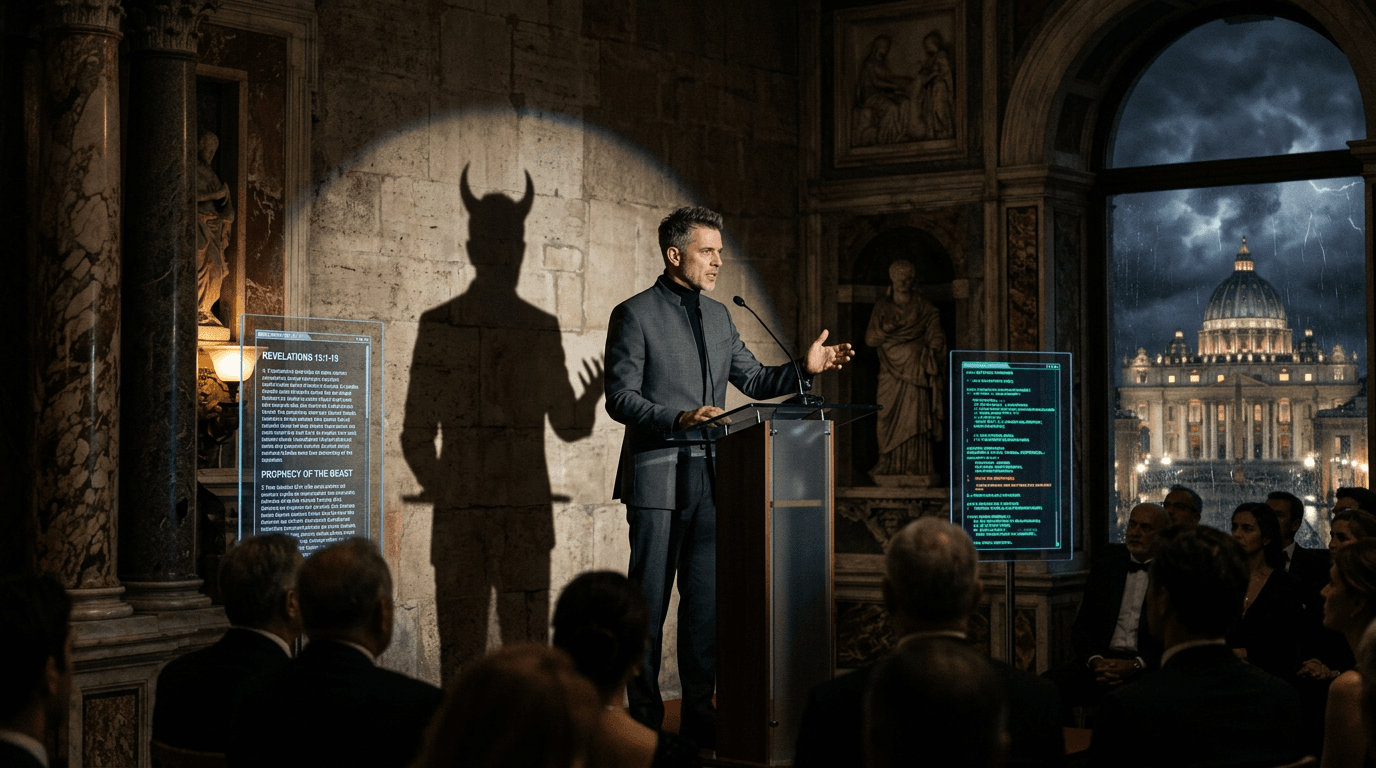
One of the hottest tickets in Rome these days is not a papal audience or a gallery opening — it’s a four-lecture series on the Antichrist being given by Silicon Valley billionaire Peter Thiel. And it has sparked a controversy that is reverberating through the Catholic Church.

The Event

The invitation-only conference began on Sunday, March 15th, and runs through Wednesday, March 18th. The event brings the tech billionaire and early supporter of former President Donald Trump to the heart of Rome — just steps from the Vatican — to explore what he sees as the Biblical prophecy of the Antichrist.

According to PBS News, the lectures were originally rumored to be held at the Pontifical University of St. Thomas Aquinas, known as the Angelicum — a Dominican university in Rome most famous today as the place where the current Pope, Robert Prevost (Pope Leo XIV), wrote his canon law doctoral thesis.

Catholic Institutions Back Away

When Italian media began reporting on secret Antichrist lectures at the pope’s old university, the Angelicum quickly posted a statement on its website:

“We would like to clarify that this event is not organized by the University, will not take place at the Angelicum, and is not part of any of our institutional initiatives.”

The Catholic University of America also distanced itself from the event. “The Catholic University of America is not sponsoring or hosting an event featuring Peter Thiel this month in Rome,” a university spokesperson told AP. “The Cluny Project is an independent initiative incubated at the university.”

According to announcements for the event, the lectures were “jointly organized” by the Vincenzo Gioberti Cultural Association in Italy and the Cluny Institute at CUA.


Thiel’s Fascination with the Apocalyptic

This is not Thiel’s first time exploring these themes. He gave a similar four-part lecture series in San Francisco last September. In a November essay in the Catholic magazine First Things, Thiel mused:

“Christians debated these prophecies for millennia. Who was the Antichrist? When would he arrive? What would he preach?”

As Fortune reports, in Thiel’s interpretation, the Biblical Antichrist figure prophesied to oppose Jesus Christ might emerge as a reassuring actor who exerts control by promising safety and an end to the “existential risk” of technological development.

Thiel is known to be deeply interested in apocalyptic concepts — the Antichrist and Armageddon — and speaks of them in terms of the existential choices facing humanity today.

What He’ll Discuss

According to invitations for the event, Thiel’s lectures will “be anchored on science and technology, and will comment on the theology, history, literature and politics of the Antichrist.”

Religious thinkers Thiel will draw upon include:

  • René Girard
  • Francis Bacon
  • Jonathan Swift
  • Carl Schmitt
  • John Henry Newman

The Controversy

Thiel’s presence in Rome has not gone over well with everyone. As The Independent reports, Thiel has previously attacked Pope Leo XIV as a “woke American pope” — adding another layer of controversy to his visit.

The tech billionaire is also a co-founder of Palantir, the data-mining company that has been assisting the Trump administration’s migrant deportation crackdown. He was an early donor to Vice President JD Vance’s political career.

The lectures remain closed to the public, but the controversy they have generated is anything but. As the world watches, a tech billionaire known for his apocalyptic worldview has brought his warnings about the Antichrist to the doorstep of the Catholic Church — and the Church wants no part of it.

Read more about the controversy on Reuters.