The Unexplained Company Logo
Raechel’s Eyes: Inside the Hybrid Roommate Claim

Raechel’s Eyes: Inside the Hybrid Roommate Claim

Art Grindstone

December 3, 2025

Key Takeaways

  • Central claim: a college student was matched with a peculiar roommate (sunglasses indoors, robotic speech); the student’s mother touched the roommate and described the skin as cold and spongy, a detail recounted in the small-press book Raechel’s Eyes (Helen Littrell with Jean Bilodeaux).
  • Verifiable context: official U.S. activity on UAP has increased public interest—ODNI’s June 25, 2021 Preliminary Assessment (144 observations) and DoD’s creation of AARO (July 2022) signal institutional attention to anomalous phenomena, though not to hybridization programs.
  • Open problem: there are no publicly available, declassified government records or peer-reviewed biomedical analyses that authenticate a named, documented human-alien hybrid program; much of the hybrid narrative corpus exists in experiencer testimony, books, and community reports.

The Girl Who Wore Sunglasses Indoors

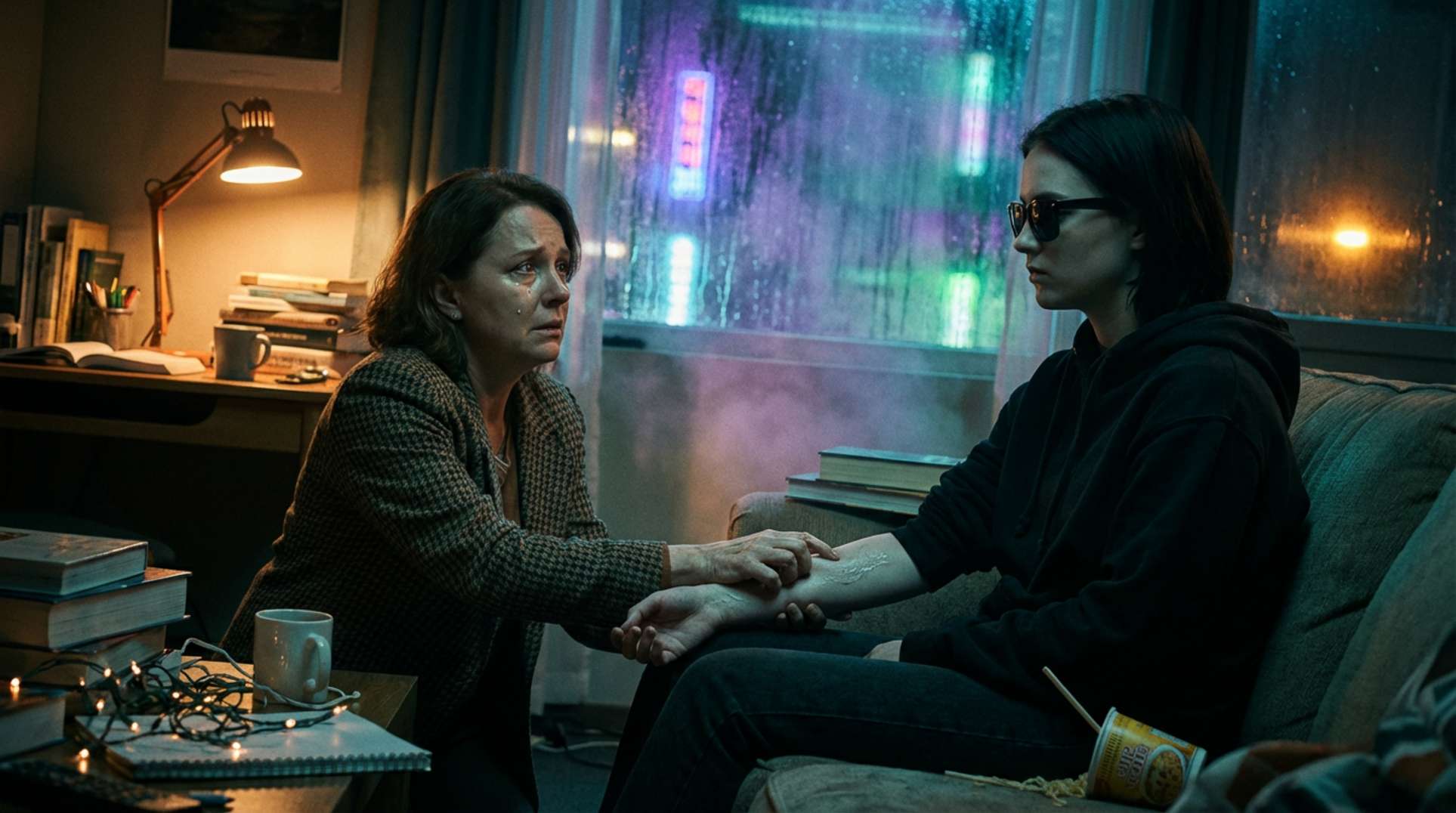
The apartment was small, shared by two college students scraping by on tight budgets. One, Marisa, needed affordable housing amid financial pressures. Her new roommate, Raechel, showed up with habits that set off quiet alarms. Sunglasses stayed on inside, even in dim light. Speech came out measured, almost scripted—precise, robotic, like lines from a manual.

Things escalated when Marisa’s mother visited. A casual touch on Raechel’s arm changed everything. The skin felt wrong: cold, spongy, like raw mushrooms left out too long. As detailed in Raechel’s Eyes, that moment shattered the normalcy of shared living, turning discomfort into outright suspicion. What started as odd quirks in a cramped space ballooned into a family crisis, with questions piling up fast.

What Witnesses and Researchers Report

Accounts like this one draw from personal experiences, shared within communities that track these patterns. In Raechel’s Eyes, the narrative describes the roommate’s sunglasses, robotic speech, and that unsettling skin texture felt by the mother. The book ties it to a supposed ‘Humanization’ or hybrid program, based on the family’s recollections.

Across the experiencer community, similar motifs surface repeatedly. Staged introductions, clinical settings, military oversight, hypnotic regression sessions, and physical anomalies—like odd skin, eyes, or missing records—appear in reports cataloged by groups like MUFON and summarized in resources such as Hangar1 episodes. Investigators in these networks compile first-hand abduction and hybrid stories, noting recurring elements without claiming proof.

MUFON and NUFORC serve as key hubs, gathering and archiving these accounts from witnesses worldwide. Many rely on memory recovery techniques, including hypnosis, which introduces questions about reliability. Still, the patterns persist, demanding attention from those piecing together the bigger picture.

Timelines, Tracks, and Hard Data

Official documents provide a foundation, even as gaps highlight what’s missing. The ODNI’s Preliminary Assessment on Unidentified Aerial Phenomena, released June 25, 2021, covered reports from November 2004 to March 2021, summarizing 144 observations, mostly from military sources.

In July 2022, the Department of Defense established the All-domain Anomaly Resolution Office (AARO) to coordinate UAP efforts. By August 30, 2022, AARO noted around 510 reports in its historical record.

Raechel’s Eyes, by Helen Littrell with Jean Bilodeaux, stands as the primary source for this roommate account, framing it within a hybrid program narrative. Yet no declassified records from DoD, ODNI, DARPA, NIH, or CDC confirm such a program, including budgets or medical details.

Key Data PointDetails
ODNI Preliminary AssessmentJune 25, 2021; 144 observations (Nov 2004–Mar 2021)
AARO EstablishmentJuly 2022 (DoD memo)
AARO Reports~510 as of August 30, 2022
Raechel’s EyesBook by Helen Littrell with Jean Bilodeaux; documents roommate claim and ‘Humanization’ narrative
Confirmed Government ProgramNone publicly available for human-alien hybrids

To strengthen quotes, excerpts from Raechel’s Eyes—via OCR if needed—could verify the exact tactile description.

Official Story vs. Community Interpretations

Government agencies frame UAP as a matter of data collection, flight safety, and security. The 2021 ODNI report avoided extraterrestrial attributions, leaving many cases unexplained but tied to practical concerns. AARO, since 2022, focuses on identification and coordination, often resolving incidents to everyday causes, with no public confirmation of alien origins.

In contrast, experiencer communities see hybrid programs as tangible operations, sometimes linked to human agencies. These views spread through books, conferences, and networks like MUFON or Hangar1, where witnesses describe structured integrations of hybrids into society.

The divide is clear: official records track aerial anomalies but lack biomedical evidence for hybrids, such as medical records or forensic tests. This gap leaves community claims strong on testimony but short on verifiable chains of proof.

What It All Might Mean

The core incident—the mother’s touch revealing cold, spongy skin—comes from Raechel’s Eyes. Meanwhile, documented UAP activity via ODNI in 2021 and AARO in 2022 shows real institutional focus, but nothing confirms a hybrid program.

Questions linger: Do hidden memos or budgets back a ‘Humanization’ project? Are there medical records for alleged hybrids? How reliable are hypnotic regressions in these stories?

These claims touch on oversight and ethics if covert programs exist, or they highlight how people process anomalies if not. For next steps, pursue FOIA requests on program names, secure excerpts from Raechel’s Eyes, interview authors and witnesses, check MUFON/NUFORC for parallels, and consult experts on the described skin traits. Documents support parts of this; testimony fills the rest. Weigh it for yourself—mystery remains.

Frequently Asked Questions

A college student shared an apartment with Raechel, who wore sunglasses indoors and spoke robotically. The student’s mother touched Raechel’s arm, feeling skin that was cold and spongy like mushrooms, as detailed in Raechel’s Eyes. This sparked suspicions of a hybrid program.

No publicly available declassified government records or peer-reviewed analyses confirm such programs. Official focus, like ODNI’s 2021 report and AARO’s work, addresses UAP as safety and security issues without endorsing hybrid claims. Community narratives rely on testimony and books.

Agencies like ODNI and AARO treat UAP as data and security matters, often explaining them mundanely without alien attributions. Experiencer communities interpret hybrids as real programs, shared through networks like MUFON, highlighting patterns in testimony that lack official biomedical backing.

Pursue FOIA requests for program details, obtain excerpts from Raechel’s Eyes, interview authors and witnesses, query MUFON/NUFORC for similar cases, and consult medical experts on the skin description. This builds on documented UAP activity while addressing testimony gaps.

It connects personal experiences to broader patterns in hybrid narratives, amid rising official UAP attention. If true, it raises ethical and oversight issues; if not, it shows how communities interpret anomalies. Readers can assess the evidence themselves.