The Unexplained Company Logo
Russia’s ‘Nuclear Night’: Policy Shift or Deadly Signal?

Russia’s ‘Nuclear Night’: Policy Shift or Deadly Signal?

Art Grindstone

December 2, 2025

Key Takeaways

    • Russia updated its nuclear-use policy on November 18–19, 2024, broadening language and increasing public signaling (Arms Control Association; NBC News).
    • Markets showed a risk-off response around these signals: global equities fell while bonds and safe-haven currencies gained, reported by The Guardian on November 19, 2024; academic work documents a “proximity penalty” for stocks near Ukraine.
    • Major uncertainties remain: whether doctrinal shifts lower actual thresholds for use; how reliable viral “mushroom cloud” videos are as evidence of radiological events; and what legal, operational, and political constraints would limit NATO responses.

The Night the Sky Looked Nuclear

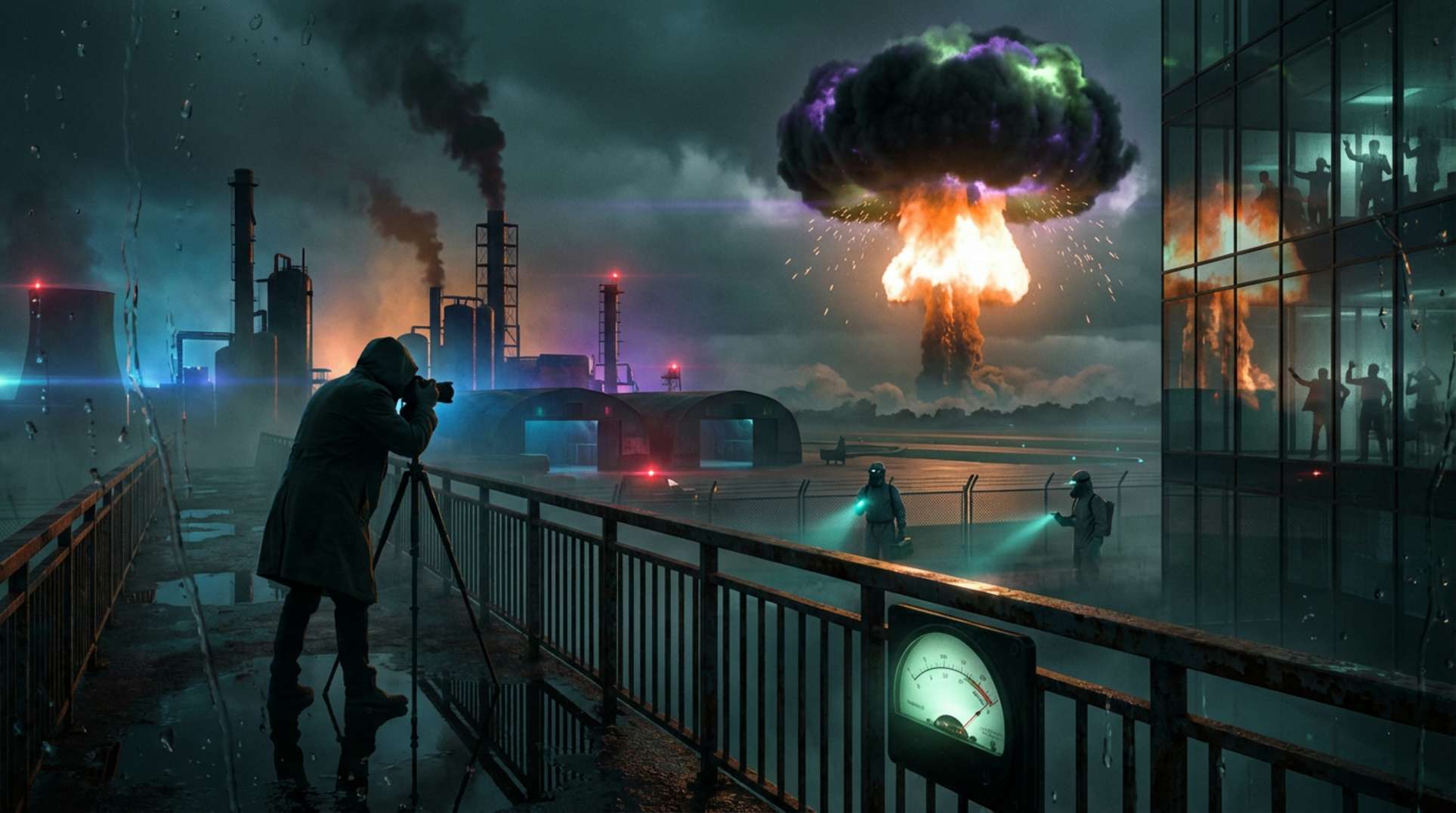
Social media filled with dramatic clips: towering, mushroom-shaped fireballs and massive plumes after large explosions. Eyewitnesses linked the footage to strikes on depots, airfields, and industrial sites. The timing overlapped with heightened Russian nuclear signaling following policy changes in November 2024 and earlier tactical-nuclear drills in May 2024, and markets reacted with visible risk-off moves. In the fog of those hours, visual horror, rumor, and geopolitical fear amplified one another.

Witness Accounts and Independent Analysis

Many frontline witnesses and citizen journalists interpreted the mushroom-shaped plumes as indicative of nuclear or radiological detonations, especially when strikes hit sites thought to contain nuclear materials. Typical evidence included shaky videos, photos of large plumes, and reports of intense thermal flashes.

However, independent analysts, monitoring groups, and the IAEA caution that large conventional explosions, fuel or munitions conflagrations, and blast-driven fireballs can mimic mushroom-like shapes without any radiation release. In several high-profile viral cases, follow-up checks found no radiological signatures or produced inconclusive results.

Timeline, Sources, and Market Signals

Summarizing verifiable points helps separate signal from noise. Key public items include: Russia’s May 2024 tactical-nuclear drills (reported by Al Jazeera); the November 18–19, 2024 doctrinal update (Arms Control Association; NBC News); and market coverage and analysis (The Guardian; academic studies on proximity effects).


DateEventSourceMarket Signal
May 6, 2024Drills including tactical nuclear practice announced.Al JazeeraBaseline (pre-escalation)
November 18–19, 2024Russia revises and publicizes broader nuclear-use language.Arms Control Association; NBC NewsGlobal equities fall; bonds and safe-haven currencies rise (The Guardian)
December 1–2, 2025NATO official states the alliance is “studying everything,” including potential pre-emptive options.Reuters; The IndependentStatement-driven volatility risk
2024–2025U.S. reports and CRS analyses document upgrades to Russia’s non-strategic nuclear posture.U.S. State Department; CRSPersistent proximity-driven risk patterns

Primary documents (doctrinal texts, official translations) and radiation-monitoring data remain the most decisive evidence to collect for confirmation.

Official Statements vs. Measured Data

Moscow frames doctrinal changes as responses to perceived Western escalations (long-range weapons, force posture). NATO and allied officials have responded with public ambiguity; some leaders have discussed studying more forceful options, prompting diplomatic pushback from Moscow. Open-source and governmental monitoring bodies emphasize that visuals alone are insufficient to demonstrate a radiological incident and call for measured verification.

Where independent follow-ups were possible, many viral claims of nuclear detonations were not corroborated by radiation readings or by forensic analysis of blast signatures.

How Markets Reacted

Narrative shocks and explicit signaling drove rapid financial reactions. In November 2024, heightened nuclear rhetoric coincided with risk-off trades: equity indices fell, government bonds rallied, and safe-haven currencies strengthened. Empirical research documents larger negative abnormal returns for firms and markets closer to conflict zones—termed a “proximity penalty.” The intensity and persistence of market moves depend on whether the episode resolves quickly or escalates further.

Interpretation and Remaining Questions

What is clear: Russia publicly broadened its nuclear-use language in November 2024, and populist visual shock events can trigger measurable market dislocations. What is uncertain: whether the doctrinal shift meaningfully lowers real-world thresholds for nuclear employment; the actual size and distribution of Russia’s non-strategic arsenal; and how reliably open-source videos indicate radiological harm.

Practical next steps for analysts and policymakers: obtain and translate the full doctrinal text; collect and publish any available radiological monitoring data; develop a time-stamped strike-to-viral-to-market dataset; and analyze legal and operational constraints on potential NATO measures.

Frequently Asked Questions

Russia codified broader nuclear-use language on November 18–19, 2024, increasing public signaling, according to Arms Control Association and NBC News. This followed earlier tactical-nuclear drills in May 2024 (Al Jazeera).

Witnesses often interpret them that way, but independent analysts and the IAEA note that large conventional explosions can produce similar plumes without radiological release. Many viral claims have been disputed or remain unverified without radiation data.

During the November 2024 signaling, global equity indices dropped while bonds and safe-haven currencies rose (The Guardian). Academic studies find larger negative impacts for markets and firms closer to the conflict zone.

Moscow frames its updates as defensive responses; NATO officials have publicly discussed contingency options. U.S. government reports acknowledge doctrinal changes but emphasize significant intelligence gaps about operational thresholds.

Open questions include whether doctrinal language translates into lower real-world thresholds for nuclear use, how often viral footage aligns with radiological events, and what operational constraints would limit pre-emptive responses. Independent, verifiable radiation monitoring and classified inventory data remain the critical gaps.