The Unexplained Company Logo
Solar Storms and Orbs: Coincidence or Real Connection?

Solar Storms and Orbs: Coincidence or Real Connection?

Art Grindstone

December 10, 2025

Key Takeaways

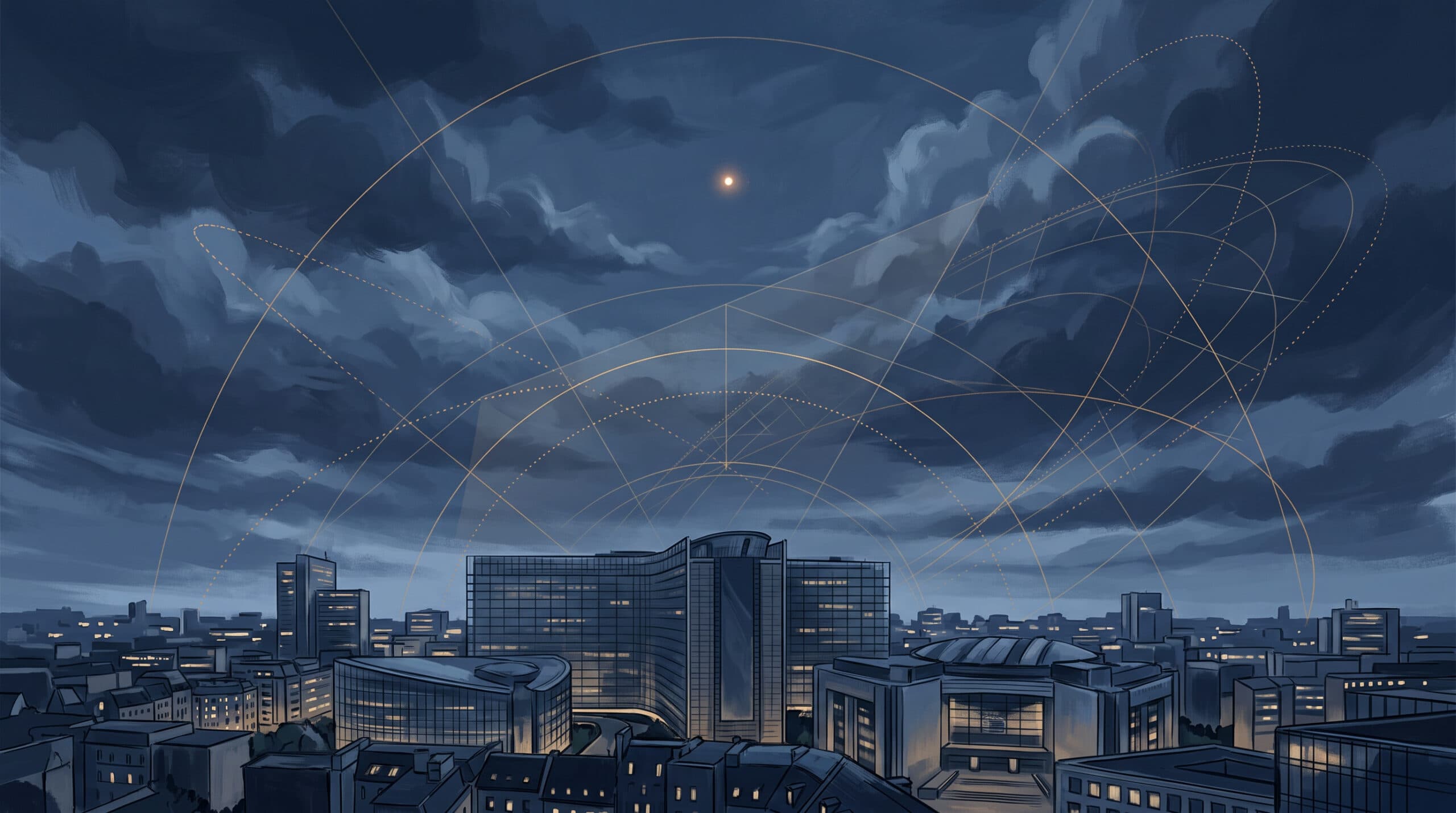
  • Solar Cycle 25 hit its maximum phase, as announced by NASA and NOAA on October 15, 2024, with warnings of higher rates of solar flares, coronal mass ejections, and space-weather effects from NOAA’s Space Weather Prediction Center.
  • Instrumented studies confirm extreme geomagnetic activity in 2024, including severe to extreme G4-G5 storms in May, backed by peer-reviewed analysis from the American Geophysical Union.
  • Eyewitness and investigator communities note a rise in orb and plasmoid sightings from 2023 to 2025 via sources like NUFORC, MUFON, and Reddit, though these lack instrumentation; questions linger on whether this stems from real causation or just reporting bias, without multi-sensor field confirmations.

A Quiet Night, an Electric Sky

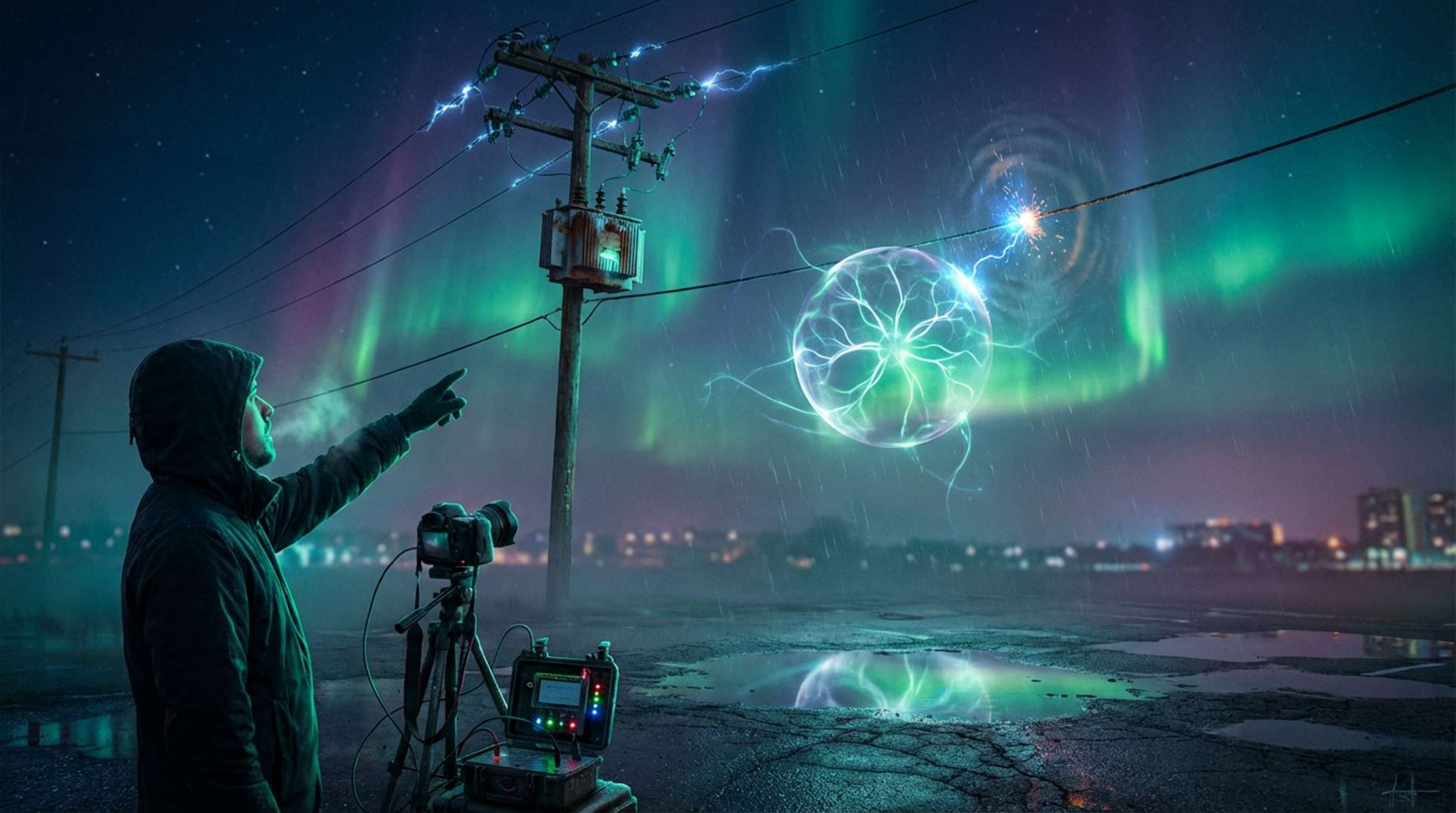
Picture this: the sky shimmers with faint auroral glow, a distant transformer hums under strain. A witness freezes, pointing upward. There, a slow-moving luminous orb drifts against the stars, silent and steady. It hovers, then darts with abrupt speed, brushing near power lines before vanishing with a faint pop. These moments hit home for those on the ground—disrupting the ordinary, sparking questions about what’s really unfolding in our atmosphere during these charged nights.

Reports often cluster around auroral displays or heightened geomagnetic activity. Witnesses describe spherical lights near thunderstorms or clear skies lit by northern lights. Some orbs interact with infrastructure, causing flickers or small bangs upon disappearance. In community threads on NUFORC, MUFON, and Reddit, these patterns emerge, drawing us into the experience alongside those who saw it firsthand.

What Witnesses and Analysts Report

From backyards to remote fields, people share stories of glowing spheres that defy easy labels. Descriptions vary—some orbs pulse with color, others remain steady white or blue. They hover silently, then accelerate sharply or fade away. Many sightings tie to storms or auroras, with reports of orbs weaving near lightning or power grids.

Databases like NUFORC and MUFON log hundreds of these plasmoid or orb entries, amplified in online spaces such as Reddit and Discord where clusters get dissected. Independent researchers correlate them with geomagnetic spikes, like high Kp indices, or solar events. Ideas float around: ball lightning, atmospheric sprites, or plasma formations. Eyewitness accounts carry weight here—we value them as starting points, even as we recognize how phones, media buzz, and shared stories can shape what gets reported.

Timelines, Tracks, and Hard Data

Official records anchor the surge in solar activity. NASA and NOAA declared Solar Cycle 25’s maximum on October 15, 2024, with a 13-month smoothed sunspot number of 156.7 reported in August 2024. May 2024 stood out with a run of G4 to G5 geomagnetic storms, triggered by coronal mass ejections and detailed in AGU’s peer-reviewed work.

Geomagnetic alerts rely on the Planetary K-index (Kp), scaling from 0 to 9, where Kp=9 signals a G5 extreme event, per NOAA’s Space Weather Prediction Center. Superbolt studies, like Ripoll et al. in Nature Communications (2021), show these lightning events emit 10 to 1000 times more VLF power into space than standard strikes, based on 2010-2018 catalogs.

Ball lightning research draws from thousands of historical reports, with lab models exploring plasma and vortex theories, though no consensus on natural mechanisms exists, as noted in a 2019 Nature review.

Key Data Points (Sources Linked in Context)
Date/MetricDetailsSource
Oct 15, 2024Solar Cycle 25 Maximum AnnouncementNASA/NOAA
May 2024G4-G5 Geomagnetic StormsAGU/Wiley Analysis
2010-2018Superbolt VLF Factor (10-1000x)Ripoll et al., Nature Communications 2021
Kp Index0-9 Scale; Kp=9 = G5 ExtremeNOAA SWPC

Official Story vs. What the Data Suggests

Agencies like NASA and NOAA stick to documented risks: solar maximum boosts flares and CMEs, leading to space-weather effects on satellites, radio, and power systems. They issue guidance but steer clear of linking this to ball lightning or unidentified aerial phenomena.

Peer-reviewed papers back the storm intensity—May 2024’s events show clear magnetospheric impacts—and superbolt research highlights strong energy transfers upward. Yet, these don’t confirm ground-level plasmoids.

Community voices push further, noting sighting clusters during high geomagnetic activity and suggesting ionospheric changes or induced currents as culprits. Independent analysts scale up lab plasma ideas, though open-air replication lags. Reporting bias plays a role too—more phones and online sharing during solar hype could swell numbers without true increases. Agencies focus on infrastructure threats, leaving plasmoid questions in the gray area of unproven possibilities.

What It All Might Mean

Solar Cycle 25’s peak in October 2024 ramps up flares and CMEs, driving geomagnetic disturbances that hit infrastructure hard— that’s the solid chain from official data.

Connections to plasmoids and superbolts intrigue but lack proof. Superbolts pump massive VLF energy skyward, as in Ripoll’s 2021 study, and 2024’s storms altered EM fields, potentially stirring near-ground effects. Still, instrumented links to visible orbs are rare.

Questions persist: Is the report spike real or biased? Can lab plasmoids explain wild ones? Do superbolts spawn ground phenomena? How much does media inflate counts? And why the gap in field sensors?

For those tracking this, capture time-stamped video with GPS, note local Kp/Dst, and log weather. Consider building multi-sensor kits—optical cameras, EM detectors, magnetometers, audio for infrasound, all synced. This could shift us from stories to hard evidence.

Frequently Asked Questions

Reports have spiked from 2023 to 2025, often tied to Solar Cycle 25’s maximum phase announced in October 2024, which increases solar flares and geomagnetic storms. Community sources like NUFORC and MUFON note clusters during high Kp activity, but questions remain on whether this is causation or just more reporting due to media attention and smartphones.

NASA and NOAA attribute solar maximum to higher chances of flares, CMEs, and space-weather impacts on tech like satellites and power grids. They don’t link it directly to ground-level orbs or plasmoids, focusing instead on verifiable geomagnetic disturbances like the May 2024 G4-G5 storms.

Superbolt studies show 10-1000 times stronger VLF emissions, potentially altering atmospheric EM fields, as per Ripoll et al. (2021). Ball lightning has historical eyewitness backing and lab models, but no confirmed natural mechanism ties it definitively to solar activity or geomagnetic storms.

Record sightings with time-stamped video, exact GPS locations, local Kp/Dst indices, and weather details. Building multi-sensor setups—like cameras, EM detectors, magnetometers, and audio recorders—could help gather data to bridge the gap between anecdotes and instrumented proof.