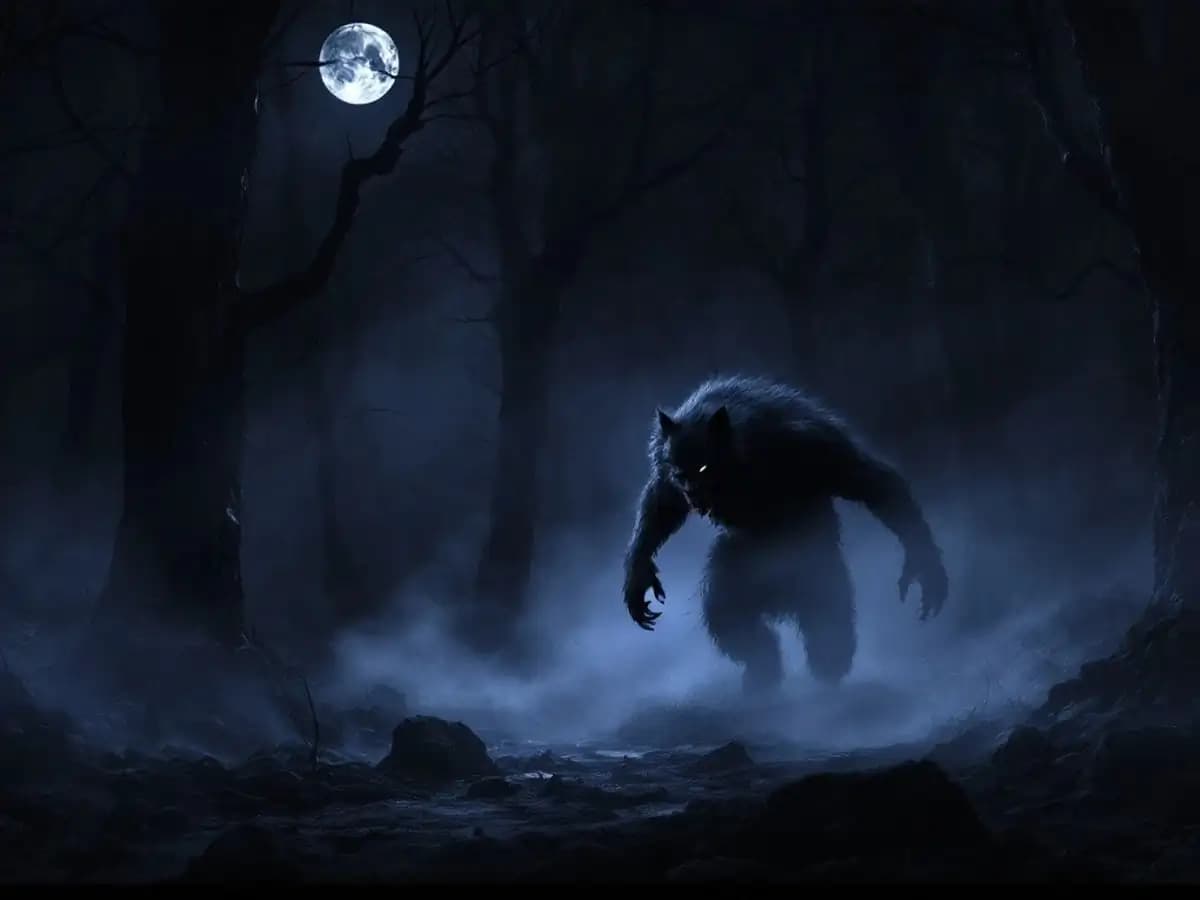

The howl of the wolf has long captured human imagination, evoking both fear and fascination. In ancient times, when civilization was still intertwined with nature, the wolf was seen as a deadly predator. This duality is reflected in the rich tapestry of werewolf mythology across Europe, where tales of transformation and the bond between man and wolf have persisted for millennia.
Key Takeaways
- The bond between humans and wolves dates back at least 25,000 years.
- The term “werewolf” has roots in Old Germanic and Greek languages.
- Ancient rituals often involved transformation into wolves as a form of punishment or initiation.
- Many historical figures were believed to have the ability to transform into wolves.
The Bond Between Man And Wolf
The relationship between humans and wolves is ancient, dating back approximately 25,000 years. This bond began with the domestication of wolves, leading to the development of dogs. Early hunter-gatherers in Eurasia and Western Europe lived closely with these wolves, which were more altruistic and less fearful than their modern counterparts. This proximity likely inspired many legends of wolves raising human children, a theme found in various cultures, including Indo-Europeans and Native Americans.
The Meaning Of Werewolf
The term “werewolf” is derived from Old Germanic words meaning “man” and “wolf.” This aligns with the Greek term “lycanthropos,” which also translates to “wolf-man.” In Norse mythology, the Ulfhednar, or wolf-coated warriors, and the berserkers, who wore bear pelts, share similarities with the werewolf concept. The Slavic term “vlkodlak” means “wolf-haired,” further emphasizing the connection between humans and wolves in folklore.
Advertisement
Earliest Werewolf Tales
The earliest recorded werewolf tale appears in the Epic of Gilgamesh, where a woman transforms her husband into a wolf. However, more recognizable werewolf themes emerge in ancient Greek literature, such as The Iliad and The Odyssey. In these texts, warriors are often compared to wolves or lions, highlighting their ferocity in battle.
Zeus Lycaios & Ancient Greek Wolf Rituals
One of the most famous werewolf legends involves Lycaon, an ancient king of Arcadia. According to myth, Lycaon served a meal of human flesh to Zeus, who, enraged, transformed him into a wolf. This story reflects ancient rituals where individuals would transform into wolves as a form of punishment or initiation. The , held in honor of Zeus, were believed to involve such transformations.