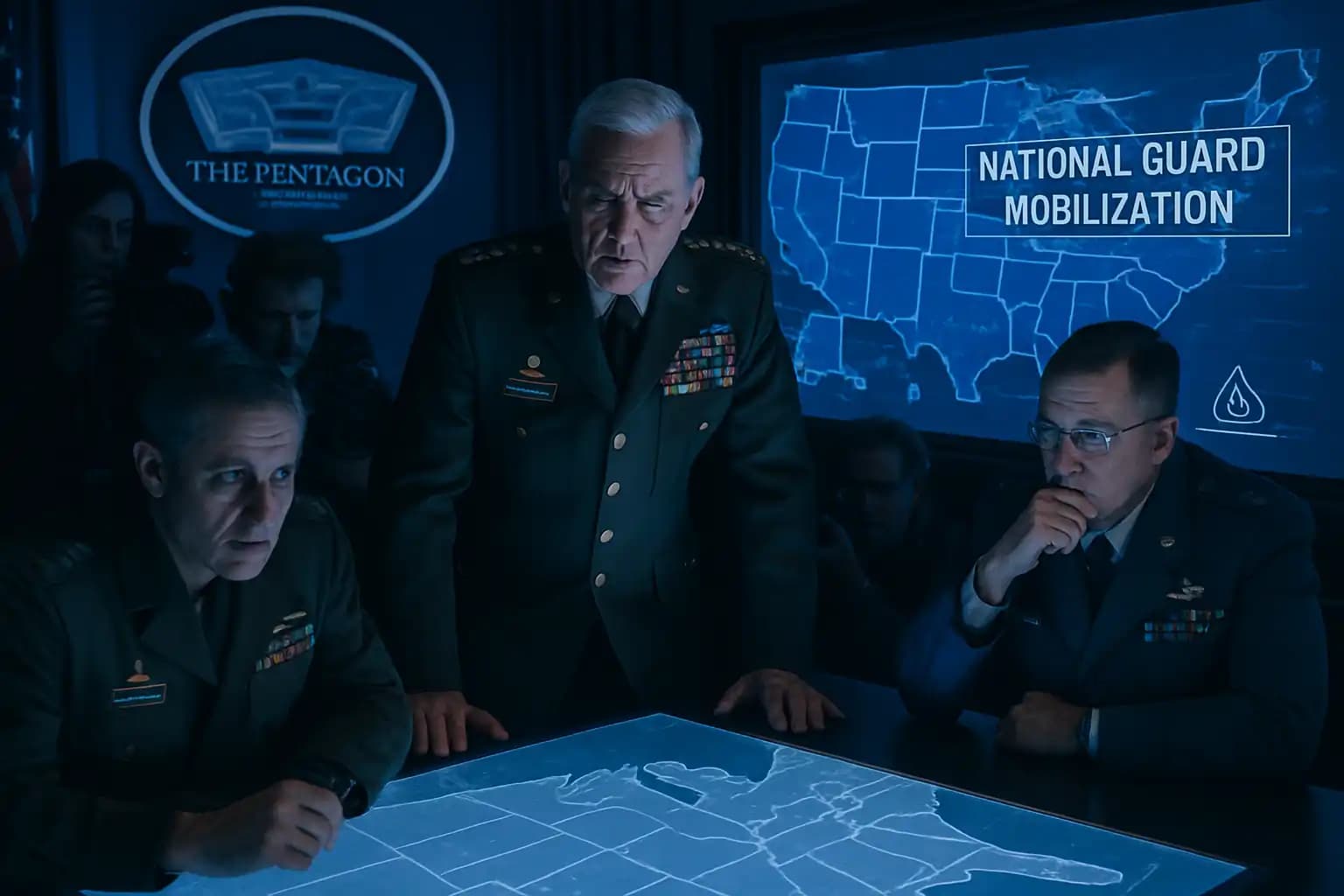

America’s air raid sirens haven’t sounded like this in thirty years. They blare from the Oval Office. President Donald Trump’s October 2025 announcement order for the Pentagon to test nuclear weapons immediately, along with directives for National Guard deployments, jolted Capitol Hill and triggered urgent discussions worldwide. Behind apocalyptic headlines lie real consequences for national security, civil liberties, and geopolitics.
Nuclear Testing: Breaking the Global Taboo
Trump’s October directive signals a major shift in American nuclear policy. Since 1992, live weapons tests had been banned. The Reuters reported that Trump instructed the Pentagon to test “on an equal basis” with Russia and China. He justified this by citing advancements in rival arsenals. The U.S. must match or exceed Russian and Chinese capabilities, he claimed. Resuming nuclear explosive testing isn’t just symbolic; it rattles arms control advocates and sparks fears of a new Cold War. As noted in this crisis analysis, Russia’s recent showcase of doomsday torpedo technology fueled Trump’s hawkish response.
Top military officials and defense hawks have debated renewed testing for months. Arms control experts caution that resuming tests could undermine U.S. diplomatic credibility and initiate a dangerous feedback loop with other nuclear states. For a recap of past nuclear escalations and their social consequences, see the 2024 urban emergency timeline.
Advertisement
National Guard Mobilization: What Presidential Authority Really Means
The expansion of National Guard deployments has stirred controversy. Reports from Newsweek confirm Trump’s order to create “quick reaction forces” consisting of up to 500 guard members per state. While unprecedented, this builds on established presidential authority to federalize the Guard during emergencies or law enforcement needs—either via request or unilaterally in a declared crisis.
The legal basis for these moves wavers between Title 10 federal authority and state sovereignty, leading to lawsuits and political confrontations in several states. For a concise overview, the National Guard’s official background provides insights. However, the president’s power to deploy Guard units nationwide encounters strong checks from courts, governors, and sometimes, from within the Pentagon itself. These checks echo past conflicts, like those explored in this .