World War III Is Already Here: The Invisible Proxy War
World War 3
World War III Is Already Here: The Invisible Proxy War
Key Things to Know About This ‘Invisible War’ Former CIA officer and Air Force veteran Andrew Bustamante has been telling audiences since around 2023 that World War III is already underway as a shadow war—fought through…
Art Grindstone is the hard-nosed storyteller behind Unexplained.co, a veteran investigator whose life’s work sits at the crossroads of the paranormal, fringe science, and the shadows most people try not to look into. With decades spent chasing impossible stories — black-budget psychic programs, vanished Cold War experiments, desert rituals that sparked UFO waves, and the strange phenomena buried in America’s forgotten backroads — Art brings a rare combination of skepticism, awe, and journalistic precision. He’s not here to debunk. He’s not here to blindly believe. He follows the evidence wherever it leads — even when it leads someplace deeply uncomfortable. Known for his immersive, cinematic style and his ability to turn obscure research into gripping narrative, Art has built a devoted following across podcasts, long-form features, documentaries, and serialized investigations. His interviews are direct. His analysis is unflinching. His voice has become a staple in the modern paranormal renaissance — the guy people turn to when a story is too strange, too complex, or too dangerous for anyone else to touch. Off-mic, Art works with a distributed network of researchers, archivists, and field operatives who help surface the stories mainstream media ignores. On-mic, he transforms their findings into meticulous, high-impact reporting that refuses to insult the intelligence of true believers. His philosophy is simple: Take the phenomenon seriously. Treat the audience with respect. Tell the story as if the world depends on it — because sometimes it does. When Art Grindstone digs into a case, he isn’t just chasing a mystery. He’s tracing the fault lines of reality itself.
6 min · 1,330 words
In This Report(7)
Key Things to Know About This ‘Invisible War’
Former CIA officer and Air Force veteran Andrew Bustamante has been telling audiences since around 2023 that World War III is already underway as a shadow war—fought through proxy conflicts, economic pressure, and information warfare rather than open, nuclear-armed superpower battles.
Hard data from sources like the Uppsala Conflict Data Program, the Council on Foreign Relations’ Global Conflict Tracker, and International Crisis Group show a world with multiple serious wars and dozens of active conflicts, but no institution formally labels this as a single, unified ‘World War III.’
There is a widening gap between how institutions describe today’s violence (regional crises, proxy conflicts, competition) and how many veterans, analysts, and online communities perceive it (a structurally global war that just hasn’t been branded yet)—and that gap, plus intensive psychological operations and propaganda, leaves open real questions about what we’re living through and what it should be called.
A World at War Without a Declaration
Picture 2025: Russia’s invasion of Ukraine grinds on since February 24, 2022. The Israel-Hamas war has claimed over 40,000 lives by late in the year. Myanmar’s civil war rages in the shadows, tearing the country apart.
News feeds tick with casualty counts. Conflict trackers like CrisisWatch and the Global Conflict Tracker list over 30 active conflicts of concern to the US, monitoring violence risks in more than 70 countries. No one steps to a podium to declare it. No headlines scream the start.
Then comes Andrew Bustamante, former CIA intelligence officer and Air Force combat veteran. On podcasts like the Shawn Ryan Show, he cuts through the static. He tells millions: World War III is here. It’s just not the version from history books—proxies and shadows instead of trenches and bombs.
Advertisement
Online, in places like r/Intelligence, veterans post late at night. They talk rotations to Eastern Europe, weapons flowing, tensions spiking in the Middle East. They wonder: will history connect these dots into a world war?
What Insiders, Veterans, and Pattern-Seekers Are Saying
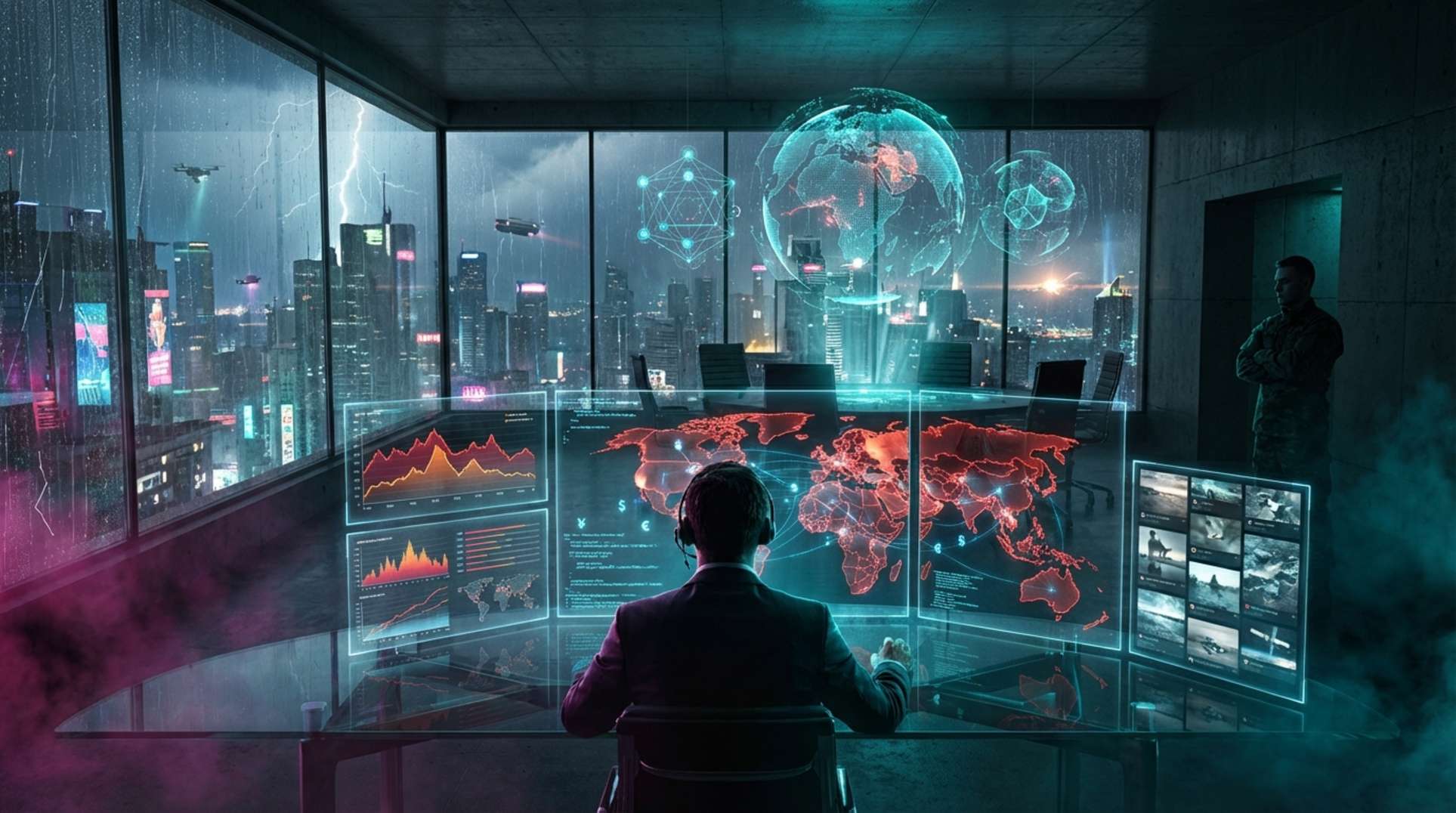
Andrew Bustamante puts it plain. World War III runs as a proxy or shadow conflict. Major powers—US, Russia, China—skip direct fights. They use client states like Ukraine or Middle East factions. Add economic hits like sanctions, cyber strikes, and info campaigns. It’s war by influence, designed to stay deniable.
What exactly is Andrew Bustamante claiming about World War III?
What does the data show about current global conflicts?
Why don’t institutions call this World War III?
How do online communities and veterans interpret these claims?
What would it take for this to be officially labeled World War III?
Advertisement
Frequently Asked Questions
What exactly is Andrew Bustamante claiming about World War III?
Andrew Bustamante, a former CIA officer and Air Force veteran, claims that World War III is already underway as a shadow or proxy war. He describes it as major powers like the US, Russia, and China fighting through client states, economic measures, cyber operations, and information warfare, rather than direct open battles.
What does the data show about current global conflicts?
Data from sources like the Uppsala Conflict Data Program indicates at least nine ongoing armed conflicts each causing 1,000 to 10,000 deaths annually, including Russia-Ukraine, Israel-Hamas, and Myanmar's civil war. The Council on Foreign Relations tracks over 30 conflicts of US concern, and CrisisWatch monitors risks in more than 70 countries, showing widespread violence but not labeled as a single world war.
Why don't institutions call this World War III?
Institutions like the US government, NATO, and conflict monitors frame current events as regional crises or strategic competition to focus on prevention and avoid escalation. They argue the scale and structure don't match the global mobilization of past world wars, even with proxy involvements.
How do online communities and veterans interpret these claims?
In communities like r/Intelligence, veterans and analysts debate Bustamante's views, with some seeing patterns of escalation similar to pre-WWI and WWII eras. Others incorporate numerology or prophecies, like Nostradamus timelines, to connect dots in what they perceive as a functionally global war.
What would it take for this to be officially labeled World War III?
Open questions include thresholds like direct clashes between NATO and Russia, US-China naval battles, or limited nuclear use. Observers argue that if proxy and covert actions already form a global struggle, the label might be more about perception than formal declaration.
Hidden in Every Human Genome: Two ‘Ghost’ Ancestors Science Has Never Found
A new Science study finds that everyone alive carries DNA from at least one unknown human ancestor. The fossils are still missing—but the genetic signal spans the globe.
Aug 21, 2026 • 9 min read
Paranormal
The Mushroom That Makes People See Tiny People—and the Chemical Nobody Has Found
Reports from China, Papua New Guinea and the Philippines describe the same unnerving vision after eating one mushroom: crowds of tiny people. Researchers have now connected the cases to Lanmaoa asiatica, but the active chemical remains unknown.
Aug 20, 2026 • 9 min read
Strange History
The Etruscan Well Sealed With Human Remains Is Stranger Than a Sacrifice Story
A newly reported Etruscan well in Italy was opened with offerings and sealed with human remains. The evidence reveals a ritual mystery, not a simple sacrifice tale.
Aug 18, 2026 • 7 min read
He draws from his CIA days and Air Force combat time. Modern fights target minds and perceptions as much as land. Civilians miss it because it’s built that way.
Russian voices echo from the other side. Chechen General Apti Alaudinov said in 2025 that World War III is on, pointing to proxy clashes. Not official Kremlin line, but it lands hard.
In online spots like Reddit’s r/Intelligence, folks break it down. Some call Bustamante sensational, question his creds. Others say it fits: NATO moves, arms shipments, rhetoric heating up like before the big wars.
Broader takes weave in. General Richard Shirreff’s 2016 book imagined a 2025 war with Russia. Some lock on dates like November 3, 2025, mixing numerology. Nostradamus gets pulled in too—a 27-year war ending around 2029, with today’s Eastern Europe and Mediterranean fits.
Theme repeats: scale of violence, entanglements, covert ops, propaganda. To many, that’s world war, named or not.
Timelines, Death Tolls, and the Conflicts We Can Actually Count
Uppsala Conflict Data Program counts at least nine armed conflicts in 2025, each with 1,000 to 10,000 violent deaths yearly. Think Russia-Ukraine, Israel-Hamas, Myanmar civil war.
International Crisis Group’s CrisisWatch tracks violence risks in over 70 countries. Covers insurgencies in Africa to brewing political storms.
Council on Foreign Relations’ Global Conflict Tracker lists more than 30 conflicts relevant to the US. Spans Eastern Europe, Middle East, Asia. They note proxy roles but don’t call it one big war.
Russia-Ukraine kicked off full-scale on February 24, 2022. Israel-Hamas deaths top 40,000 by late 2025. Myanmar keeps adding thousands each year.
Conflict Name
Start Date
Death Estimates
Involved Powers
Russia-Ukraine War
February 24, 2022
Thousands annually; cumulative in hundreds of thousands
Russia direct; NATO support to Ukraine
Israel-Hamas War
Ongoing escalation
Over 40,000 cumulative by late 2025
Israel direct; Iran proxy support
Myanmar Civil War
Ongoing
Thousands annually
Local factions; regional influences
These sources—Uppsala, CFR, CrisisWatch—stick to categories like civil war or insurgency. No ‘World War III’ tag, even with great powers in the mix.
Mainstream historians, echoed in outlets like TIME, say today’s setup doesn’t match WWI or WWII’s global mobilization and massive military deaths.
When a ‘Global Contest’ Becomes a ‘World War’
US government and military talk ‘strategic competition,’ ‘regional conflicts,’ ‘deterrence.’ Focus on Russia in Ukraine, Middle East instability, China’s rise. No World War III label.
Think tanks like CFR and International Crisis Group frame it as local crises. Proxy support noted, but emphasis on prevention. Calling it a world war risks panic and escalation.
Advertisement
Contrast that with observers’ view: web of proxy wars, arms, cyberattacks, sanctions. Ties Europe, Middle East, Africa, Indo-Pacific into one struggle.
Some say ‘World War III’ is descriptive, not legal. If great powers clash globally via military, economic, info means— that’s it, declaration or not.
Numerology and prophecies add layers. Shirreff’s 2025 dates, Nostradamus’ 27-year arc. Ways to map chaos when official stories feel thin.
What tips the scale? Direct NATO-Russia fights, US-China naval clashes, nuclear use? That’s the question.
Both sides shaped by psych ops. Governments dodge panic. Veterans spot downplayed realities from experience and secrecy.
Living Through a War That No One Will Name
Hard facts: multiple wars killing thousands yearly. Over 30 US-concern conflicts. More than 70 countries watched for violence. Proxy roles by big players acknowledged.
Bustamante sees it as one shadow war of proxies, economics, coercion. More accurate than isolated flare-ups.
No major body—US, Russia, NATO, UN, monitors—declares World War III. Historians warn against loose use; scale and structure differ from past world wars.
Unresolved: how much is coordinated strategy versus local mess? What’s psych ops’ role in that ‘invisible war’ feeling?
Pattern-hunting fills gaps from secrecy and spin. People seek structure in partial data.
Historians may never label it. But in hard-hit regions, the cost feels world-war real. Key isn’t the name—shadow war, multipolar mess, or world war. It’s if naming it pushes for accountability and peace.
Frequently Asked Questions
Andrew Bustamante, a former CIA officer and Air Force veteran, claims that World War III is already underway as a shadow or proxy war. He describes it as major powers like the US, Russia, and China fighting through client states, economic measures, cyber operations, and information warfare, rather than direct open battles.
Data from sources like the Uppsala Conflict Data Program indicates at least nine ongoing armed conflicts each causing 1,000 to 10,000 deaths annually, including Russia-Ukraine, Israel-Hamas, and Myanmar’s civil war. The Council on Foreign Relations tracks over 30 conflicts of US concern, and CrisisWatch monitors risks in more than 70 countries, showing widespread violence but not labeled as a single world war.
Institutions like the US government, NATO, and conflict monitors frame current events as regional crises or strategic competition to focus on prevention and avoid escalation. They argue the scale and structure don’t match the global mobilization of past world wars, even with proxy involvements.
In communities like r/Intelligence, veterans and analysts debate Bustamante’s views, with some seeing patterns of escalation similar to pre-WWI and WWII eras. Others incorporate numerology or prophecies, like Nostradamus timelines, to connect dots in what they perceive as a functionally global war.
Open questions include thresholds like direct clashes between NATO and Russia, US-China naval battles, or limited nuclear use. Observers argue that if proxy and covert actions already form a global struggle, the label might be more about perception than formal declaration.
Art Grindstone is the hard-nosed storyteller behind Unexplained.co, a veteran investigator whose life’s work sits at the crossroads of the paranormal, fringe science, and the shadows most people try not to look into. With decades spent chasing impossible stories — black-budget psychic programs, vanished Cold War experiments, desert rituals that sparked UFO waves, and the strange phenomena buried in America’s forgotten backroads — Art brings a rare combination of skepticism, awe, and journalistic precision. He’s not here to debunk. He’s not here to blindly believe. He follows the evidence wherever it leads — even when it leads someplace deeply uncomfortable. Known for his immersive, cinematic style and his ability to turn obscure research into gripping narrative, Art has built a devoted following across podcasts, long-form features, documentaries, and serialized investigations. His interviews are direct. His analysis is unflinching. His voice has become a staple in the modern paranormal renaissance — the guy people turn to when a story is too strange, too complex, or too dangerous for anyone else to touch. Off-mic, Art works with a distributed network of researchers, archivists, and field operatives who help surface the stories mainstream media ignores. On-mic, he transforms their findings into meticulous, high-impact reporting that refuses to insult the intelligence of true believers. His philosophy is simple: Take the phenomenon seriously. Treat the audience with respect. Tell the story as if the world depends on it — because sometimes it does. When Art Grindstone digs into a case, he isn’t just chasing a mystery. He’s tracing the fault lines of reality itself.