Helena Blavatsky’s Mahatma Letters: Fraud or Fact?
Prophecy
Helena Blavatsky’s Mahatma Letters: Fraud or Fact?
Key Takeaways Helena Petrovna Blavatsky, born August 12, 1831, in Yekaterinoslav and died May 8, 1891, founded the Theosophical Society in New York City in 1875 alongside Henry Steel Olcott and William Q. Judge. Her key…
Art Grindstone is the hard-nosed storyteller behind Unexplained.co, a veteran investigator whose life’s work sits at the crossroads of the paranormal, fringe science, and the shadows most people try not to look into. With decades spent chasing impossible stories — black-budget psychic programs, vanished Cold War experiments, desert rituals that sparked UFO waves, and the strange phenomena buried in America’s forgotten backroads — Art brings a rare combination of skepticism, awe, and journalistic precision. He’s not here to debunk. He’s not here to blindly believe. He follows the evidence wherever it leads — even when it leads someplace deeply uncomfortable. Known for his immersive, cinematic style and his ability to turn obscure research into gripping narrative, Art has built a devoted following across podcasts, long-form features, documentaries, and serialized investigations. His interviews are direct. His analysis is unflinching. His voice has become a staple in the modern paranormal renaissance — the guy people turn to when a story is too strange, too complex, or too dangerous for anyone else to touch. Off-mic, Art works with a distributed network of researchers, archivists, and field operatives who help surface the stories mainstream media ignores. On-mic, he transforms their findings into meticulous, high-impact reporting that refuses to insult the intelligence of true believers. His philosophy is simple: Take the phenomenon seriously. Treat the audience with respect. Tell the story as if the world depends on it — because sometimes it does. When Art Grindstone digs into a case, he isn’t just chasing a mystery. He’s tracing the fault lines of reality itself.
5 min · 1,044 words
In This Report(8)
Key Takeaways
Helena Petrovna Blavatsky, born August 12, 1831, in Yekaterinoslav and died May 8, 1891, founded the Theosophical Society in New York City in 1875 alongside Henry Steel Olcott and William Q. Judge.
Her key works, Isis Unveiled from 1877 and The Secret Doctrine from 1888, built a framework of ‘Ancient Wisdom’ that influenced occult and New Age movements.
Disputed events like the Mahatma Letters from around 1880–1884 and reports of materializations stand out; the 1885 Hodgson Report claimed fraud, but later reviews by Vernon Harrison pointed to flaws in Hodgson’s methods, keeping questions about origins and authenticity alive.
A Midnight Room in a Strange City
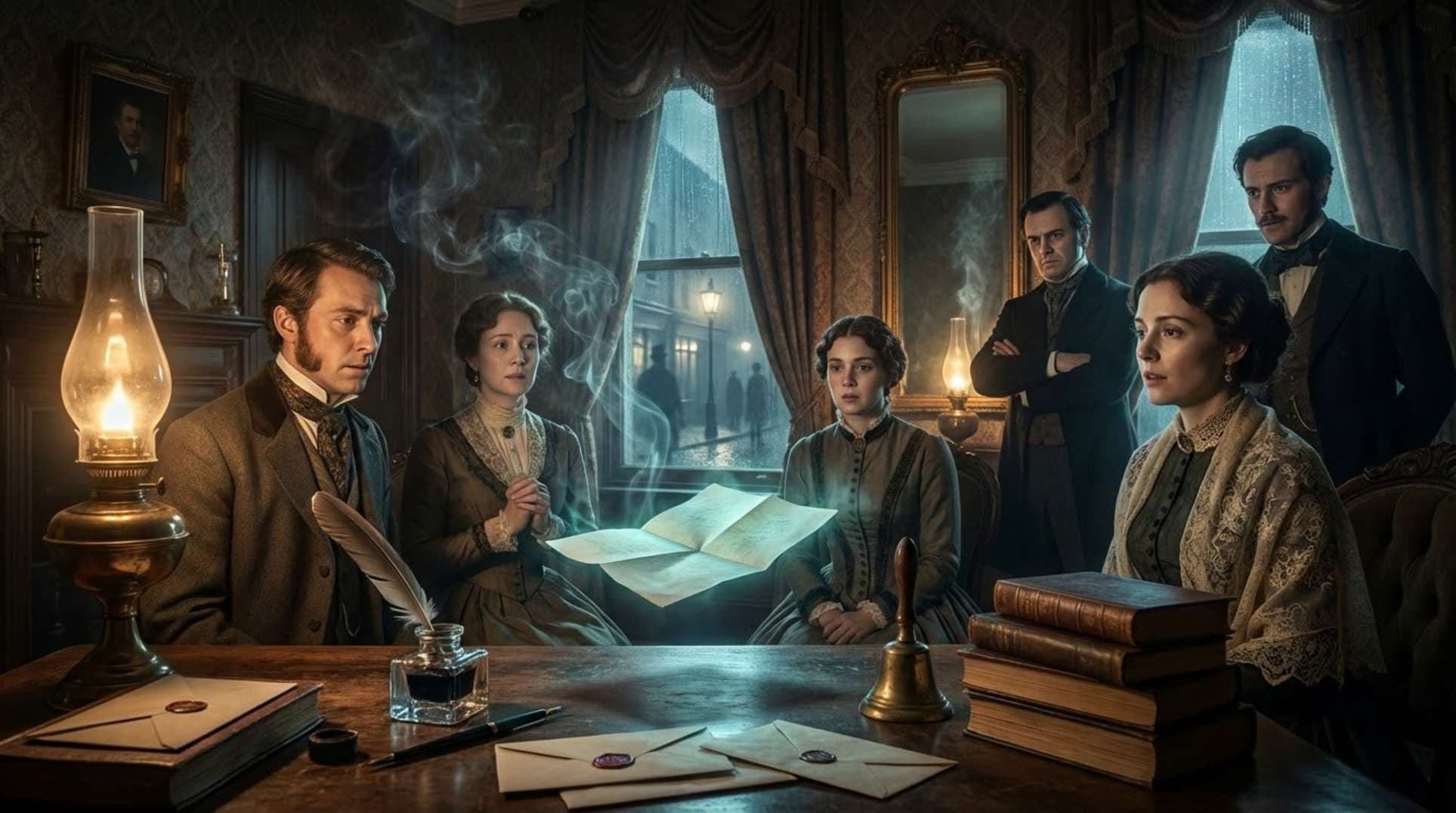
Picture the dim light of a gas lamp flickering in a New York parlor during the 1870s. Shadows stretch across heavy drapes as a small group gathers for a Theosophical sitting. The air hangs thick with incense, and the faint chime of a bell breaks the silence. Suddenly, a folded letter materializes on the table, seemingly out of nowhere. This scene repeats in London gatherings of the 1880s, where participants like A. P. Sinnett and Henry Olcott described such events in their memoirs and letters.
Eyewitnesses noted consistent details: soft knocks, the abrupt appearance of notes signed by figures like ‘Morya’ or ‘Koot Hoomi,’ and a sense of otherworldly presence. A. O. Hume’s correspondence echoes these accounts, painting a picture of hushed anticipation in rooms filled with seekers of hidden knowledge.
What Witnesses and Analysts Report
Those close to the events offer vivid testimonies. Adherents like A. P. Sinnett, in his 1883 correspondence, described letters that ‘precipitated’ before his eyes, attributing them to Mahatmas—enlightened beings from the East. Henry Olcott’s memoirs detail similar materializations, including apports and uncanny sounds that seemed to defy explanation.
Advertisement
Not everyone agreed. Defectors Emma and Alexis Coulomb claimed it was all staged, pointing to hidden mechanisms and collusion. Their statements fueled the 1885 Hodgson inquiry for the Society for Psychical Research (SPR), where Hodgson concluded, ‘The evidence… points to a conspiracy of fraud.’
Later analysts pushed back. Vernon Harrison scrutinized Hodgson’s work and found errors in methodology and selective evidence. Harrison argued in his critique that the investigation overlooked key details, sparking ongoing debate within research circles.
Timelines, Tracks, and Hard Data
What were the Mahatma Letters?
Did the Hodgson Report prove Blavatsky was a fraud?
What evidence supports Blavatsky’s claims?
Why does Blavatsky’s story still matter?
Frequently Asked Questions
What were the Mahatma Letters?
The Mahatma Letters were a series of about 140 messages, dated around 1880–1884, reportedly from enlightened beings like Morya and Koot Hoomi. Witnesses like A. P. Sinnett described them appearing suddenly during Theosophical sittings. Their authorship remains disputed, with some claiming fraud and others pointing to unexplained origins.
Did the Hodgson Report prove Blavatsky was a fraud?
The 1885 Hodgson Report for the SPR concluded that many of Blavatsky's phenomena, including the letters, involved deception. However, later analysts like Vernon Harrison identified flaws in Hodgson's methods and evidence selection. This has kept the debate open without an official reversal.
What evidence supports Blavatsky's claims?
Eyewitness accounts from adherents like Sinnett and Olcott describe materializations and letters in memoirs and correspondence. Archives hold original documents that could undergo modern forensic tests. Yet, defectors' testimonies and missing records leave room for skepticism.
Why does Blavatsky's story still matter?
Her work influenced occult and New Age movements through ideas of Ancient Wisdom. The unresolved questions about the letters and phenomena highlight tensions between belief, evidence, and investigation. It remains a case study in how charismatic figures shape cultural narratives.
Two New Loch Ness Reports Bring 2026 Sightings to 13—But What Was Actually Seen?
Two new reported encounters bring the 2026 Loch Ness sighting count to 13. Here is what the reports establish—and what they do not.
Aug 26, 2026 • 6 min read
Articles
Two New Loch Ness Reports Bring 2026 Sightings to 13: But What Was Actually Seen?
Two new reported encounters bring the 2026 Loch Ness sighting count to 13. Here is what the reports establish and what they do not.
Aug 24, 2026 • 6 min read
Articles
Hidden in Every Human Genome: Two ‘Ghost’ Ancestors Science Has Never Found
A new Science study finds that everyone alive carries DNA from at least one unknown human ancestor. The fossils are still missing—but the genetic signal spans the globe.
Aug 21, 2026 • 9 min read
Blavatsky’s story rests on solid dates and documents. She was born on August 12, 1831 (July 31 Old Style), and died May 8, 1891, as recorded in sources like Britannica. The Theosophical Society launched in New York City in 1875, with its official inauguration on November 17, involving Blavatsky, Olcott, and William Q. Judge.
Her books hit shelves with Isis Unveiled in 1877 (two volumes) and The Secret Doctrine in 1888 (focusing on cosmogenesis and anthropogenesis). The Mahatma Letters, about 140 in total, date to 1880–1884, addressed to Sinnett and first collected in 1923 by A. Trevor Barker.
The Hodgson Report from 1885, available in SPR Proceedings, deemed many phenomena fraudulent. Archives like Andover-Harvard, the British Library, and the Library of Congress hold related materials, including letter facsimiles and memoirs.
Year/Event
Primary Source/Archive
1831: Birth of Helena Blavatsky
Britannica
1875: Founding of Theosophical Society
Founders’ records, November 17 inauguration
1877: Publication of Isis Unveiled
Original two-volume edition
1880–1884: Mahatma Letters written
Sinnett correspondence; 1923 Barker edition
1885: Hodgson Report released
SPR Proceedings PDF
1888: Publication of The Secret Doctrine
Original two-volume edition
1891: Death of Blavatsky
Britannica
Official Story vs. What the Documents Suggest
The SPR’s 1885 report, led by Richard Hodgson, labeled Blavatsky’s phenomena as fraudulent, citing deception in the letters and materializations. Mainstream sources like Britannica echo this, highlighting her influence while noting controversies over plagiarism and unverified travels.
Yet documents tell a more layered tale. Vernon Harrison’s review exposed Hodgson’s selective evidence and methodological gaps, without leading to an official reversal. Archives at Harvard and the British Library preserve original letters, open to modern tools like spectral imaging that could test claims anew.
Both sides present strong arguments: the SPR’s detailed accusations versus critiques that question the inquiry’s fairness. Readers can weigh the evidence directly through these holdings.
Advertisement
Where the Record Stops and the Mystery Persists
Questions linger on the Mahatma Letters’ true origins—Blavatsky’s hand, collaborators, or something unexplained? Hodgson’s case leaned on now-missing Coulomb papers, creating gaps in the record.
Blavatsky’s travel stories show inconsistencies, with sparse independent proof like passports or manifests. Modern forensics could help: ink analysis or handwriting comparisons on archived items at the British Library or Harvard, though access rules limit what’s possible.
For those digging deeper, start with primary document links, request finding aids, or advocate for non-destructive testing. Ethical and legal bounds apply, but these steps could clarify longstanding ambiguities.
What It All Might Mean
Blavatsky’s life anchors on firm ground: her 1831 birth, the 1875 society founding, and books in 1877 and 1888. These seeded ideas like karma and reincarnation that reshaped Western esotericism, as traced in studies of occult history.
Debates over the letters’ provenance and missing evidence keep the story alive. It shows how bold claims can build movements and draw scrutiny, with archives holding clues that might one day tip the scales.
Frequently Asked Questions
The Mahatma Letters were a series of about 140 messages, dated around 1880–1884, reportedly from enlightened beings like Morya and Koot Hoomi. Witnesses like A. P. Sinnett described them appearing suddenly during Theosophical sittings. Their authorship remains disputed, with some claiming fraud and others pointing to unexplained origins.
The 1885 Hodgson Report for the SPR concluded that many of Blavatsky’s phenomena, including the letters, involved deception. However, later analysts like Vernon Harrison identified flaws in Hodgson’s methods and evidence selection. This has kept the debate open without an official reversal.
Eyewitness accounts from adherents like Sinnett and Olcott describe materializations and letters in memoirs and correspondence. Archives hold original documents that could undergo modern forensic tests. Yet, defectors’ testimonies and missing records leave room for skepticism.
Her work influenced occult and New Age movements through ideas of Ancient Wisdom. The unresolved questions about the letters and phenomena highlight tensions between belief, evidence, and investigation. It remains a case study in how charismatic figures shape cultural narratives.
Art Grindstone is the hard-nosed storyteller behind Unexplained.co, a veteran investigator whose life’s work sits at the crossroads of the paranormal, fringe science, and the shadows most people try not to look into. With decades spent chasing impossible stories — black-budget psychic programs, vanished Cold War experiments, desert rituals that sparked UFO waves, and the strange phenomena buried in America’s forgotten backroads — Art brings a rare combination of skepticism, awe, and journalistic precision. He’s not here to debunk. He’s not here to blindly believe. He follows the evidence wherever it leads — even when it leads someplace deeply uncomfortable. Known for his immersive, cinematic style and his ability to turn obscure research into gripping narrative, Art has built a devoted following across podcasts, long-form features, documentaries, and serialized investigations. His interviews are direct. His analysis is unflinching. His voice has become a staple in the modern paranormal renaissance — the guy people turn to when a story is too strange, too complex, or too dangerous for anyone else to touch. Off-mic, Art works with a distributed network of researchers, archivists, and field operatives who help surface the stories mainstream media ignores. On-mic, he transforms their findings into meticulous, high-impact reporting that refuses to insult the intelligence of true believers. His philosophy is simple: Take the phenomenon seriously. Treat the audience with respect. Tell the story as if the world depends on it — because sometimes it does. When Art Grindstone digs into a case, he isn’t just chasing a mystery. He’s tracing the fault lines of reality itself.