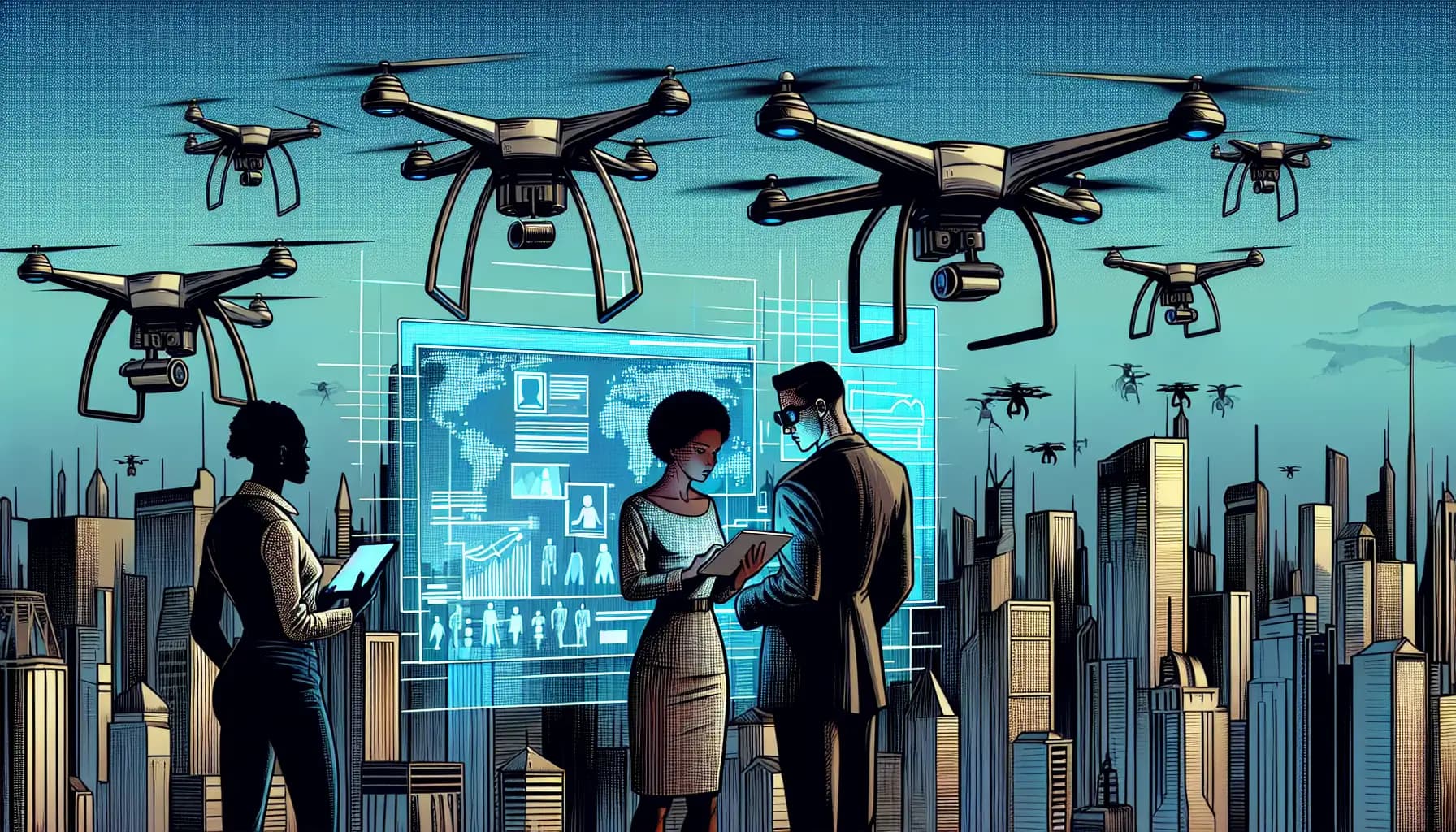

Welcome to the Technocratic Age: Pre-Crime on the Horizon
Do you feel that tingling down your spine? No, it’s not the caffeine; it’s the unsettling creep of a dystopian reality—a realm where science fiction hacks at the foliage of everyday existence. Enter the age of pre-crime, a term recently exhumed from Philip K. Dick’s vivid imaginings and incarnated into our current judicial lexicon (source).
The UK finds itself at the vanguard of this eerily familiar endeavor, developing algorithms capable of predicting criminal activity before it happens. But fear not, for Big Brother will guide us as we tentatively tread these pathways dotted with ethical tripwires and faux pas quagmires.
The Algorithmalists: Can We Trust Machine Judgement?
Let’s investigate the UK’s latest intrigue: a purported murder prediction tool so ambitious it would make a crystal ball blush. According to The Guardian, UK authorities are dabbling in algorithmic clairvoyance, creating software designed to sift through reams of data—lurking in the shadows of digital interactions to prognosticate nefarious deeds.
Advertisement
Such tools, critics say, threaten to quash freedom beneath heavy boots of surveillance and suspicion. Algorithms decide who breaks from mundane monotony into menace, potentially miscast by bytes and code. Cynics and foes argue that while grave safety might be enhanced, privacy and personal freedoms risk being wrung out like yesterday’s laundry.
The Sci-Fi Seam: From Fiction to Tangible Threat
When Spielberg and Cruise thrilled us with Minority Report, few pondered that notions forged in cinematic clay might one day shape our tangible tomorrows. Today, sci-fi’s speculative strain threads firmly into the tapestry of techno-authoritarian futures (source).
These pre-crime concepts find a strange bedfellow in existing practices such as predictive policing, which seeks omnipresence within data-driven corridors like a knowing deity. One questions, however, whether this expansion serves justice or crushes individuality beneath oppressive monoliths of rote computation.
Advertisement