First Blasts, Fallout, and Shock: Inside the First 72 Hours of Nuclear War

First Blasts, Fallout, and Shock: Inside the First 72 Hours of Nuclear War

Art Grindstone

Art Grindstone

September 15, 2025

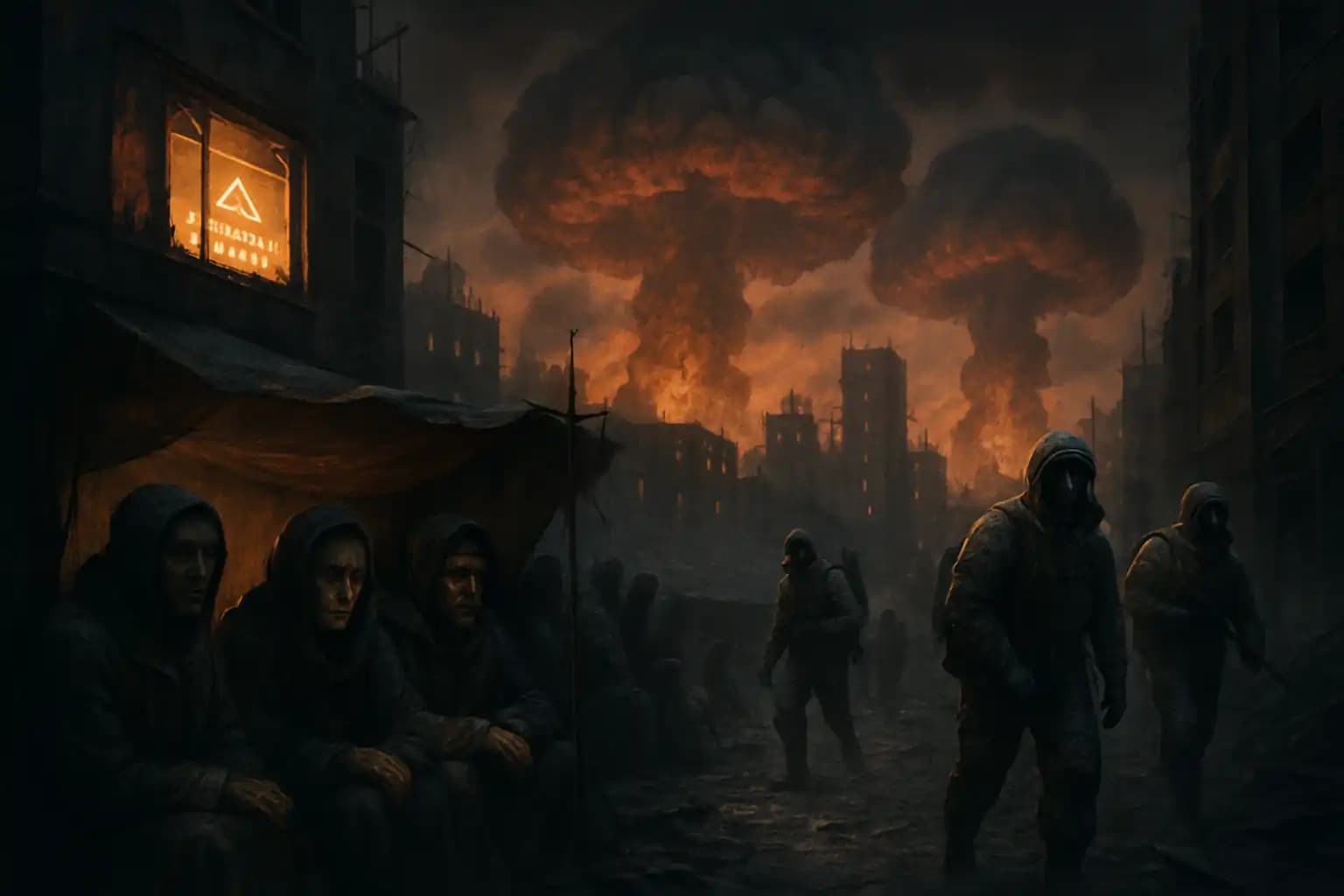
A flash blares—blinding and relentless—as the world’s digital veins flood with warning codes. When the dreaded day arrives, World War 3 won’t wait for talking heads to finish their sentences. In those opening seconds, governments spring into action, civil defense plans shudder off the pages, and millions instinctively flee to basements, bathtubs, or anything resembling shelter. The true battle for survival, however, extends far beyond the first detonations. It’s within the next 72 hours that the fate of nations and survivors is determined, not by luck, but by precise protocol—and a bit of preparation.

For decades, planners meticulously charted nuclear retaliation timelines, fallout, and public guidance with chilling accuracy. This high-stakes scenario, now more likely than at any moment since the Cold War, is a script with no room for improvisation and minimal margin for error. Welcome to the hour-by-hour breakdown of nuclear warfare’s opening act—a reality check that slices through panic with research-based truth.

From Missile Launch to Detonation: The First Hour

The clock ticks the moment early-warning systems detect inbound warheads. Within minutes, military command posts—like those detailed in the National Response Scenario Number One—enter Red Alert. The U.S. president and national leaders receive the dreaded briefing, triggering a cascade: defense systems activate, retaliatory forces prepare, and the public (if time permits) gets a terse, grim warning, likely via Emergency Alert System messages. Civilians who heed this call understand the need to take cover immediately, as fallout may begin falling within the hour. In this chaos, every minute counts: windows must be secured, water and basic medications gathered, and, as FEMA notes in this FEMA guide, shielding from blast and radiation is the sole way to survive the initial wave.

The Government and Military Mobilization Machine

Behind the civilian scramble, military operations follow a grim dance. Defense systems intercept threats where possible, but planners anticipate the worst: major cities and military hubs will suffer catastrophic hits. National Guard units deploy to protect critical infrastructure and maintain order amid the aftermath. Homeland Security protocols sync with public health and fallout sequences outlined in Radiation Emergency Medical Management resources. First responders venture into the unknown, knowing they could enter radioactive ruins—risking their own lives to stabilize chaos. The first 24 hours focus on locating survivors, outlining triage plans, establishing perimeters, and preventing panic from morphing into mass exodus or violent unrest.


Surviving the Fallout: Civilian Realities in the Crucible

For ordinary people, the crucial mantra is to shelter in place—preferably underground—until directed otherwise. Experts cited in the Homeland Security Digital Library report that radiation levels drop sharply after the first 24 to 48 hours. Those who remain indoors, away from windows and doors, have a small but real chance to avoid lethal exposure. Emergency broadcasts (if still operational) issue instructions regarding food, water, and medical assistance. In this uncertainty, misinformation flourishes. Underground networks, like survival forums inspired by real-life contingency plans such as modern survival guides, become critical hubs for practical advice.

This moment—uncertain, shadowed by nuclear winter, and echoing scenes from post-apocalyptic fiction—tests assumptions about the thin barrier separating society from anarchy. For survivors, every minute is a dilemma: exposure risk versus supply acquisition, faith in broadcast messages versus rumors of safe zones, and the continual threat of aftershocks as secondary strikes or accidents transpire.

The 72-Hour Mark: Assessing Damage and Adapting

After three days, the world has likely transformed—possibly forever. National leaders, if communication is possible, relay new orders to surviving populations and initiate the arduous tasks of rescue and rebuilding. Civil authority strains to the breaking point, while first responders suffer casualties from radiation sickness and civil unrest. According to federal planning documents, response “may reach robust capability within 48 hours, but 72 hours is probably more realistic.” What begins as a military operation quickly shifts into an all-hands-on-deck rescue effort, drawing on local knowledge, hidden resources, and—at times—makeshift alliances among survivors. The risks persist: food and water shortages, fires, and continuous radiation render every venture outside shelter perilous.

Throughout this accelerated crisis, one thing is evident: those with thorough preparation and a bit of paranoia are ahead of the game. Whether inspired by leaked contingency plans or grim playbooks dissected in assessments of World War 3’s tripwires, key lessons emerge. Even with governments operating at their utmost efficiency, personal readiness and community coordination can mean the difference between hope and despair.

Nuclear Survival: Lessons for a Not-So-Distant Future

If there’s any solace in this scenario, it’s the history that offers guidance. Since Hiroshima and Nagasaki (see Wikipedia’s entry on nuclear warfare), governments have researched, strategized, and refined their protocols for the nuclear age. But with every new missile test, emerging threat, or policy misstep, the question looms larger: Are you truly ready for the unthinkable? For a deeper exploration of the grim realities of nuclear brinkmanship—and the art of survival when everything falls apart—keep a watchful eye on Unexplained.co.